
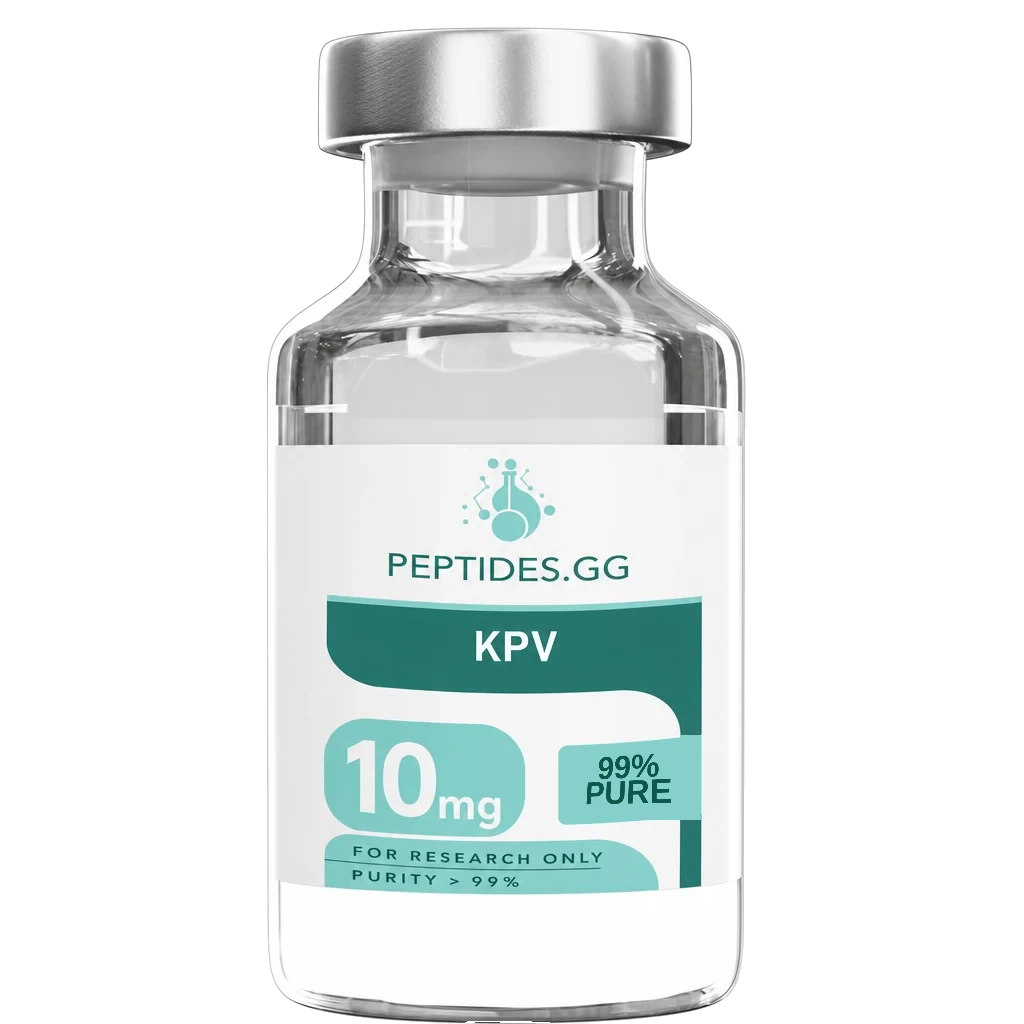
KPV is a synthetic tripeptide (Lys-Pro-Val) supplied as a lyophilized research chemical for in vitro laboratory investigation. Third-party lab tested for purity.
Peptides.GG is a chemical supplier and is not a compounding pharmacy under 503A or 503B. Statements have not been evaluated by the US FDA. Products are not intended to diagnose, treat, cure, or prevent any disease. For research use only — not for human consumption.
KPV
$50.00 – $120.00
- Free Delivery on all orders over $200
- Earn 5% Store Credit with Every Order
- Same Day Shipping Before 1 PM PST
- 10% Discount for Cryptocurrency Payments
14-day money-back guarantee
If you are not satisfied with the product, simply return it and we will refund your money

KPV is a synthetic tripeptide (Lys-Pro-Val) supplied as a lyophilized research chemical for in vitro laboratory investigation. Third-party lab tested for purity.
Peptides.GG is a chemical supplier and is not a compounding pharmacy under 503A or 503B. Statements have not been evaluated by the US FDA. Products are not intended to diagnose, treat, cure, or prevent any disease. For research use only — not for human consumption.
Frequently Asked Questions About KPV
What is KPV?
KPV is a synthetic tripeptide corresponding to the C-terminal sequence (Lys-Pro-Val) of α-MSH (alpha-melanocyte-stimulating hormone). Unlike full-length melanocortin peptides, it is studied as a research tool for non-receptor-mediated anti-inflammatory mechanisms, retaining activity through direct intracellular pathways rather than melanocortin-receptor binding. It is supplied strictly as a research compound for laboratory use and is not for human consumption.
What is the molecular profile of KPV?
KPV is a tripeptide with the amino acid sequence Lys-Pro-Val, molecular formula C₁₆H₃₀N₄O₄, a molecular weight of 341.45 Da, and CAS registry number 79147-07-0 (PubChem CID 9938004). Its small three-residue structure gives it high stability and efficient cellular penetration, and the basic lysine residue carries a positive charge at physiological pH. It is supplied as a white to off-white powder soluble in water, phosphate-buffered saline, and cell culture media, with purity verified by HPLC at ≥98%.
How does KPV act in research models?
In laboratory research, the primary characterized mechanism of KPV is direct intracellular inhibition of the NF-κB (nuclear factor kappa B) pathway, reducing nuclear translocation of NF-κB and the transcription of pro-inflammatory genes. Because its small size allows cellular penetration, it acts without requiring melanocortin-receptor binding, distinguishing it from receptor-mediated melanocortin peptides. Reported research effects include modulation of pro-inflammatory cytokines and MAPK signaling. These mechanisms are investigated in cell-culture and animal models, not in humans.
What is KPV studied for in laboratory research?
In preclinical and in vitro research, KPV is used as a tool to investigate non-receptor anti-inflammatory mechanisms across several systems: cell-culture inflammatory models (NF-κB reporter and cytokine assays), experimental models of intestinal inflammation (such as DSS and TNBS colitis models), antimicrobial-activity assays, and wound-closure and skin-inflammation models. Typical protocols include minimum-inhibitory-concentration assays, gene-expression analysis, and ex vivo tissue preparations. Supplied for laboratory research use only; not for human consumption.
Is KPV soluble in water or saline, and how is it stored?
KPV is soluble in water, phosphate-buffered saline, and cell culture media, which supports its use across a range of in vitro inflammatory assays. As a small, stable tripeptide it tolerates freeze-thaw cycles better than larger peptides and remains stable across the physiological pH range. The powder is kept sealed and desiccated at -20°C to -80°C, protected from moisture, with stability data available for 24+ months at -20°C.
What purity is KPV, and is it third-party tested?
Each batch of KPV is verified at ≥99% purity by reversed-phase HPLC, with identity confirmed by electrospray-ionization mass spectrometry (against its 341.45 Da molecular weight) and amino-acid analysis of the Lys-Pro-Val sequence. Contaminant testing covers bacterial endotoxin (<5 EU/mg by LAL), heavy metals, residual solvents, and water content. A Certificate of Analysis is provided with each batch, with third-party verification available on request.
Research References
Peer-reviewed studies and database records underpinning the research described on this page. Links open on PubMed, PubMed Central, or the publisher in a new tab.
- Dalmasso G, et al. PepT1-mediated tripeptide KPV uptake reduces intestinal inflammation. Gastroenterology. 2008. PMID: 18061177 →
- Kannengiesser K, et al. Melanocortin-derived tripeptide KPV has anti-inflammatory potential in murine models of inflammatory bowel disease. Inflamm Bowel Dis. 2008. PMID: 18092346 →
- Viennois E, et al. Critical role of PepT1 in promoting colitis-associated cancer and therapeutic benefits of the anti-inflammatory PepT1-mediated tripeptide KPV in a murine model. Cell Mol Gastroenterol Hepatol. 2016. PMID: 27458604 →
- Getting SJ, Schiöth HB, Perretti M. Dissection of the anti-inflammatory effect of the core and C-terminal (KPV) alpha-melanocyte-stimulating hormone peptides. J Pharmacol Exp Ther. 2003. PMID: 12750433 →
- Brzoska T, et al. Alpha-melanocyte-stimulating hormone and related tripeptides: biochemistry, antiinflammatory and protective effects in vitro and in vivo, and future perspectives for the treatment of immune-mediated inflammatory diseases. Endocr Rev. 2008. PMID: 18612139 →
- Luger TA, Brzoska T. alpha-MSH related peptides: a new class of anti-inflammatory and immunomodulating drugs. Ann Rheum Dis. 2007. PMID: 17934097 →
- Cutuli M, et al. Antimicrobial effects of alpha-MSH peptides. J Leukoc Biol. 2000. PMID: 10670585 →
- Elliott RJ, et al. alpha-Melanocyte-stimulating hormone, MSH 11-13 KPV and adrenocorticotropic hormone signalling in human keratinocyte cells. J Invest Dermatol. 2004. PMID: 15102092 →
Related products
-

BPC-157 Capsules
$170.00 Select options This product has multiple variants. The options may be chosen on the product pageSize: 500mcg x 60 capsules
-
TB-500 Thymosin Beta-4
$65.00 Select options This product has multiple variants. The options may be chosen on the product pageSize: 10mg
-
GHK-Cu
$53.00 – $65.00 Select options This product has multiple variants. The options may be chosen on the product pageSize: 50mg, 100mg
Research Overview
KPV serves as a valuable research tool for investigating non-receptor-mediated anti-inflammatory mechanisms. This synthetic tripeptide represents the C-terminal sequence of α-MSH (Lys-Pro-Val) and retains potent anti-inflammatory activity despite lacking the full melanocortin sequence required for receptor binding. Full melanocortin receptor agonism is investigated using Melanotan 2, which targets MC-1R through MC-4R for studying the complete melanocortin signaling spectrum. Research applications span inflammatory pathway investigation, intestinal inflammation models, antimicrobial activity studies, and wound healing research. Anti-inflammatory peptide research positions KPV alongside LL-37, which bridges innate immune defense with inflammation modulation, and BPC-157, which promotes tissue healing through growth factor and nitric oxide pathway activation.
The peptide’s designation as KPV derives from single-letter amino acid codes for its constituent amino acids. Unlike full-length α-MSH or synthetic melanocortin analogs that exert effects through melanocortin receptor activation, KPV demonstrates anti-inflammatory activity through direct intracellular mechanisms, particularly NF-κB (nuclear factor kappa B) pathway inhibition.
KPV research has contributed significantly to understanding non-classical anti-inflammatory peptide mechanisms. The tripeptide’s small size allows for efficient cellular penetration and direct interaction with intracellular inflammatory signaling components. This unique mechanism of action provides complementary research approaches to receptor-mediated anti-inflammatory pathways.
Molecular Characteristics
Complete Specifications:
- CAS Registry Number: 79147-07-0
- Molecular Weight: 341.45 Da
- Molecular Formula: C₁₆H₃₀N₄O₄
- Amino Acid Sequence: Lys-Pro-Val (H-Lys-Pro-Val-OH)
- PubChem CID: 9938004
- Peptide Classification: Synthetic tripeptide, anti-inflammatory peptide
- Appearance: White to off-white powder
- Solubility: Water, phosphate buffered saline, cell culture media
The peptide’s three-amino acid structure provides exceptional stability and cellular penetration properties. The lysine residue confers positive charge at physiological pH, facilitating cellular uptake. Proline’s cyclic structure and valine’s branched hydrophobic side chain contribute to peptide stability and resistance to enzymatic degradation. The small molecular size enables penetration through cell membranes and access to intracellular targets.
Pharmacokinetic Profile in Research Models
KPV pharmacokinetic characterization in preclinical research reveals important properties for experimental design:
Absorption and Bioavailability:
- Enhanced cellular penetration compared to larger peptides
- Multiple administration routes investigated: oral, topical, subcutaneous, intraperitoneal
- Oral bioavailability demonstrated in gastrointestinal research models
- Topical application shows local anti-inflammatory effects
Distribution and Elimination:
- Plasma half-life: Relatively short (minutes to hours) due to small size
- Rapid cellular uptake and distribution
- Tissue penetration to sites of inflammation
- Intracellular accumulation at inflammatory foci
Pharmacodynamic Characteristics:
- Onset of anti-inflammatory effects: 1-6 hours post-administration in research models
- Duration of effects: 6-24 hours depending on model and amount
- concentration-dependent NF-κB inhibition
- Local effects following topical administration
These pharmacokinetic properties inform research protocol design, particularly regarding administration routes, administration frequency, and timing of inflammatory measurements.
Research Applications
Anti-Inflammatory Mechanism Studies
KPV serves as a primary research tool for investigating non-receptor-mediated anti-inflammatory pathways:
- NF-κB Inhibition Research: Investigation of KPV’s direct inhibition of nuclear factor kappa B translocation and inflammatory gene transcription
- Cytokine Modulation Studies: Examination of effects on pro-inflammatory cytokines (TNF-α, IL-6, IL-1β, IL-8) and anti-inflammatory mediators
- Inflammatory Signaling Pathways: Research on MAPK pathways, AP-1 transcription factors, and other inflammatory signaling cascades
- Oxidative Stress Studies: Investigation of antioxidant effects and reactive oxygen species (ROS) modulation
- Inflammatory Gene Expression: Analysis of inflammatory gene transcription, mRNA stability, and protein expression
Research protocols employ cell culture inflammatory models, cytokine assays, NF-κB reporter assays, and gene expression analysis to characterize KPV’s anti-inflammatory mechanisms.
Gastrointestinal Inflammation Research
Given KPV’s origin from α-MSH and demonstrated oral activity, substantial research focuses on intestinal inflammation:
- Inflammatory Bowel Disease Models: Investigation of KPV effects in experimental colitis models (DSS, TNBS, etc.)
- Intestinal Barrier Function: Research on gut permeability, tight junction integrity, and epithelial barrier maintenance
- Mucosal Immune Response: Studies on intestinal immune cell populations, mucosal inflammation, and local immune regulation
- Colonic Inflammation Biomarkers: Examination of inflammatory markers, histological damage scores, and disease activity indices
- Oral Administration Studies: Research on oral bioavailability, local gastrointestinal effects, and systemic anti-inflammatory activity
Laboratory studies utilize inflammatory bowel disease animal models, intestinal epithelial cell cultures, and ex vivo intestinal tissue preparations.
Antimicrobial Activity Research
KPV demonstrates antimicrobial peptide properties:
- Bacterial Growth Inhibition: Investigation of antibacterial activity against gram-positive and gram-negative bacteria
- Mechanism of Antimicrobial Action: Research on membrane disruption, bacterial cell wall interactions, and intracellular antimicrobial effects
- Biofilm Studies: Examination of effects on bacterial biofilm formation and disruption
- Pathogen-Specific Activity: Studies on activity against specific pathogens relevant to inflammatory conditions
- Synergy Studies: Investigation of combined effects with other antimicrobial agents or anti-inflammatory compounds
Research protocols include minimum inhibitory concentration (MIC) assays, bacterial culture studies, biofilm quantification, and mechanism-of-action investigations.
Wound Healing and Tissue Repair Research
KPV research extends to tissue repair applications:
- Wound Healing Models: Investigation of effects on acute and chronic wound healing processes
- Inflammation Resolution: Studies on inflammatory phase modulation and transition to tissue repair
- Cellular Migration Research: Examination of keratinocyte and fibroblast migration during wound healing
- Collagen Synthesis Studies: Research on extracellular matrix formation and remodeling
- Angiogenesis Investigation: Analysis of blood vessel formation supporting tissue repair
Laboratory models include in vitro scratch assays, wound healing animal models, and tissue repair biomarker measurements.
Skin Inflammation and Dermatological Research
Research applications in dermatology and skin biology:
- Topical Anti-Inflammatory Effects: Investigation of local skin inflammation modulation
- Skin Barrier Function: Research on epidermal barrier integrity and skin permeability
- Dermatitis Models: Studies in atopic dermatitis, contact dermatitis, and other inflammatory skin conditions
- Psoriasis Research: Investigation of effects in psoriasis models with keratinocyte hyperproliferation and inflammation
- Skin Immune Response: Examination of skin-resident immune cells and cutaneous immune regulation
Research protocols employ dermatitis animal models, cultured keratinocytes, skin explants, and topical application studies.
Laboratory Handling and Storage Protocols
Powder Storage:
- Store at -20°C to -80°C in original sealed container
- Desiccated storage environment recommended
- Protect from moisture exposure
- Stability data available for 24+ months at -20°C
Handling Considerations:
KPV’s small size and stability allow for flexible handling. The peptide tolerates freeze-thaw cycles better than larger peptides and maintains activity across physiological pH range (6.5-8.0).
Quality Assurance and Analytical Testing
Each KPV batch undergoes comprehensive analytical characterization:
Purity Analysis:
- High-Performance Liquid Chromatography (HPLC): ≥99% purity
- Analytical method: Reversed-phase HPLC with UV detection at 220nm
- Multiple peak integration to ensure accurate purity determination
Structural Verification:
- Electrospray Ionization Mass Spectrometry (ESI-MS): Confirms molecular weight 341.45 Da
- Amino acid analysis: Verifies sequence composition (Lys-Pro-Val)
- Peptide content determination: Quantifies actual peptide content by weight
Contaminant Testing:
- Bacterial endotoxin: <5 EU/mg (LAL method)
- Heavy metals: Below detection limits per USP standards
- Residual solvents: Within acceptable limits
- Water content: Karl Fischer titration (<10% for small peptides)
Documentation:
- Certificate of Analysis (COA) provided with each batch
- Third-party analytical verification available upon request
- Stability data documented for recommended storage conditions
- Batch-specific QC results traceable by lot number
Research Considerations
Experimental Design Factors:
Researchers should consider several factors when designing KPV experiments:
1. Concentration Selection: Determine appropriate concentrations based on inflammatory model and research objectives. Published research reports concentration ranges from micromolar (1-100 μM) in cell culture to mg/kg amounts in animal studies.
2. Administration Route: Select route based on research questions. Oral administration for gastrointestinal studies, topical for skin inflammation, systemic (IP, SC) for broader inflammatory models.
3. Timing Considerations: KPV demonstrates relatively rapid onset of anti-inflammatory effects. Design experiments with appropriate pre-treatment timing or therapeutic timing relative to inflammatory stimulus.
4. Non-Receptor Mechanism: Unlike melanocortin receptor agonists, KPV’s mechanism involves direct intracellular effects. Consider mechanistic approaches targeting NF-κB and intracellular pathways.
5. Control Groups: Include appropriate vehicle controls, positive controls (corticosteroids, other anti-inflammatory agents), and comparative melanocortin peptides to distinguish receptor vs. non-receptor mechanisms.
Mechanism Investigation:
KPV’s primary anti-inflammatory mechanisms involve:
- Direct NF-κB inhibition (prevents p65 nuclear translocation)
- IκB-α degradation prevention
- Inflammatory gene transcription suppression
- Pro-inflammatory cytokine reduction (TNF-α, IL-6, IL-1β)
- Oxidative stress reduction
Secondary mechanisms include:
- Antimicrobial activity
- Cellular migration modulation
- Tissue repair pathway influences
- Barrier function enhancement
Compliance and Safety Information
Regulatory Status:
KPV is provided as a research chemical for in-vitro laboratory studies and preclinical research only. This product has not been approved by the FDA for human therapeutic use, diagnostic purposes, or medical applications.
Intended Use:
- In-vitro cell culture studies
- In-vivo preclinical research in approved animal models
- Laboratory investigation of anti-inflammatory mechanisms
- Academic and institutional research applications
NOT Intended For:
- Human consumption or administration
- Therapeutic treatment of inflammatory conditions
- Diagnostic purposes
- Dietary supplementation
- Veterinary therapeutic applications without appropriate oversight
- Any medical applications
Safety Protocols:
Researchers should follow standard laboratory safety practices when handling KPV:
- Use appropriate personal protective equipment (lab coat, gloves, safety glasses)
- Handle in well-ventilated areas
- Follow institutional biosafety guidelines
- Dispose of waste according to local regulations for biological/chemical waste
- Consult material safety data sheet (MSDS) for additional safety information
—