


The Melanotan 2 peptide (Melanotan II) serves as a valuable research tool for investigating melanocortin receptor system activation, melanogenesis pathways, and neuroendocrine signaling in laboratory settings. This cyclic heptapeptide demonstrates broad melanocortin receptor affinity enabling multi-pathway research.
Research Disclaimer: Peptides.GG sells this and all other peptides for Research Only and not for human consumption.
Melanotan 2 Peptide
$36.00
- Free Delivery on all orders over $200
- Earn 5% Store Credit with Every Order
- Same Day Shipping Before 1 PM PST
14-day money-back guarantee
Not satisfied? Return any unopened product within 14 days of delivery for a full refund — we send the return label.

The Melanotan 2 peptide (Melanotan II) serves as a valuable research tool for investigating melanocortin receptor system activation, melanogenesis pathways, and neuroendocrine signaling in laboratory settings. This cyclic heptapeptide demonstrates broad melanocortin receptor affinity enabling multi-pathway research.
Research Disclaimer: Peptides.GG sells this and all other peptides for Research Only and not for human consumption.
Frequently Asked Questions About Melanotan 2
What is Melanotan-2 (MT-2)?
Melanotan II (MT-2) is a synthetic cyclic heptapeptide and a non-selective melanocortin-receptor agonist — an analog of α-MSH engineered for greater enzymatic stability and potency through cyclization and amino-acid modifications (norleucine substitution and D-phenylalanine incorporation). It is studied as a research tool for melanocortin-receptor pharmacology across the MC1R–MC5R receptor family. It is supplied strictly as a research compound for laboratory use and is not for human consumption.
What is the molecular profile of MT-2?
MT-2 is a cyclic heptapeptide with the sequence Ac-Nle-cyclo[Asp-His-D-Phe-Arg-Trp-Lys]-NH₂, molecular formula C₅₀H₆₉N₁₅O₉, a molecular weight of 1,024.24 Da, and CAS registry number 121062-08-6 (PubChem CID 92432). Its ring forms through a lactam bridge between an aspartic-acid side chain and a lysine ε-amino group, and the D-phenylalanine at position 7 adds enzymatic resistance. It is supplied as a white to off-white lyophilized powder soluble in water, bacteriostatic water, and DMSO, with purity verified by HPLC at ≥98%.
How does MT-2 act in research models?
In laboratory research, MT-2 acts as a non-selective agonist across the melanocortin-receptor subtypes (MC1R, MC3R, MC4R, and MC5R), engaging downstream cAMP/PKA and MAPK signaling. Its cyclic, modified structure gives it markedly greater stability and potency than native α-MSH. Because it activates several receptor subtypes, it is frequently used alongside selective agonists or antagonists to dissect subtype-specific effects. These mechanisms are investigated in cell-culture and animal models, not in humans.
What is MT-2 studied for in laboratory research?
In preclinical and in vitro research, MT-2 is used as a tool to investigate melanocortin-receptor pharmacology: receptor binding, selectivity, and signal transduction; melanocyte biology and melanogenesis (melanin-synthesis pathways, tyrosinase, and MC1R/MITF signaling); and hypothalamic melanocortin (MC4R/POMC) circuits in energy-homeostasis research. Typical protocols include receptor-binding and cell-based functional assays and cultured-melanocyte or skin-explant models. Supplied for laboratory research use only; not for human consumption.
How does MT-2 differ from PT-141?
MT-2 and PT-141 are closely related: PT-141 (bremelanotide) is the des-acetyl metabolite of MT-2. MT-2 activates the melanocortin-receptor subtypes broadly (MC1R through MC5R), while PT-141 lacks the N-terminal acetyl group and shows preferential MC3R/MC4R activity with reduced MC1R involvement. Researchers use the pair to compare broad-spectrum versus more receptor-selective melanocortin pharmacology. Both are supplied strictly for laboratory research use and are not for human consumption.
How is MT-2 stored, and what purity is it?
MT-2 is photosensitive, so it is stored in amber or light-protected vials at -20°C to -80°C, sealed and desiccated, with stability data available for 12+ months at -20°C. Each batch is verified at ≥99% purity by reversed-phase HPLC, with identity confirmed by electrospray-ionization mass spectrometry against its 1,024.24 Da molecular weight, and contaminant testing for endotoxin (<5 EU/mg), heavy metals, residual solvents, and water content. A Certificate of Analysis is provided with each batch.
Research References
Peer-reviewed studies and database records underpinning the research described on this page. Links open on PubMed, PubMed Central, or the publisher in a new tab.
- Al-Obeidi F, et al. Potent and prolonged acting cyclic lactam analogues of alpha-melanotropin: design based on molecular dynamics. J Med Chem. 1989. PMID: 2555512 →
- Sawyer TK, et al. 4-Norleucine, 7-D-phenylalanine-alpha-melanocyte-stimulating hormone: a highly potent alpha-melanotropin with ultralong biological activity. Proc Natl Acad Sci U S A. 1980. PMID: 6777774 →
- Hruby VJ, et al. Cyclic lactam alpha-melanotropin analogues of Ac-Nle4-cyclo[Asp5, D-Phe7,Lys10] alpha-melanocyte-stimulating hormone-(4-10)-NH2 with bulky aromatic amino acids at position 7 show high antagonist potency and selectivity at specific melanocortin receptors. J Med Chem. 1995. PMID: 7658432 →
- Cody WL, et al. Cyclic melanotropins. 5. Importance of the C-terminal tripeptide (Lys-Pro-Val). J Med Chem. 1984. PMID: 6332195 →
- Dorr RT, et al. Evaluation of melanotan-II, a superpotent cyclic melanotropic peptide in a pilot phase-I clinical study. Life Sci. 1996. PMID: 8637402 →
- Ugwu SO, et al. A comparison of HPLC and bioassay methods for plasma melanotan-II (MT-II) determination: application to a pharmacokinetic study in rats. Biopharm Drug Dispos. 1994. PMID: 7981427 →
- Hadley ME, et al. Discovery and development of novel melanogenic drugs. Melanotan-I and -II. Pharm Biotechnol. 1998. PMID: 9760697 →
- Cone RD. Anatomy and regulation of the central melanocortin system. Nat Neurosci. 2005. PMID: 15856065 →
Related products
-

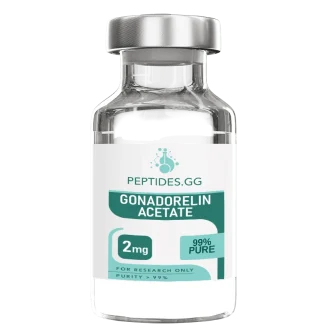
Gonadorelin Acetate
$40.00 Select options This product has multiple variants. The options may be chosen on the product pageSize: 2mg
-
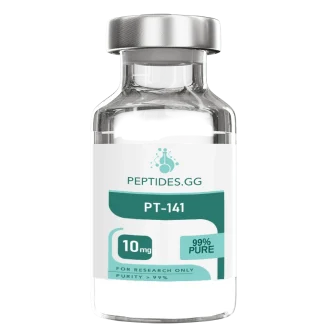
PT-141
$30.00 Select options This product has multiple variants. The options may be chosen on the product pageSize: 10mg
-
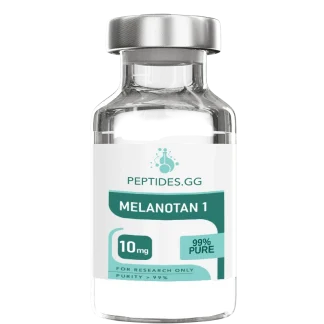
Melanotan 1
$40.00 Select options This product has multiple variants. The options may be chosen on the product pageSize: 10mg
Certificate of Analysis
Third-party tested · Independent analytical lab
| Tested | Measured | Purity |
|---|---|---|
| Jul 2026 | 11.12mg | 99.89% |
| Jun 2026 | 11.08mg | 99.58% |
| May 2026 | 11.22mg | 99.85% |
| May 2026 | 11.30mg | 99.86% |
| Apr 2026 | 11.66mg | 99.89% |
| Feb 2026 | 12.32mg | 99.51% |
| Jan 2026 | 11.27mg | 99.82% |
Research Overview
The Melanotan 2 peptide (Melanotan II) serves as a valuable research tool for investigating melanocortin receptor systems and their diverse physiological roles. This synthetic peptide analog was developed to overcome the limitations of natural α-MSH, including poor enzymatic stability and short half-life. Appetite regulation research also employs Semaglutide and Tesofensine, which suppress food intake through GLP-1 receptor and monoamine reuptake mechanisms respectively. Research applications span pigmentation biology, energy homeostasis, sexual function pathways, and feeding behavior regulation across multiple experimental models. Melanocortin receptor research positions MT-2 alongside PT-141, a more selective MC-4R agonist for sexual function studies, and Melanotan 2 in comparative receptor binding studies across the melanocortin receptor family.
The peptide’s designation derives from its melanotropic (melanin-stimulating) properties observed in early research. MT-2 demonstrates significantly enhanced potency and stability compared to endogenous α-MSH, achieved through cyclization and strategic amino acid modifications including norleucine (Nle) substitution and D-phenylalanine incorporation. These structural modifications prevent enzymatic degradation while maintaining receptor binding affinity.
MT-2 research encompasses investigations into melanocortin receptor subtypes (MC1R through MC5R), their tissue distribution, signaling pathways, and physiological functions. The peptide’s non-selective receptor activation profile allows researchers to study multiple melanocortin pathways simultaneously or investigate receptor-specific effects through comparative studies with selective agonists.
Molecular Characteristics
Complete Specifications:
- CAS Registry Number: 121062-08-6
- Molecular Weight: 1,024.24 Da
- Molecular Formula: C₅₀H₆₉N₁₅O₉
- Amino Acid Sequence: Ac-Nle-cyclo[Asp-His-D-Phe-Arg-Trp-Lys]-NH₂
- PubChem CID: 92432
- Peptide Classification: Synthetic cyclic heptapeptide, melanocortin receptor agonist
- Appearance: White to off-white lyophilized powder
- Solubility: Water, bacteriostatic water, dimethyl sulfoxide (DMSO)
The peptide’s cyclic structure forms through lactam bridge formation between the aspartic acid side chain and lysine epsilon-amino group, creating a constrained seven-membered ring. This cyclization restricts conformational flexibility while protecting terminal ends from exopeptidase degradation. The D-phenylalanine at position 7 provides additional enzymatic resistance and influences receptor binding characteristics.
Pharmacokinetic Profile in Research Models
MT-2 pharmacokinetic characterization in preclinical research reveals important properties for experimental design:
Absorption and Bioavailability:
- Subcutaneous bioavailability: Enhanced compared to linear α-MSH analogs
- Demonstrates improved stability against peptidase degradation
- Multiple administration routes investigated: SC, IV, intranasal
- Gradual absorption profile following subcutaneous administration
Distribution and Elimination:
- Plasma half-life: Approximately 33 minutes in rodent models
- Extended biological activity beyond plasma presence
- Blood-brain barrier penetration demonstrated in research studies
- Tissue distribution includes skin, brain, and adipose tissue
Pharmacodynamic Characteristics:
- Duration of melanotropic effects: 8-48 hours post-administration in research models
- concentration-dependent receptor activation across MC receptor subtypes
- Receptor binding affinity: High nanomolar to low micromolar range
- Sustained biological effects despite relatively short plasma half-life
These pharmacokinetic properties inform research protocol design, particularly regarding administration schedules and timing of outcome measurements in experimental models.
Research Applications
Melanocortin Receptor Pharmacology Studies
MT-2 serves as a research tool for investigating melanocortin receptor systems:
- Receptor Binding Studies: Investigation of ligand-receptor interactions, binding affinities, and receptor selectivity
- Signal Transduction Research: Analysis of cAMP generation, MAPK pathway activation, and downstream signaling cascades
- Receptor Desensitization Studies: Examination of receptor internalization, recycling, and long-term signaling regulation
- Structure-Activity Relationship Research: Comparative studies with modified peptides to understand structural requirements for activity
- Receptor Distribution Mapping: Investigation of melanocortin receptor expression patterns across tissues and cell types
Research protocols employ receptor binding assays, cell-based functional assays, and tissue-specific expression studies to characterize MT-2’s melanocortin receptor pharmacology.
Pigmentation Biology Research
Given MT-2’s melanotropic properties, substantial research focuses on pigmentation mechanisms:
- Melanogenesis Studies: Investigation of melanin synthesis pathways, tyrosinase activation, and eumelanin production
- Melanocyte Biology: Research on melanocyte proliferation, dendricity, and melanosome transfer mechanisms
- MC1R Signaling Research: Examination of MC1R-mediated cAMP signaling and transcription factor activation (MITF, CREB)
- Photoprotection Studies: Investigation of UV-independent pigmentation and DNA damage protection mechanisms
- Pigmentation Regulation: Analysis of factors modulating melanogenic responses to MC receptor activation
Laboratory studies utilize cultured melanocytes, skin explants, and pigmentation animal models to examine MT-2’s effects on melanogenesis and pigmentation biology.
Energy Homeostasis and Feeding Behavior Research
MT-2 research investigates melanocortin pathways in energy regulation:
- MC4R-Mediated Appetite Studies: Investigation of hypothalamic melanocortin system in feeding behavior regulation
- Energy Expenditure Research: Examination of metabolic rate, thermogenesis, and energy utilization pathways
- POMC Neuron Studies: Research on proopiomelanocortin neuronal circuits and appetite-regulating pathways
- Leptin Pathway Interactions: Investigation of melanocortin system integration with leptin signaling
- Body Weight Regulation: Studies examining long-term effects on body composition and metabolic parameters
Research protocols include feeding behavior assays, metabolic cage measurements, body composition analysis, and hypothalamic pathway investigations in rodent models.
Sexual Function and Reproductive Research
Research applications extend to reproductive physiology investigation:
- MC3R/MC4R Sexual Function Studies: Examination of melanocortin receptor roles in sexual behavior and arousal pathways
- Erectile Function Research: Investigation of penile erection mechanisms and neurovascular pathways
- Central Nervous System Effects: Studies on brain regions involved in sexual behavior and arousal
- Hormonal Pathway Research: Examination of testosterone, estrogen, and neuroendocrine interactions
- Mating Behavior Studies: Analysis of courtship behaviors and reproductive success in animal models
Laboratory protocols investigate sexual behavior endpoints, genital tissue responses, neural activation patterns, and endocrine measurements.
Metabolic and Cardiovascular Research
Emerging research areas include metabolic effects:
- Insulin Sensitivity Studies: Investigation of glucose metabolism and insulin signaling pathway modulation
- Cardiovascular Effects Research: Examination of blood pressure, heart rate, and vascular function
- Lipid Metabolism Studies: Research on fatty acid oxidation, lipolysis, and lipid handling
- Thermogenesis Research: Investigation of brown adipose tissue activation and energy expenditure
- Metabolic Syndrome Models: Studies examining effects in obesity, diabetes, and metabolic disorder models
Research in this area examines MT-2’s effects on metabolic parameters, glucose homeostasis, cardiovascular function, and energy balance mechanisms.
Laboratory Handling and Storage Protocols
Lyophilized Powder Storage:
- Store at -20°C to -80°C in original sealed vial
- Protect from light exposure (peptide is photosensitive)
- Desiccated storage environment required
- Stability data available for 12+ months at -20°C
Photosensitivity Considerations:
MT-2 demonstrates light sensitivity that can affect peptide stability. Store in amber vials or protect from light exposure. During experimental procedures, minimize light exposure time and use amber or foil-wrapped containers when possible.
Quality Assurance and Analytical Testing
The analytical methods below are those commonly used to characterize and verify the identity, purity, and quality of research compounds in this class:
Purity Analysis:
- High-Performance Liquid Chromatography (HPLC): ≥99% purity
- Analytical method: Reversed-phase HPLC with UV detection at 280nm
- Multiple peak integration to ensure accurate purity determination
Structural Verification:
- Electrospray Ionization Mass Spectrometry (ESI-MS): Confirms molecular weight 1,024.24 Da
- Amino acid analysis: Verifies sequence composition
- Peptide content determination: Quantifies actual peptide content by weight
Contaminant Testing:
- Bacterial endotoxin — Limulus amebocyte lysate (LAL) method
- Residual solvents: TFA and acetonitrile within acceptable limits
- Water content: Karl Fischer titration (<8%)
Documentation:
- Certificate of Analysis (COA) provided with each batch
- Third-party analytical verification available upon request
- Stability data documented for recommended storage conditions
- Batch-specific QC results traceable by lot number
Research Considerations
Experimental Design Factors:
Researchers should consider several factors when designing MT-2 experiments:
1. Concentration Selection: Determine appropriate concentrations based on receptor affinity data, experimental model, and research objectives. Published research reports concentration ranges from nanomolar to micromolar depending on application.
2. Receptor Selectivity: MT-2 activates multiple melanocortin receptor subtypes. Consider using selective agonists or antagonists for receptor-specific studies.
3. Temporal Dynamics: Account for both acute receptor activation and sustained biological effects in experimental timing and measurements.
4. Light Protection: Implement light protection protocols throughout experimental procedures due to peptide photosensitivity.
5. Control Groups: Include appropriate vehicle controls, receptor-specific controls, and comparative melanocortin peptides.
Mechanism Investigation:
MT-2’s mechanisms involve multiple receptor systems and downstream pathways:
- MC1R activation: cAMP signaling, MITF activation, melanogenesis
- MC3R/MC4R activation: Hypothalamic circuits, energy homeostasis, sexual function
- MC5R activation: Exocrine function, sebaceous gland regulation
- Secondary messenger systems: cAMP/PKA, MAPK pathways, calcium signaling
Careful experimental design helps isolate specific receptor-mediated effects and downstream pathway contributions.
Compliance and Safety Information
Regulatory Status:
Melanotan II is provided as a research chemical for in-vitro laboratory studies and preclinical research only. This product has not been approved by the FDA or any regulatory agency for human therapeutic use, cosmetic applications, or medical purposes.
Intended Use:
- In-vitro cell culture studies
- In-vivo preclinical research in approved animal models
- Laboratory investigation of melanocortin receptor pharmacology
- Academic and institutional research applications
NOT Intended For:
- Human consumption or administration
- Cosmetic or tanning applications
- Therapeutic treatment or diagnosis
- Dietary supplementation
- Veterinary therapeutic applications without appropriate oversight
Safety Protocols:
Researchers should follow standard laboratory safety practices when handling MT-2:
- Use appropriate personal protective equipment (lab coat, gloves, safety glasses)
- Handle in well-ventilated areas or fume hood
- Protect from light exposure during handling
- Follow institutional biosafety guidelines
- Dispose of waste according to local regulations for biological/chemical waste
- Consult material safety data sheet (MSDS) for additional safety information
—