
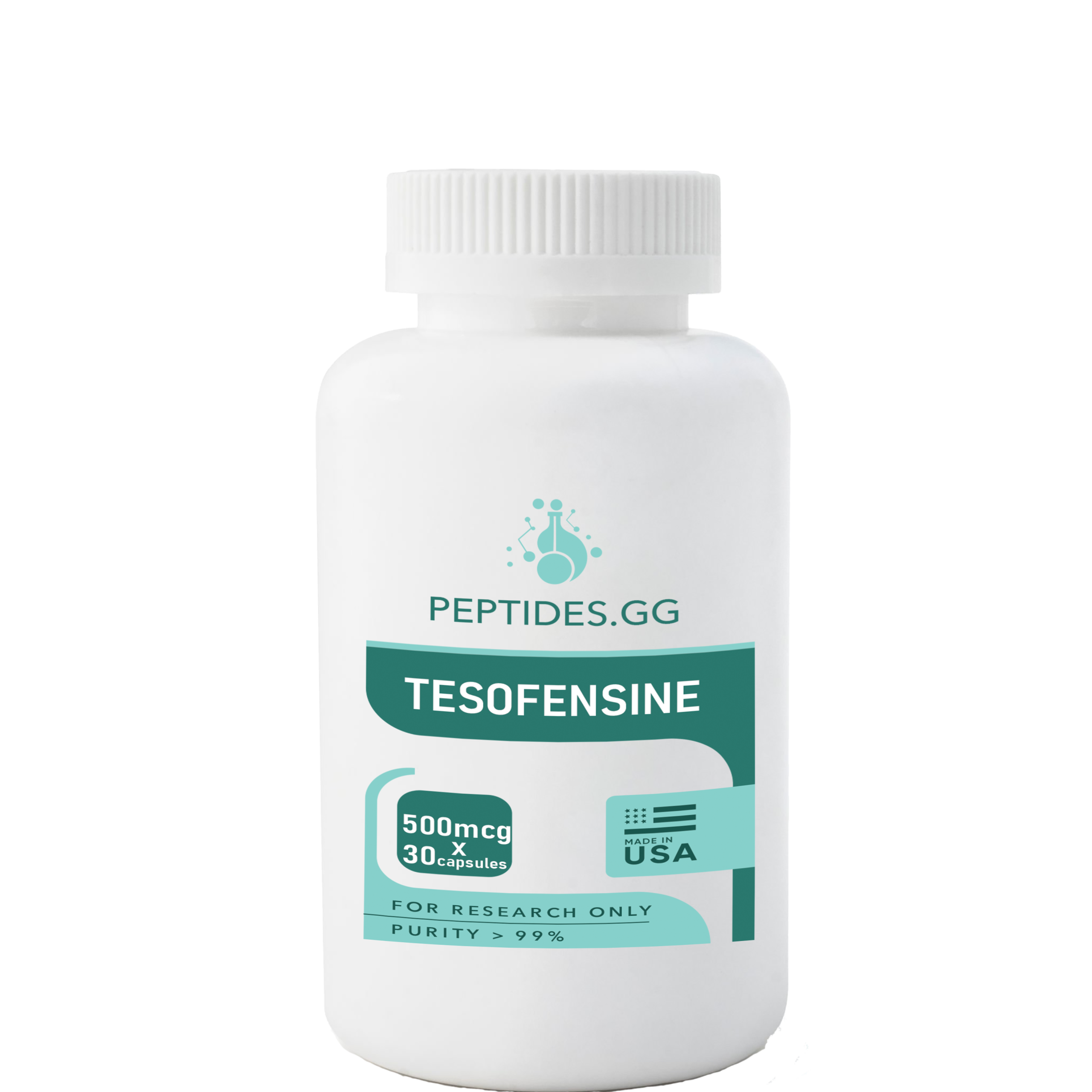
Tesofensine serves as an important research tool for investigating monoaminergic neurotransmission, metabolic regulation, and appetite control mechanisms in laboratory settings.
Research Disclaimer: Peptides.GG sells this and all other peptides for Research Only and not for human consumption.
Tesofensine
$155.00
- Free Delivery on all orders over $200
- Earn 5% Store Credit with Every Order
- Same Day Shipping Before 1 PM PST
- 10% Discount for Cryptocurrency Payments
14-day money-back guarantee
If you are not satisfied with the product, simply return it and we will refund your money
Tesofensine serves as an important research tool for investigating monoaminergic neurotransmission, metabolic regulation, and appetite control mechanisms in laboratory settings.
Research Disclaimer: Peptides.GG sells this and all other peptides for Research Only and not for human consumption.
Frequently Asked Questions About Tesofensine
Is tesofensine a peptide?
No. Tesofensine is a synthetic small-molecule compound, not a peptide. It is classified pharmacologically as a triple monoamine reuptake inhibitor (development code NS2330) that blocks the serotonin, norepinephrine, and dopamine transporters. Because it is a small molecule rather than an amino-acid chain, it differs structurally from the peptides in this catalog. It is supplied strictly as a research compound for laboratory use and is not for human consumption.
What is the molecular profile of tesofensine?
Tesofensine is a small molecule built on an 8-azabicyclo[3.2.1]octane (tropane) scaffold bearing a dichlorophenyl group, with CAS registry number 195875-84-4. Its free base has molecular formula C₁₇H₂₃Cl₂NO and a molecular weight of 328.28 Da; as the hydrochloride salt the molecular weight is 364.74 Da. It is supplied as a research-grade powder, verified at ≥99% purity by reversed-phase HPLC with identity confirmed by mass spectrometry.
How does tesofensine act in research models?
In laboratory research, tesofensine inhibits the reuptake of three monoamine neurotransmitters by blocking the serotonin transporter (SERT), the norepinephrine transporter (NET), and the dopamine transporter (DAT), which raises the synaptic availability of those neurotransmitters. This balanced action at all three monoamine transporter sites is the basis for its use as a tool compound in monoaminergic-neurotransmission research. These mechanisms are studied in cell-culture and animal models, not in humans.
What is tesofensine studied for in laboratory research?
In preclinical and in vitro research, tesofensine is used as a reference compound for investigating monoaminergic neurotransmission and the integrated effects of combined serotonin, norepinephrine, and dopamine signaling. Research applications include neurochemistry and transporter-occupancy studies, behavioral models of feeding and metabolic regulation, and comparative pharmacology against other monoamine-active compounds. Supplied for laboratory research use only; not for human consumption.
What is the reported half-life of tesofensine in research models?
Tesofensine is reported in research to have a long elimination half-life relative to many small molecules, contributing to sustained transporter occupancy in pharmacokinetic studies. Notable differences exist between species — rodent studies require more frequent administration than larger-animal models — so researchers account for species-specific kinetics when designing protocols. These are research-model observations and do not constitute human guidance.
What purity is tesofensine, and is it third-party tested?
Each batch of tesofensine is verified at ≥99% purity by reversed-phase HPLC, with identity confirmed by ESI-MS and APCI-MS against its molecular weight. The material is kept sealed and protected from light and moisture under cool, dry storage appropriate for a small-molecule compound. A Certificate of Analysis accompanies each batch, with third-party analytical verification available on request.
Research References
Peer-reviewed studies and database records underpinning the research described on this page. Links open on PubMed, PubMed Central, or the publisher in a new tab.
- Larsen MH, et al. Expression of brain derived neurotrophic factor, activity-regulated cytoskeleton protein mRNA, and enhancement of adult hippocampal neurogenesis in rats after sub-chronic and chronic treatment with the triple monoamine re-uptake inhibitor tesofensine. Eur J Pharmacol. 2007. PMID: 17112503 →
- Hansen HH, et al. The novel triple monoamine reuptake inhibitor tesofensine induces sustained weight loss and improves glycemic control in the diet-induced obese rat: comparison to sibutramine and rimonabant. Eur J Pharmacol. 2010. PMID: 20385125 →
- Hansen HH, et al. Tesofensine induces appetite suppression and weight loss with reversal of low forebrain dopamine levels in the diet-induced obese rat. Pharmacol Biochem Behav. 2013. PMID: 23932919 →
- van de Giessen E, et al. Triple monoamine inhibitor tesofensine decreases food intake, body weight, and striatal dopamine D2/D3 receptor availability in diet-induced obese rats. Eur Neuropsychopharmacol. 2012. PMID: 21889317 →
- Astrup A, et al. Effect of tesofensine on bodyweight loss, body composition, and quality of life in obese patients: a randomised, double-blind, placebo-controlled trial. Lancet. 2008. PMID: 18950853 →
- Hauser RA, et al. Randomized trial of the triple monoamine reuptake inhibitor NS 2330 (tesofensine) in early Parkinson's disease. Mov Disord. 2007. PMID: 17149725 →
- Rascol O, et al. Tesofensine (NS 2330), a monoamine reuptake inhibitor, in patients with advanced Parkinson disease and motor fluctuations: the ADVANS Study. Arch Neurol. 2008. PMID: 18474731 →
- Appel L, et al. Tesofensine, a novel triple monoamine re-uptake inhibitor with anti-obesity effects: dopamine transporter occupancy as measured by PET. Eur Neuropsychopharmacol. 2014. PMID: 24239329 →
- Lehr T, et al. Population pharmacokinetic modelling of NS2330 (tesofensine) and its major metabolite in patients with Alzheimer's disease. Br J Clin Pharmacol. 2007. PMID: 17324246 →
Related products
-

SLU-PP-332
Sale!$89.99 – $799.00 Select options This product has multiple variants. The options may be chosen on the product pageSize: 1mg/ML 30 ML, .5mg/ML 30 ML, 1mg x 30 Capsules, 100mg x 30 Capsules, 100mg x 120 Capsules
-
Aicar
$50.00 Select options This product has multiple variants. The options may be chosen on the product pageSize: 50mg
-
L-Carnitine
$35.00 – $200.00 Select options This product has multiple variants. The options may be chosen on the product pageSize: 400mg/ml, 600mg/ml, 5 Pack - 600mg
Research Overview
Tesofensine serves as an important research tool for investigating monoaminergic neurotransmission, metabolic regulation, and appetite control mechanisms in laboratory settings. This compound was originally synthesized and characterized as a potential treatment for Alzheimer’s disease and Parkinson’s disease, targeting multiple neurotransmitter systems implicated in neurodegeneration. During clinical investigation for neurodegenerative conditions, researchers observed significant effects on body weight and appetite regulation, redirecting research focus toward metabolic and weight management mechanism investigation. Metabolic weight regulation research employs diverse mechanisms including GLP-1 receptor agonists like Semaglutide and NNMT inhibitors such as 5-Amino-1MQ, which operate through entirely different pathways from Tesofensine’s monoamine reuptake approach.
The compound’s mechanism involves potent, non-selective inhibition of three major monoamine transporters: the serotonin transporter (SERT), norepinephrine transporter (NET), and dopamine transporter (DAT). Appetite regulation research also investigates Melanotan 2, which suppresses food intake through melanocortin-4 receptor agonism in the hypothalamus, representing a distinct neuroendocrine approach to energy balance modulation. By blocking these transporters, tesofensine increases synaptic concentrations of serotonin, norepinephrine, and dopamine throughout the central nervous system. This triple mechanism distinguishes tesofensine from selective serotonin reuptake inhibitors (SSRIs), serotonin-norepinephrine reuptake inhibitors (SNRIs), and other single- or dual-mechanism compounds.
Research applications have expanded to encompass appetite regulation studies, energy expenditure investigation, metabolic rate modulation research, body weight control mechanism analysis, and reward pathway studies. Laboratory protocols utilize tesofensine to examine the integrated effects of monoaminergic system activation on feeding behavior, satiety signaling, thermogenesis, locomotor activity, and metabolic homeostasis in various experimental models.
Molecular Characteristics
Complete Specifications:
- Chemical Name: (1R,2S,3S,5S)-3-(3,4-dichlorophenyl)-2-(ethoxymethyl)-8-azabicyclo[3.2.1]octane
- CAS Registry Number: 195875-84-4
- Molecular Weight: 364.74 Da (as hydrochloride salt); 328.28 Da (free base)
- Molecular Formula: C₁₇H₂₃Cl₂NO·HCl (hydrochloride salt); C₁₇H₂₃Cl₂NO (free base)
- Chemical Classification: Tropane derivative, triple monoamine reuptake inhibitor
- Appearance: White to off-white crystalline powder
- Solubility: Water-soluble (as hydrochloride salt), DMSO, ethanol
- Melting Point: 190-194°C (hydrochloride salt)
Tesofensine’s molecular structure features a tropane-based bicyclic ring system with an 8-azabicyclo[3.2.1]octane core, similar to cocaine’s basic structure. The 3,4-dichlorophenyl substituent at position 3 and the ethoxymethyl group at position 2 contribute to the compound’s pharmacological profile and receptor binding characteristics. The specific stereochemistry (1R,2S,3S,5S) is critical for biological activity, as different stereoisomers exhibit varying potencies at monoamine transporters.
The tropane scaffold provides structural rigidity that positions pharmacophoric elements for optimal interaction with monoamine transporter binding sites. The dichlorophenyl group enhances lipophilicity and binding affinity, while the ethoxymethyl substituent modulates selectivity across the three transporter subtypes.
Pharmacological Profile
Monoamine Transporter Inhibition:
Tesofensine demonstrates potent inhibition across all three monoamine transporters with the following IC₅₀ values (human transporters):
- Norepinephrine Transporter (NET): 1.8 nM (most potent)
- Serotonin Transporter (SERT): 6.0 nM
- Dopamine Transporter (DAT): 8.5 nM
This relatively balanced inhibition profile distinguishes tesofensine from other reuptake inhibitors. For comparison, most antidepressants show >100-fold selectivity for one transporter over others. The approximate 1:3:5 ratio (NET:SERT:DAT) provides simultaneous modulation of all three monoamine systems.
Neurotransmitter Elevation in Research Models:
Microdialysis studies in rodent models demonstrate tesofensine’s effects on extracellular neurotransmitter concentrations:
- Norepinephrine: Increased 300-400% above baseline
- Serotonin: Increased 200-300% above baseline
- Dopamine: Increased 150-250% above baseline
These elevations occur in multiple brain regions including hypothalamus, nucleus accumbens, prefrontal cortex, and striatum, reflecting widespread central nervous system penetration and transporter occupancy.
Receptor Affinity Profile:
Binding studies demonstrate tesofensine’s selectivity for monoamine transporters over other targets:
- Minimal activity at monoamine receptors (5-HT, adrenergic, dopamine receptors)
- No significant interaction with histamine receptors
- Minimal activity at ion channels and other CNS targets
- Ki values >10,000 nM for most off-target sites
This selectivity profile indicates that tesofensine’s effects derive primarily from transporter inhibition rather than direct receptor agonism or antagonism.
Pharmacokinetic Profile in Research Models
Absorption and Distribution:
- Oral bioavailability: Approximately 80-85% in rodent models
- Peak plasma concentrations: 2-4 hours following oral administration
- Volume of distribution: Large (>10 L/kg), indicating extensive tissue distribution
- Plasma protein binding: Approximately 98%
- Blood-brain barrier penetration: Excellent CNS penetration (brain:plasma ratio 5-10:1)
Metabolism and Elimination:
- Primary metabolism: Hepatic via CYP450 enzymes (mainly CYP2D6)
- Major metabolites: N-demethylated and hydroxylated derivatives (reduced activity)
- Plasma half-life: Approximately 8-10 hours in rodents, 5-6 days in humans
- Elimination route: Primarily renal excretion of metabolites
- Species differences: Significantly longer half-life in humans compared to rodent models
The extended half-life in humans enables once-daily administration in research protocols and maintains consistent transporter occupancy. Steady-state concentrations are achieved after approximately 2-3 weeks of repeated administration.
concentration-response Relationships:
Research studies demonstrate concentration-dependent effects on:
- Transporter occupancy (measured by PET imaging studies)
- Neurotransmitter elevation (microdialysis measurements)
- Behavioral outcomes (food intake, locomotor activity)
- Metabolic parameters (energy expenditure, respiratory quotient)
The steep concentration-response curve for behavioral and metabolic effects suggests threshold concentrations for clinically relevant transporter occupancy.
Research Applications
Metabolic and Weight Management Research
Tesofensine serves as a valuable research tool for investigating body weight regulation mechanisms:
Appetite and Food Intake Studies:
- Investigation of appetite suppression mechanisms through integrated monoaminergic signaling
- Research on satiety pathway activation and meal termination signals
- Studies examining food reward valuation and hedonic feeding behavior
- Analysis of homeostatic vs. hedonic feeding control systems
- Investigation of macronutrient selection and food preference modulation
Rodent studies demonstrate 15-30% reduction in food intake with consistent tesofensine administration, occurring without apparent signs of illness or stress. Food intake suppression appears mediated through both homeostatic (hypothalamic) and hedonic (mesolimbic) pathways.
Energy Expenditure Research:
- Examination of resting metabolic rate elevation mechanisms
- Investigation of thermogenesis activation in brown and beige adipose tissue
- Research on locomotor activity increases and spontaneous movement
- Studies on exercise capacity and endurance modulation
- Analysis of mitochondrial function and oxidative metabolism
Calorimetry studies in research models reveal 10-15% increases in total energy expenditure with tesofensine treatment, comprising both increased basal metabolic rate and enhanced physical activity.
Body Composition Studies:
- Investigation of fat mass reduction and lean mass preservation
- Research on adipocyte metabolism and lipolysis regulation
- Studies examining muscle protein synthesis and preservation
- Analysis of body fat distribution changes (visceral vs. subcutaneous)
- Investigation of weight loss maintenance mechanisms
Long-term studies in preclinical models demonstrate preferential fat mass reduction with relative preservation of lean tissue mass, differing from simple caloric restriction effects.
Neurotransmitter System Research
Monoaminergic Pathway Investigation:
- Comparative studies of single vs. multiple monoamine system activation
- Research on neurotransmitter interaction and co-release phenomena
- Investigation of presynaptic autoreceptor regulation
- Studies examining postsynaptic receptor sensitivity changes
- Analysis of compensatory adaptation mechanisms
Tesofensine enables investigation of integrated monoamine system function, contrasting with selective reuptake inhibitors that target individual neurotransmitter systems.
Hypothalamic Circuit Research:
- Investigation of arcuate nucleus neuronal populations (POMC, AgRP neurons)
- Research on paraventricular nucleus satiety signaling
- Studies examining lateral hypothalamic area feeding circuits
- Analysis of leptin and ghrelin signaling pathway modulation
- Investigation of melanocortin system activation
Electrophysiology and neurochemistry studies examine tesofensine’s effects on hypothalamic feeding circuits integrating peripheral metabolic signals with central appetite control mechanisms.
Reward Pathway Studies:
- Investigation of nucleus accumbens dopamine signaling in food reward
- Research on prefrontal cortex regulation of eating behavior
- Studies examining ventral tegmental area activity and motivation
- Analysis of food-related reward prediction and learning
- Investigation of hedonic vs. motivational components of feeding
Behavioral studies utilize tesofensine to dissect dopaminergic contributions to food reward valuation, motivation to obtain food, and hedonic aspects of eating.
Behavioral Research Applications
Locomotor Activity Studies:
- Investigation of spontaneous locomotor activity increases
- Research on dopaminergic modulation of movement initiation
- Studies examining fatigue resistance and endurance
- Analysis of motor coordination and fine motor control
- Investigation of activity patterns and circadian rhythm effects
Activity monitoring reveals concentration-dependent increases in spontaneous locomotor activity without stereotypic behaviors observed with pure dopamine releasers or amphetamines.
Cognitive Function Research:
- Investigation of attention and vigilance enhancement
- Research on working memory and executive function
- Studies examining decision-making and impulsivity
- Analysis of cognitive flexibility and set-shifting
- Investigation of learning and memory consolidation
Cognitive testing in research models examines monoaminergic contributions to various cognitive domains, with particular interest in prefrontal cortex-dependent functions.
Mood and Motivation Studies:
- Investigation of reward sensitivity and anhedonia models
- Research on behavioral activation and effort-based tasks
- Studies examining stress response and coping behaviors
- Analysis of social interaction and social reward
- Investigation of anxiety- and depression-related behaviors
Behavioral phenotyping assesses tesofensine’s effects across domains relevant to mood disorders, motivation deficits, and stress-related conditions.
Comparative Pharmacology Research
Drug Class Comparison Studies:
- Comparison with selective SSRIs (fluoxetine, sertraline)
- Research contrasting effects with SNRIs (venlafaxine, duloxetine)
- Studies comparing triple vs. dual reuptake inhibition
- Analysis versus amphetamine-type stimulants
- Investigation of differences from pure dopamine releasers
Comparative research characterizes the unique pharmacological profile created by balanced triple reuptake inhibition versus other monoaminergic mechanisms.
Mechanism of Action Studies:
- Investigation of transporter occupancy requirements for effects
- Research on time course of neurotransmitter elevation vs. behavioral changes
- Studies examining the necessity of multiple transporter targets
- Analysis of metabolite contributions to overall activity
- Investigation of tolerance development and receptor adaptation
These studies elucidate whether tesofensine’s effects require simultaneous inhibition of all three transporters or if individual components contribute differentially.
Neurodegenerative Disease Research
Parkinson’s Disease Models:
- Investigation of dopaminergic system support in degeneration models
- Research on motor symptom amelioration mechanisms
- Studies examining neuroprotection against dopaminergic neuron loss
- Analysis of L-DOPA combination effects
- Investigation of non-motor symptom modulation
Original research focus investigated tesofensine’s potential in Parkinson’s disease models, examining dopaminergic enhancement and potential disease-modifying effects.
Alzheimer’s Disease Research:
- Investigation of cholinergic and monoaminergic interaction
- Research on cognitive symptom amelioration
- Studies examining neuroinflammation modulation
- Analysis of behavioral and psychological symptoms
- Investigation of neuroprotective mechanisms
Early-phase research examined tesofensine in Alzheimer’s disease models, investigating effects on multiple neurotransmitter systems implicated in disease progression.
Laboratory Handling and Storage Protocols
Powder Storage:
- Store at -20°C to -80°C in original sealed container
- Protect from light exposure (amber vials recommended)
- Desiccated storage environment essential (hygroscopic compound)
- Stability data available for 24+ months at -20°C
- Allow to reach room temperature before opening to prevent condensation
Experimental Preparation:
- Determine appropriate vehicle for administration route
- For in vivo studies, common vehicles include sterile saline, 0.5% methylcellulose, or water
- For in vitro studies, DMSO stocks diluted into culture medium (<0.1% final DMSO)
- Prepare fresh working solutions on day of use when possible
- Account for salt form when calculating concentrations (HCl salt is 95.4% active free base)
Quality Assurance and Analytical Testing
Each tesofensine batch undergoes rigorous analytical characterization:
Purity Analysis:
- High-Performance Liquid Chromatography (HPLC): ≥99% purity
- Analytical method: Reversed-phase HPLC with UV detection at 254nm
- Multiple detection wavelengths for impurity profiling
- Gradient elution for comprehensive separation
Identity Verification:
- Nuclear Magnetic Resonance (NMR) spectroscopy: ¹H-NMR and ¹³C-NMR
- Mass Spectrometry: ESI-MS and APCI-MS confirming molecular weight
- Infrared Spectroscopy (IR): Fingerprint comparison to reference standard
- Melting point determination: Verification within specified range
Quantitative Analysis:
- Assay determination by HPLC with external standard calibration
- Typical assay: 98-102% of labeled amount
- Water content: Karl Fischer titration (<5% for hygroscopic salt)
- Residual solvents: GC-MS analysis per ICH guidelines
Contaminant Testing:
- Heavy metals: ICP-MS analysis, <20 ppm total
- Residual synthesis reagents: Below detection limits
- Related substances: Individual impurities <0.5%, total <2.0%
- Bacterial endotoxin: <50 EU/mg (if applicable)
Documentation:
- Certificate of Analysis (COA) provided with each batch
- Lot-specific analytical data
- Storage and handling recommendations
- Expiration date based on stability data
- Third-party verification available upon request
Research Considerations
Experimental Design Factors:
Researchers should consider multiple factors when designing tesofensine experiments:
1. Species Differences: Significant pharmacokinetic differences exist between species, particularly in elimination half-life. Rodent studies require more frequent administration than primate models to maintain steady-state concentrations.
2. concentration Selection: Published research employs broad concentration ranges depending on species, route, and endpoints. concentration-response studies are recommended to establish appropriate concentrations for specific research questions.
3. Time Course Considerations: Acute neurotransmitter elevation occurs within hours, but metabolic and behavioral effects may require days to weeks to fully develop. Distinguish acute vs. chronic treatment effects.
4. Vehicle and Route Selection: Oral administration shows high bioavailability; subcutaneous and intraperitoneal routes are common in rodent studies. Vehicle selection should not interfere with measurements of interest.
5. Control Groups: Include vehicle-treated controls, pair-fed controls (to distinguish pharmacological effects from caloric restriction), and positive controls with comparison compounds when appropriate.
Mechanism Investigation:
Multiple mechanisms contribute to tesofensine’s effects:
- Direct transporter inhibition increases synaptic neurotransmitter availability
- Noradrenergic effects on thermogenesis and metabolic rate
- Serotonergic effects on satiety and meal termination
- Dopaminergic effects on food reward and motivation
- Integrated effects on hypothalamic feeding circuits
- Peripheral effects on adipose tissue and metabolism
Experimental approaches to dissect individual contributions include:
- Selective antagonist co-administration to block specific receptor subtypes
- Comparison with selective reuptake inhibitors
- Receptor knockout models to eliminate specific pathways
- Regional CNS manipulations (intracranial microinjections)
- Temporal correlation of neurochemical vs. behavioral changes
Measurement Considerations:
Appropriate outcome measures depend on research objectives:
Behavioral Measurements:
- Food intake (meal patterns, macronutrient selection, feeding microstructure)
- Body weight and composition (DEXA, MRI, carcass analysis)
- Locomotor activity (automated monitoring, voluntary wheel running)
- Cognitive testing (attention, working memory, decision-making)
- Motivational tasks (progressive ratio, effort-based choice)
Neurochemical Measurements:
- Microdialysis for real-time neurotransmitter monitoring
- Tissue neurotransmitter content by HPLC
- Transporter occupancy by PET imaging or ex vivo binding
- Receptor expression and sensitivity changes
- Downstream signaling pathway activation
Metabolic Measurements:
- Indirect calorimetry (oxygen consumption, CO₂ production)
- Body temperature monitoring (core and peripheral)
- Respiratory quotient (fuel utilization)
- Plasma metabolite profiles (glucose, lipids, hormones)
- Adipose tissue biopsy and gene expression
Compliance and Safety Information
Regulatory Status:
Tesofensine is provided as a research chemical for in-vitro laboratory studies and preclinical research only. This compound has undergone clinical investigation but is not approved by FDA or EMA for therapeutic use, dietary supplementation, or medical applications.
Intended Use:
- In-vitro pharmacology and receptor studies
- In-vivo preclinical research in approved animal models
- Laboratory investigation of monoaminergic mechanisms
- Academic and institutional research applications
- Comparative pharmacology studies
NOT Intended For:
- Human consumption or self-administration
- Therapeutic treatment or diagnosis
- Dietary supplementation or weight loss products
- Veterinary therapeutic applications
- Any clinical or medical use
Safety Protocols:
Researchers should implement appropriate safety measures when handling tesofensine:
- Use personal protective equipment (lab coat, nitrile gloves, safety glasses)
- Handle in well-ventilated areas or chemical fume hood
- Avoid skin contact and inhalation of powder
- Follow institutional chemical safety guidelines
- Dispose of waste according to local regulations for pharmaceutical waste
- Consult Safety Data Sheet (SDS) for additional safety information
- Report any accidental exposure to institutional safety office
Controlled Substance Considerations:
While tesofensine itself is not scheduled as a controlled substance in most jurisdictions, researchers should verify local regulations. The compound’s mechanism and structure may be subject to analogue laws or research chemical regulations in some locations. Institutional oversight and appropriate documentation of research use are recommended.
—