
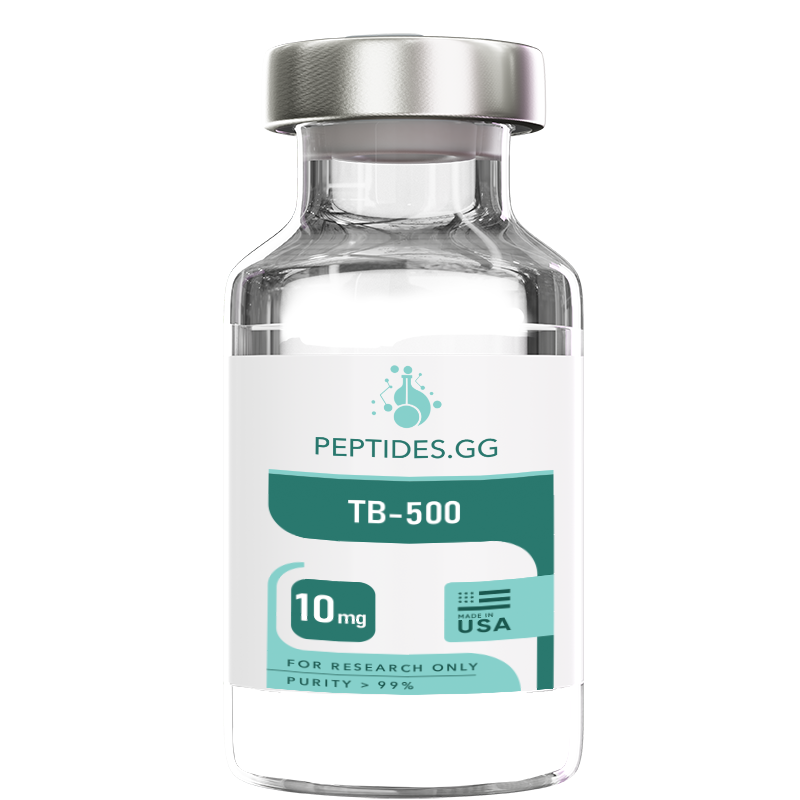
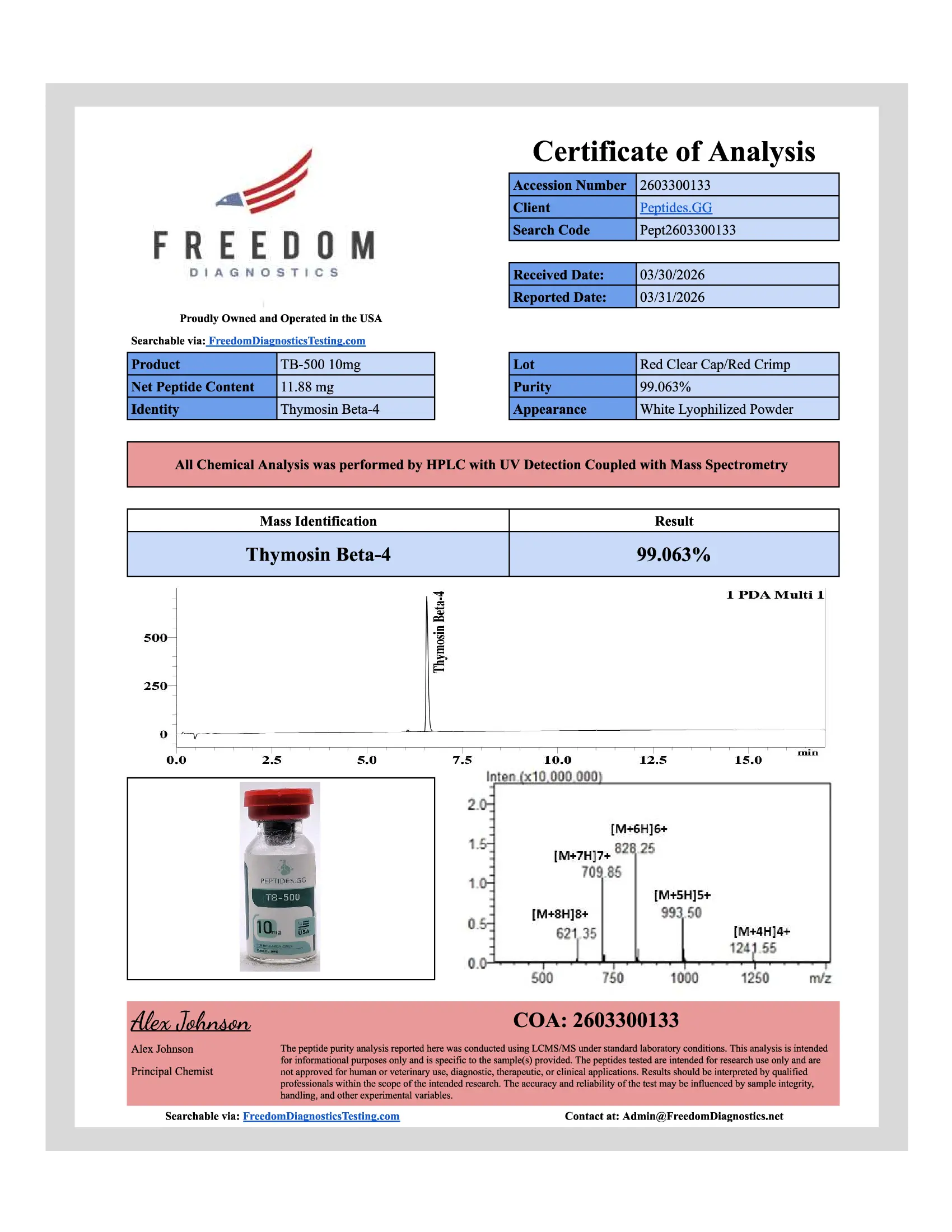
TB-500 (Thymosin Beta-4 fragment) is a synthetic peptide supplied as a lyophilized research chemical for in vitro laboratory investigation. Third-party lab tested for purity.
Peptides.GG is a chemical supplier and is not a compounding pharmacy under 503A or 503B. Statements have not been evaluated by the US FDA. Products are not intended to diagnose, treat, cure, or prevent any disease. For research use only — not for human consumption.
TB-500 Thymosin Beta-4
$65.00
- Free Delivery on all orders over $200
- Earn 5% Store Credit with Every Order
- Same Day Shipping Before 1 PM PST
- 10% Discount for Cryptocurrency Payments
14-day money-back guarantee
If you are not satisfied with the product, simply return it and we will refund your money
TB-500 (Thymosin Beta-4 fragment) is a synthetic peptide supplied as a lyophilized research chemical for in vitro laboratory investigation. Third-party lab tested for purity.
Peptides.GG is a chemical supplier and is not a compounding pharmacy under 503A or 503B. Statements have not been evaluated by the US FDA. Products are not intended to diagnose, treat, cure, or prevent any disease. For research use only — not for human consumption.
Frequently Asked Questions About TB-500 Thymosin Beta-4
Is TB-500 the same as thymosin beta-4?
TB-500 is the synthetic peptide form of thymosin beta-4 (Tβ4), representing the active region of this naturally occurring protein that is expressed across mammalian cell types. In research the two names are frequently used interchangeably. The material supplied here is a synthetic thymosin beta-4 analog of 43 amino acids (CAS 77591-33-4; molecular formula C₂₁₂H₃₅₀N₅₆O₇₈S; molecular weight 4,963.4 Da). Its defining structural feature is the conserved actin-binding domain — the LKKTET sequence — that mediates binding and sequestration of monomeric G-actin. It is supplied strictly as a research compound for laboratory use and is not for human consumption.
What is the molecular profile of TB-500?
TB-500 is a 43-amino acid peptide with the molecular formula C₂₁₂H₃₅₀N₅₆O₇₈S, a molecular weight of 4,963.4 Da, and CAS registry number 77591-33-4 (PubChem CID 16132341). The sequence contains a highly conserved central actin-binding domain (the LKKTET motif) critical for its interaction with G-actin, along with a single cysteine residue that can participate in disulfide formation under oxidizing conditions. It is supplied as a white to off-white lyophilized powder soluble in water, bacteriostatic water, and phosphate-buffered saline, with purity verified by HPLC at ≥98%.
How does TB-500 act in research models?
In laboratory research, the primary characterized mechanism of TB-500 is actin sequestration: it binds monomeric G-actin through its LKKTET domain and regulates the balance between G-actin and filamentous F-actin, influencing cytoskeletal dynamics. Published studies have linked this activity to downstream processes including cellular migration, angiogenesis, and extracellular-matrix remodeling, with reported involvement of VEGF and NF-κB signaling and upregulation of laminin-332. These mechanisms are investigated in cell-culture systems, tissue explants, and preclinical animal models — not in humans.
What is TB-500 studied for in laboratory research?
In preclinical and in vitro research, TB-500 is used as a tool to investigate fundamental mechanisms of tissue repair and cellular migration across several systems: wound-closure and re-epithelialization models, cardiovascular research (including cardiomyocyte survival and coronary angiogenesis), musculoskeletal studies (tendon, ligament, and skeletal-muscle injury models), and neurological research (neuronal survival and experimental neural-injury models). Typical protocols employ scratch and transwell migration assays, isolated-tissue preparations, and animal injury models characterized by histology, immunohistochemistry, and biomechanical testing. Supplied for laboratory research use only; not for human consumption.
How do TB-500 and BPC-157 compare in research?
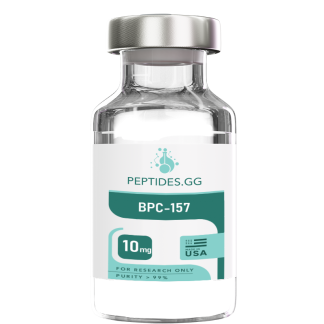
TB-500 and BPC-157 are frequently studied alongside one another as research tools for tissue-repair mechanisms, but they are structurally distinct and act through different pathways. TB-500 is the 43-amino acid active region of thymosin beta-4 and works primarily through actin sequestration and cytoskeletal regulation, whereas BPC-157 is a gastric-derived pentadecapeptide investigated for cytoprotective effects through complementary growth-factor and nitric-oxide pathway mechanisms. Because their proposed mechanisms differ, researchers sometimes compare or pair them in experimental models of cellular migration and repair. Both are supplied strictly for laboratory research use and are not for human consumption.
How is TB-500 stored and handled in the laboratory?
TB-500 is a white to off-white lyophilized powder that demonstrates good stability under proper storage. It is kept sealed and desiccated at -20°C to -80°C in the original sealed vial, protected from light and moisture, with stability data available for 24+ months at -20°C. For laboratory use it is soluble in water, bacteriostatic water, or phosphate-buffered saline, allowing preparation of research concentrations at the point of use. Each batch is third-party tested, with a Certificate of Analysis documenting identity and ≥98% HPLC purity alongside endotoxin and related quality parameters.
Research References
Peer-reviewed studies and database records underpinning the research described on this page. Links open on PubMed, PubMed Central, or the publisher in a new tab.
- Goldstein AL, Hannappel E, Kleinman HK. Thymosin beta4: actin-sequestering protein moonlights to repair injured tissues. Trends Mol Med. 2005. PMID: 16099219 →
- Goldstein AL, Hannappel E, Sosne G, et al. Thymosin β4: a multi-functional regenerative peptide. Basic properties and clinical applications. Expert Opin Biol Ther. 2012. PMID: 22074294 →
- Bock-Marquette I, Saxena A, White MD, et al. Thymosin beta4 activates integrin-linked kinase and promotes cardiac cell migration, survival and cardiac repair. Nature. 2004. PMID: 15565145 →
- Smart N, Risebro CA, Melville AA, et al. Thymosin beta4 induces adult epicardial progenitor mobilization and neovascularization. Nature. 2007. PMID: 17108969 →
- Malinda KM, Sidhu GS, Mani H, et al. Thymosin beta4 accelerates wound healing. J Invest Dermatol. 1999. PMID: 10469335 →
- Malinda KM, Goldstein AL, Kleinman HK. Thymosin beta 4 stimulates directional migration of human umbilical vein endothelial cells. FASEB J. 1997. PMID: 9194528 →
- Philp D, Huff T, Gho YS, et al. The actin binding site on thymosin beta4 promotes angiogenesis. FASEB J. 2003. PMID: 14500546 →
- Sosne G, Qiu P, Kurpakus-Wheater M. Thymosin beta 4: a novel corneal wound healing and anti-inflammatory agent. Clin Ophthalmol. 2007. PMID: 19668473 →
- Xiong Y, Mahmood A, Meng Y, et al. Neuroprotective and neurorestorative effects of thymosin β4 treatment following experimental traumatic brain injury. Ann N Y Acad Sci. 2012. PMID: 23050817 →
Related products
-

ARA-290
$50.00 Select options This product has multiple variants. The options may be chosen on the product pageSize: 10mg
-
BPC-157
$65.00 – $125.00 Select options This product has multiple variants. The options may be chosen on the product pageSize: 10mg, 20mg
-
BPC-157 Capsules
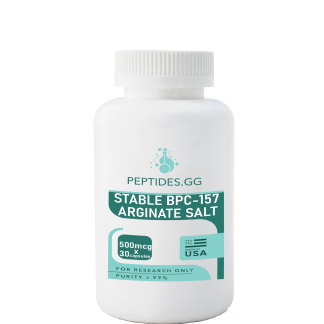
$170.00 Select options This product has multiple variants. The options may be chosen on the product pageSize: 500mcg x 60 capsules
Research Overview
TB-500 serves as a valuable research tool for investigating fundamental mechanisms of tissue repair, cellular migration, and wound healing in laboratory settings. This synthetic peptide represents the active region of thymosin beta-4, a protein originally isolated from thymus gland tissue and subsequently found to be ubiquitously expressed across mammalian cell types. Research applications have expanded to encompass investigations of cardiovascular repair, musculoskeletal healing, and neurological protection across multiple experimental models.
The peptide’s designation as thymosin beta-4 fragment reflects its origin as part of the thymosin family of proteins involved in immune function and tissue repair. Laboratory studies investigate TB-500’s effects on actin polymerization dynamics, cell migration pathways, extracellular matrix remodeling, and protective mechanisms against various forms of cellular injury. Research protocols examine these effects in cell culture systems, tissue explants, and preclinical animal models.
TB-500 research demonstrates the peptide’s remarkable biological activity through its primary mechanism as an actin-sequestering protein. This fundamental property influences numerous downstream cellular processes including migration, proliferation, differentiation, and survival. Studies have documented TB-500’s ability to promote blood vessel formation, modulate inflammation, reduce fibrosis, and enhance tissue regeneration across diverse experimental contexts. Tissue repair research frequently examines TB-500 alongside BPC-157, a gastric-derived pentadecapeptide that promotes healing through complementary growth factor and nitric oxide pathway mechanisms.
Molecular Characteristics
Complete Specifications:
- CAS Registry Number: 77591-33-4
- Molecular Weight: 4,963.4 Da
- Molecular Formula: C₂₁₂H₃₅₀N₅₆O₇₈S
- Amino Acid Count: 43 amino acids
- PubChem CID: 16132341
- Peptide Classification: Synthetic thymosin beta-4 analog
- Appearance: White to off-white lyophilized powder
- Solubility: Water, bacteriostatic water, phosphate buffered saline
The peptide’s 43-amino acid structure includes a highly conserved actin-binding domain located within the central region of the sequence. This domain (LKKTET sequence) is critical for TB-500’s ability to sequester G-actin and prevent its polymerization into F-actin filaments. The sequence includes both hydrophobic and hydrophilic regions that contribute to its solubility profile and cellular interactions. The presence of a single cysteine residue contributes to potential disulfide bond formation under oxidizing conditions.
Pharmacokinetic Profile in Research Models
TB-500 pharmacokinetic characterization in preclinical research reveals important properties for experimental design:
Absorption and Distribution:
- Multiple administration routes investigated: IV, IM, SC, IP
- Rapid absorption from subcutaneous and intramuscular sites
- Wide tissue distribution observed across organ systems
- Cellular uptake observed in various cell types in vitro
Metabolism and Elimination:
- Plasma half-life: Approximately 1-2 hours (human pharmacokinetic data); biological effects can persist longer via high-affinity actin binding and tissue retention
- Slower clearance compared to many peptides of similar size
- Potential intracellular accumulation and sustained activity
- Metabolic stability contributes to prolonged experimental window
These pharmacokinetic characteristics inform research protocol design, particularly regarding administration frequency and duration in experimental models. The prolonged tissue retention relative to the short plasma half-life is a consideration in experimental design, as biological activity can persist beyond plasma clearance.
Research Applications
Tissue Repair and Wound Healing Studies
TB-500 serves as a research tool for investigating fundamental wound healing mechanisms. Laboratory studies examine the peptide’s effects on:
- Cellular Migration Research: Investigation of directional cell movement, chemotaxis, and tissue infiltration during repair processes
- Wound Closure Studies: Analysis of re-epithelialization, wound contraction, and healing rate in various injury models
- Angiogenesis Investigation: Examination of blood vessel formation, endothelial cell sprouting, and vascular network development
- Extracellular Matrix Remodeling: Studies on matrix protein deposition, organization, and turnover during healing
- Inflammatory Modulation: Investigation of inflammatory cell recruitment and resolution during tissue repair
Research protocols typically employ scratch assays, transwell migration assays, and in vivo wound healing models to characterize TB-500’s effects on repair mechanisms.
Cardiovascular Research Applications
Substantial research focuses on cardiovascular tissue investigation:
- Cardiac Protection Studies: Investigation of cardioprotective mechanisms in ischemia-reperfusion models
- Cardiomyocyte Survival Research: Studies examining cardiac cell protection against various injury stimuli
- Coronary Angiogenesis: Research on coronary vessel formation and collateral circulation development
- Cardiac Remodeling Studies: Investigation of post-injury cardiac tissue remodeling and fibrosis
- Endothelial Function Research: Analysis of vascular endothelial cell function and integrity
Laboratory protocols investigate TB-500’s effects in cardiac cell cultures, isolated heart preparations, and animal models of cardiac injury including infarction and ischemia models. Vascular repair research also utilizes GHK-Cu, a copper-binding tripeptide that promotes endothelial cell function and extracellular matrix remodeling through distinct metalloprotein-mediated mechanisms.
Musculoskeletal Research Applications
Laboratory studies investigate TB-500 in musculoskeletal tissue research:
- Tendon and Ligament Research: Studies on connective tissue healing, collagen fiber organization, and biomechanical strength recovery
- Muscle Tissue Studies: Investigation of muscle fiber regeneration, satellite cell activation, and contractile function restoration
- Skeletal Muscle Injury Models: Research on crush injuries, laceration models, and contusion damage
- Ligament Healing Research: Examination of ligament repair processes, collagen alignment, and mechanical properties
- Tendinopathy Models: Studies investigating mechanisms of tendon pathology and repair
Experimental models include tendon injury models, muscle damage protocols, and ligament transection studies, with outcomes measured through histological analysis, immunohistochemistry, and biomechanical testing. Growth factor-mediated musculoskeletal repair is also investigated using IGF-1 LR3, which activates insulin-like growth factor receptor signaling for muscle and connective tissue anabolism.
Neurological and Neuroprotection Research
Research applications extend to nervous system investigation:
- Neuronal Survival Studies: Examination of neuronal protection mechanisms against excitotoxicity and oxidative stress
- Axonal Growth Research: Investigation of neurite outgrowth, axonal extension, and neural pathway development
- Spinal Cord Injury Models: Research on spinal cord tissue protection and functional recovery mechanisms
- Traumatic Brain Injury Studies: Examination of neuroprotective pathways in experimental TBI models
- Neural Stem Cell Research: Studies on neural progenitor cell migration, differentiation, and integration
Laboratory protocols investigate TB-500’s effects on neuronal cell cultures, organotypic brain slice cultures, and rodent models of neural injury.
Inflammatory Modulation Research
Emerging research areas include anti-inflammatory pathway investigation:
- Inflammatory Mediator Studies: Research on cytokine and chemokine expression modulation
- Immune Cell Migration: Investigation of immune cell recruitment and tissue infiltration patterns
- Resolution Phase Research: Studies examining inflammation resolution mechanisms and pro-resolving pathways
- Fibrosis Prevention: Research on excessive collagen deposition and scar tissue formation
- Macrophage Polarization: Investigation of macrophage phenotype switching during tissue repair
Research in this area examines TB-500’s effects on inflammatory cell signaling, cytokine production, and resolution pathway activation in various experimental models. Host defense and immune modulation research frequently employs LL-37, a cathelicidin-derived antimicrobial peptide with complementary immunomodulatory and tissue repair properties.
Laboratory Handling and Storage Protocols
Lyophilized Powder Storage:
- Store at -20°C to -80°C in original sealed vial
- Protect from light exposure and moisture
- Desiccated storage environment recommended
- Stability data available for 24+ months at -20°C
Stability Considerations:
TB-500 demonstrates good stability as a lyophilized powder under proper storage conditions.
Quality Assurance and Analytical Testing
Each TB-500 batch undergoes comprehensive analytical characterization:
Purity Analysis:
- High-Performance Liquid Chromatography (HPLC): ≥99% purity
- Analytical method: Reversed-phase HPLC with UV detection at 214nm
- Multiple peak integration to ensure accurate purity determination
Structural Verification:
- Electrospray Ionization Mass Spectrometry (ESI-MS): Confirms molecular weight 4,963.4 Da
- Amino acid analysis: Verifies sequence composition
- Peptide content determination: Quantifies actual peptide content by weight
Contaminant Testing:
- Bacterial endotoxin: <5 EU/mg (LAL method)
- Heavy metals: Below detection limits per USP standards
- Residual solvents: TFA and acetonitrile within acceptable limits
- Water content: Karl Fischer titration (<8%)
Documentation:
- Certificate of Analysis (COA) provided with each batch
- Third-party analytical verification available upon request
- Stability data documented for recommended storage conditions
- Batch-specific QC results traceable by lot number
Research Considerations
Experimental Design Factors:
Researchers should consider several factors when designing TB-500 experiments:
1. Concentration Selection: Determine appropriate concentrations based on research objectives and experimental model. Published research reports ranges from nanomolar to micromolar concentrations depending on application.
2. Temporal Considerations: TB-500’s short plasma half-life alongside prolonged tissue/actin-bound retention should inform the timing of measurements relative to administration.
3. Route Considerations: Multiple administration routes show efficacy in research models. Subcutaneous and intraperitoneal routes are commonly used in animal studies.
4. Model Selection: Choose appropriate cell culture systems, tissue explants, or animal models based on specific research questions.
5. Control Groups: Include appropriate vehicle controls, positive controls (where applicable), and comparative compounds.
Mechanism Investigation:
TB-500’s mechanisms of action have been extensively investigated. Primary pathways include:
- Actin sequestration and cytoskeletal dynamics regulation
- PINCH-ILK-α-parvin complex interactions
- VEGF pathway modulation and angiogenesis promotion
- NF-κB signaling pathway modulation
- Laminin-332 upregulation and cell migration enhancement
The peptide’s well-characterized actin-binding mechanism provides a foundation for investigating downstream cellular effects.
Compliance and Safety Information
Regulatory Status:
TB-500 is provided as a research chemical for in-vitro laboratory studies and preclinical research only. This product has not been approved by the FDA for human therapeutic use, dietary supplementation, or medical applications.
Intended Use:
- In-vitro cell culture studies
- In-vivo preclinical research in approved animal models
- Laboratory investigation of biological mechanisms
- Academic and institutional research applications
NOT Intended For:
- Human consumption or administration
- Therapeutic treatment or diagnosis
- Dietary supplementation
- Veterinary therapeutic applications without appropriate oversight
Safety Protocols:
Researchers should follow standard laboratory safety practices when handling TB-500:
- Use appropriate personal protective equipment (lab coat, gloves, safety glasses)
- Handle in well-ventilated areas or fume hood
- Follow institutional biosafety guidelines
- Dispose of waste according to local regulations for biological/chemical waste
- Consult material safety data sheet (MSDS) for additional safety information
—