
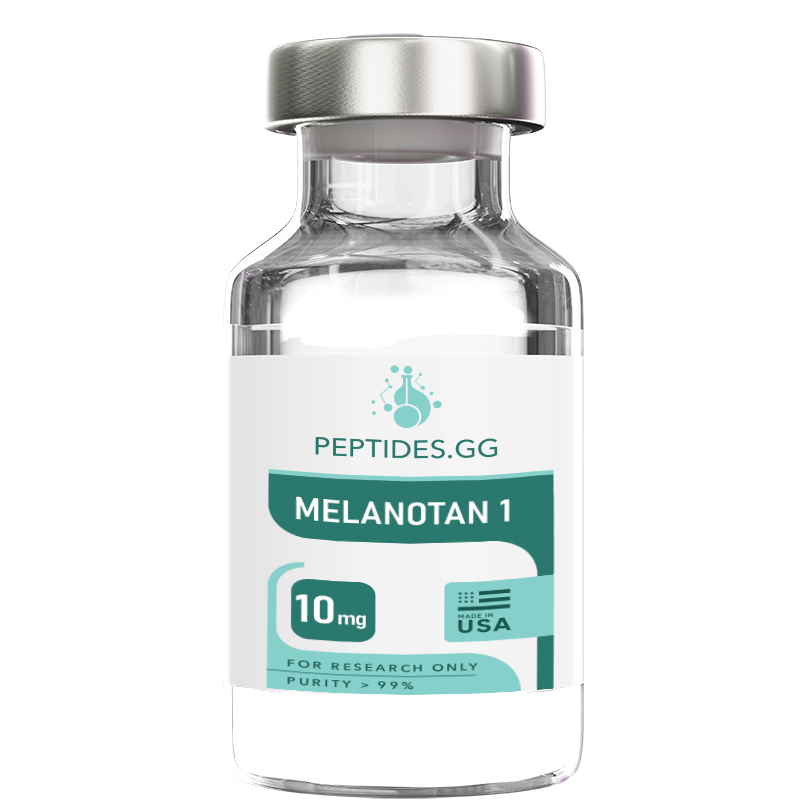
Melanotan I serves as a valuable research tool for investigating MC1R-mediated melanogenesis and pigmentation mechanisms.
Research Disclaimer: Peptides.GG sells this and all other peptides for Research Only and not for human consumption.
Melanotan 1
$40.00
- Free Delivery on all orders over $200
- Earn 5% Store Credit with Every Order
- Same Day Shipping Before 1 PM PST
- 10% Discount for Cryptocurrency Payments
14-day money-back guarantee
If you are not satisfied with the product, simply return it and we will refund your money

Melanotan I serves as a valuable research tool for investigating MC1R-mediated melanogenesis and pigmentation mechanisms.
Research Disclaimer: Peptides.GG sells this and all other peptides for Research Only and not for human consumption.
Frequently Asked Questions About Melanotan 1
What is melanotan-1?
Melanotan-1 is a synthetic linear tridecapeptide analog of alpha-melanocyte-stimulating hormone (α-MSH), studied as a research tool for melanocortin-receptor pharmacology. It is a non-selective melanocortin agonist with predominant potency at the melanocortin-1 receptor (MC1R), making it a model compound for investigating MC1R signaling and melanocyte biology in experimental systems. It is supplied strictly as a research compound for laboratory use and is not for human consumption.
Is melanotan-1 the same as afamelanotide or NDP-α-MSH?
Yes — "melanotan-1," "afamelanotide," and "NDP-α-MSH" are names for the same molecule, the superpotent α-MSH analog [Nle4-D-Phe7]-α-MSH. The substitutions of norleucine at position 4 and D-phenylalanine at position 7 distinguish it from native α-MSH. It is a distinct compound from melanotan-2, which is a shorter cyclic peptide. The material supplied here is provided strictly as a research chemical, not as a pharmaceutical preparation.
What is the molecular profile of melanotan-1?
Melanotan-1 is a tridecapeptide with molecular formula C₇₈H₁₁₁N₂₁O₁₉, a molecular weight of 1,646.84 Da, and CAS registry number 75921-69-6. The norleucine-4 and D-phenylalanine-7 substitutions that define the analog increase its resistance to enzymatic breakdown and its receptor potency relative to native α-MSH. It is supplied as a white to off-white lyophilized powder, soluble in water and bacteriostatic water, and verified at ≥99% purity by reversed-phase HPLC.
How does melanotan-1 act in research models?
In laboratory research, melanotan-1 binds the melanocortin receptors — with predominant activity at MC1R — and activates adenylyl-cyclase / cAMP signaling. In melanocyte cell models, MC1R activation is studied for its role in the eumelanin-synthesis pathway, and the compound is also used to probe the broader melanocortin-receptor family (including MC4R). These mechanisms are investigated in cell-culture and animal models, not in humans.
What is the reported duration of activity of melanotan-1 in research models?
Native α-MSH is degraded rapidly, which limits its use in research. The norleucine-4 and D-phenylalanine-7 substitutions in melanotan-1 were specifically designed to resist that breakdown, and the foundational pharmacology described the analog as having markedly prolonged, "ultralong" biological activity relative to native α-MSH. This extended-activity profile is a defining feature studied in receptor-pharmacology research. These are research-model observations and do not constitute human guidance.
What purity is melanotan-1, and is it third-party tested?
Each batch of melanotan-1 is verified at ≥99% purity by reversed-phase HPLC, with identity confirmed by electrospray-ionization mass spectrometry against its 1,646.84 Da molecular weight and amino-acid analysis. The lyophilized powder is kept sealed and desiccated at -20°C to -80°C, protected from light and moisture, with stability data available for 24+ months at -20°C. A Certificate of Analysis accompanies each batch, with third-party analytical verification available on request.
Research References
Peer-reviewed studies and database records underpinning the research described on this page. Links open on PubMed, PubMed Central, or the publisher in a new tab.
- Sawyer TK, et al. 4-Norleucine, 7-D-phenylalanine-alpha-melanocyte-stimulating hormone: a highly potent alpha-melanotropin with ultralong biological activity. Proc Natl Acad Sci U S A. 1980. PMID: 6777774 →
- Hruby VJ, et al. Synthesis and structure-function studies of melanocyte stimulating hormone analogues modified in the 2 and 4(7) positions: comparison of activities on frog skin melanophores and melanoma adenylate cyclase. J Med Chem. 1980. PMID: 7452698 →
- Mountjoy KG, et al. The cloning of a family of genes that encode the melanocortin receptors. Science. 1992. PMID: 1325670 →
- García-Borrón JC, et al. Melanocortin-1 receptor structure and functional regulation. Pigment Cell Res. 2005. PMID: 16280005 →
- Wolf Horrell EM, et al. Melanocortin 1 Receptor: Structure, Function, and Regulation. Front Genet. 2016. PMID: 27303435 →
- Valverde P, et al. Variants of the melanocyte-stimulating hormone receptor gene are associated with red hair and fair skin in humans. Nat Genet. 1995. PMID: 7581459 →
- Langendonk JG, et al. Afamelanotide for Erythropoietic Protoporphyria. N Engl J Med. 2015. PMID: 26132941 →
- Biolcati G, et al. Long-term observational study of afamelanotide in 115 patients with erythropoietic protoporphyria. Br J Dermatol. 2015. PMID: 25494545 →
- Kim ES, et al. Afamelanotide: A Review in Erythropoietic Protoporphyria. Am J Clin Dermatol. 2016. PMID: 26979527 →
Related products
-

Oxytocin
$50.00 Select options This product has multiple variants. The options may be chosen on the product pageSize: 10mg
-
Gonadorelin Acetate
$40.00 Select options This product has multiple variants. The options may be chosen on the product pageSize: 2mg
-
PT-141
$30.00 Select options This product has multiple variants. The options may be chosen on the product pageSize: 10mg
Research Overview
Melanotan I serves as a valuable research tool for investigating MC1R-mediated melanogenesis and pigmentation mechanisms. This synthetic peptide analog was developed as a more stable, longer-acting version of natural α-MSH with enhanced MC1R selectivity compared to broader-spectrum melanocortin agonists. Research applications focus primarily on melanocyte biology, pigmentation pathways, and photoprotection mechanisms. For anti-inflammatory skin research, the tripeptide KPV provides a complementary melanocortin-derived research tool.
The peptide’s designation as Afamelanotide in clinical research contexts reflects its development for investigating photoprotection and pigmentation disorders. Melanotan I is a potent agonist across the melanocortin receptor family (MC1R, MC3R, MC4R, MC5R), with MC1R being its most extensively studied target in melanocyte and pigmentation research models. It is most potent at MC1R but is not receptor-selective.
Melanotan I research has contributed significantly to understanding melanocortin receptor biology, particularly MC1R signaling pathways in melanocytes, photoprotection mechanisms, and pigmentation regulation. The peptide’s linear structure distinguishes it from cyclic analogs like Melanotan II, providing complementary research tools for melanocortin system investigation.
Molecular Characteristics
Complete Specifications:
- CAS Registry Number: 75921-69-6
- Molecular Weight: 1,646.84 Da
- Molecular Formula: C₇₈H₁₁₁N₂₁O₁₉
- Amino Acid Sequence: Ac-Ser-Tyr-Ser-Nle-Glu-His-D-Phe-Arg-Trp-Gly-Lys-Pro-Val-NH₂
- PubChem CID: 16132268
- Peptide Classification: Synthetic linear tridecapeptide, non-selective melanocortin agonist (predominant MC1R potency)
- Appearance: White to off-white lyophilized powder
- Solubility: Water, bacteriostatic water, phosphate buffered saline
The peptide’s 13-amino acid linear structure closely resembles natural α-MSH (Ac-Ser-Tyr-Ser-Met-Glu-His-Phe-Arg-Trp-Gly-Lys-Pro-Val-NH₂) with two critical modifications: norleucine (Nle) substitution at position 4 replacing methionine, and D-phenylalanine at position 7 replacing L-phenylalanine. The Nle substitution prevents methionine oxidation, while D-Phe provides enzymatic resistance and enhanced stability.
Pharmacokinetic Profile in Research Models
Melanotan I pharmacokinetic characterization in preclinical research reveals important properties for experimental design:
Absorption and Bioavailability:
- Subcutaneous administration provides sustained absorption profile
- Enhanced stability against peptidase degradation compared to native α-MSH
- Multiple administration routes investigated: SC, IV, intradermal
- Depot effect observed with SC administration in research models
Distribution and Elimination:
- Plasma half-life: Approximately 30-45 minutes in rodent models
- Extended biological activity (12-72 hours) despite relatively short plasma presence
- Tissue distribution primarily to skin and melanocytes
- Gradual clearance allows for less frequent administration in research protocols
Pharmacodynamic Characteristics:
- Duration of melanogenic effects: 24-72 hours post-administration
- concentration-dependent MC1R activation and melanin synthesis
- MC1R binding affinity: Nanomolar range
- Sustained pigmentation effects in research models
These pharmacokinetic properties inform research protocol design, particularly regarding administration intervals and timing of pigmentation measurements in experimental studies.
Research Applications
Melanogenesis and Pigmentation Biology Research
Melanotan I serves as the primary research tool for investigating MC1R-mediated melanogenesis:
- Melanin Synthesis Studies: Investigation of eumelanin production pathways, tyrosinase activation, and melanogenic enzyme regulation
- MC1R Signaling Research: Analysis of cAMP/PKA pathway activation, MITF (microphthalmia-associated transcription factor) regulation, and melanogenic gene expression
- Melanocyte Biology: Studies on melanocyte proliferation, dendricity, melanosome maturation, and melanosome transfer to keratinocytes
- Pigmentation Kinetics: Investigation of pigmentation development time course, concentration-response relationships, and pigmentation maintenance
- Skin Phototype Research: Examination of pigmentation responses across different genetic backgrounds and baseline pigmentation levels
Research protocols employ cultured melanocytes, reconstructed skin models, and animal pigmentation models to characterize Melanotan I’s melanogenic effects.
Photoprotection Mechanism Studies
Research investigates Melanotan I’s effects on UV protection:
- UV-Independent Pigmentation: Studies on melanin production without UV exposure requirement
- DNA Damage Protection: Investigation of melanin-mediated protection against UV-induced DNA damage, thymine dimer formation, and oxidative stress
- Photoprotection Quantification: Research on SPF (sun protection factor) enhancement, minimal erythema dose (MED) changes, and UV tolerance
- Melanin Distribution Studies: Examination of supranuclear melanin cap formation and nuclear DNA protection
- Antioxidant Effects: Investigation of melanin’s free radical scavenging and oxidative damage prevention
Laboratory studies utilize UV irradiation models, DNA damage assays, and photoprotection measurement techniques to examine Melanotan I’s protective mechanisms.
MC1R Receptor Pharmacology
Melanotan I enables melanocortin-receptor (predominantly MC1R) research:
- Receptor Selectivity Studies: Investigation of MC1R vs. other melanocortin receptor binding and activation
- Structure-Activity Relationships: Comparative studies with α-MSH variants to understand MC1R binding requirements
- Receptor Signaling Pathways: Analysis of cAMP generation, MAPK activation, and downstream signaling cascades specific to MC1R
- Receptor Regulation: Studies on MC1R expression, internalization, desensitization, and recycling
- Genetic Variant Research: Investigation of MC1R polymorphisms and their effects on peptide responsiveness
Research protocols include receptor binding assays, functional cAMP assays, receptor transfection studies, and signaling pathway investigations.
Dermatological Research Applications
Research extends to various skin biology areas:
- Pigmentation Disorder Models: Investigation of pigmentation mechanisms relevant to conditions like vitiligo, albinism, and pigmentation abnormalities
- Skin Cancer Prevention Research: Studies on melanin-mediated photoprotection and UV-induced carcinogenesis prevention
- Photosensitivity Disorder Models: Research relevant to porphyria and other photosensitivity conditions
- Keratinocyte-Melanocyte Interactions: Investigation of cell-cell communication, melanosome transfer, and paracrine signaling
- Skin Aging Research: Studies on photoaging mechanisms and pigmentation changes
Laboratory models include organotypic skin cultures, co-culture systems, and various dermatological disease models.
Comparative Melanocortin Research
Melanotan I serves as comparison tool for melanocortin pharmacology:
- Receptor Subtype Selectivity: Comparative studies with non-selective agonists (MT-2) and other selective agonists
- Metabolic vs. Pigmentary Effects: Research distinguishing MC1R pigmentary effects from MC4R metabolic effects (investigated by MC4R-preferring compounds such as PT-141)
- Structure-Function Studies: Comparison of linear vs. cyclic melanocortin peptides
- Safety Profile Research: Investigation of receptor-specific vs. pleiotropic effects
- Therapeutic Window Studies: Research on efficacy vs. off-target effect concentrations
Laboratory Handling and Storage Protocols
Lyophilized Powder Storage:
- Store at -20°C to -80°C in original sealed vial
- Protect from light exposure (peptide is photosensitive)
- Desiccated storage environment required
- Stability data available for 24+ months at -20°C
Photosensitivity Considerations:
Melanotan I demonstrates light sensitivity. Store in amber vials or protect from light exposure. During experimental procedures, minimize light exposure and use light-protected containers.
Quality Assurance and Analytical Testing
Each Melanotan I batch undergoes comprehensive analytical characterization:
Purity Analysis:
- High-Performance Liquid Chromatography (HPLC): ≥99% purity
- Analytical method: Reversed-phase HPLC with UV detection at 280nm
- Multiple peak integration to ensure accurate purity determination
Structural Verification:
- Electrospray Ionization Mass Spectrometry (ESI-MS): Confirms molecular weight 1,646.84 Da
- Amino acid analysis: Verifies sequence composition
- Peptide content determination: Quantifies actual peptide content by weight
Contaminant Testing:
- Bacterial endotoxin: <5 EU/mg (LAL method)
- Heavy metals: Below detection limits per USP standards
- Residual solvents: TFA and acetonitrile within acceptable limits
- Water content: Karl Fischer titration (<8%)
- Oxidation products: Monitored for methionine oxidation (should be absent with Nle substitution)
Documentation:
- Certificate of Analysis (COA) provided with each batch
- Third-party analytical verification available upon request
- Stability data documented for recommended storage conditions
- Batch-specific QC results traceable by lot number
Research Considerations
Experimental Design Factors:
Researchers should consider several factors when designing Melanotan I experiments:
1. MC1R Selectivity: Melanotan I’s strong MC1R potency makes it a widely used tool for studying melanogenic signaling in melanocyte models, where MC1R is the predominant melanocortin receptor.
2. Concentration Selection: Determine appropriate concentrations based on MC1R binding affinity (nanomolar range) and experimental model. Typical research concentrations range from 1nM to 10μM depending on application.
3. Temporal Considerations: Pigmentation development requires time (hours to days). Design experiments with appropriate timing for melanin synthesis and measurement.
4. Baseline Pigmentation: Research outcomes may vary based on baseline melanin content and MC1R genotype. Consider genetic background in experimental design.
5. Light Protection: Implement light protection protocols throughout experimental procedures due to peptide photosensitivity.
Mechanism Investigation:
Melanotan I’s primary mechanism involves MC1R activation and downstream signaling:
- MC1R binding and activation
- Gs protein coupling and adenylyl cyclase activation
- cAMP generation and PKA activation
- CREB phosphorylation and MITF expression
- Melanogenic enzyme upregulation (tyrosinase, TRP-1, TRP-2)
- Eumelanin synthesis and melanosome maturation
Secondary effects include:
- Dendrite formation and melanosome transfer
- Melanocyte proliferation
- Antioxidant and DNA protective mechanisms
Compliance and Safety Information
Regulatory Status:
Melanotan I (Afamelanotide) is provided as a research chemical for in-vitro laboratory studies and preclinical research only. While clinical research has been conducted with this compound, this product is supplied for research purposes and has not been approved by the FDA for general therapeutic use, cosmetic applications, or over-the-counter use.
Intended Use:
- In-vitro cell culture studies
- In-vivo preclinical research in approved animal models
- Laboratory investigation of MC1R pharmacology and melanogenesis
- Academic and institutional research applications
NOT Intended For:
- Human consumption or administration
- Cosmetic or tanning applications
- Therapeutic treatment or diagnosis
- Dietary supplementation
- Veterinary therapeutic applications without appropriate oversight
Safety Protocols:
Researchers should follow standard laboratory safety practices when handling Melanotan I:
- Use appropriate personal protective equipment (lab coat, gloves, safety glasses)
- Handle in well-ventilated areas or fume hood
- Protect from light exposure during handling
- Follow institutional biosafety guidelines
- Dispose of waste according to local regulations for biological/chemical waste
- Consult material safety data sheet (MSDS) for additional safety information
—