

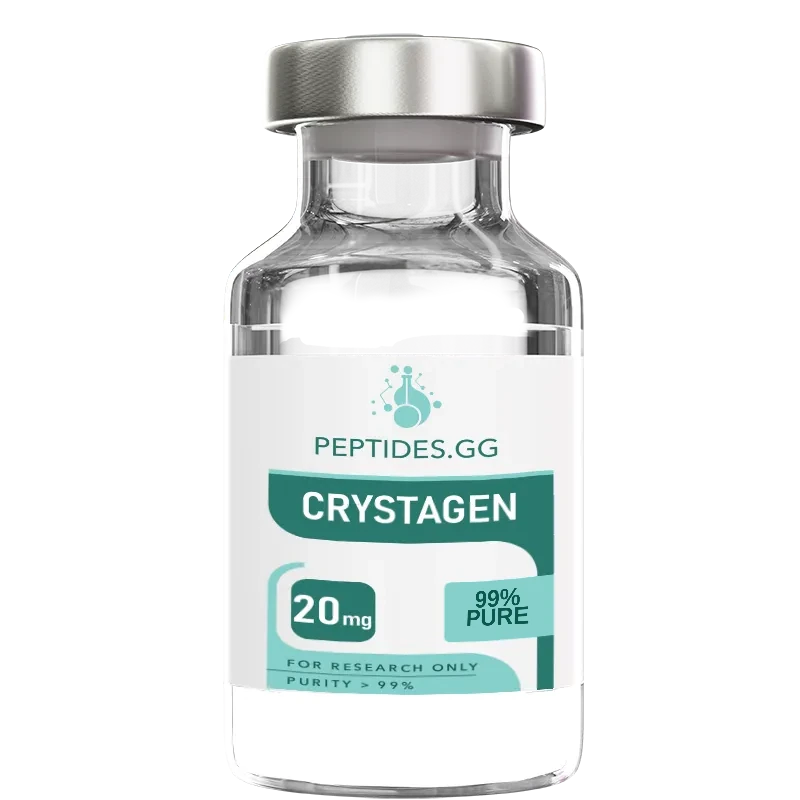
The Crystagen peptide serves as a research tool for investigating immune system bioregulation and thymus-related peptide signaling. This short bioregulatory peptide enables research into immune cell modulation, T-lymphocyte function, and immunosenescence mechanisms.
Research Disclaimer: Peptides.GG sells this and all other peptides for Research Only and not for human consumption.
Crystagen Peptide
$55.00
- Free Delivery on all orders over $200
- Earn 5% Store Credit with Every Order
- Same Day Shipping Before 1 PM PST
- 10% Discount for Cryptocurrency Payments
14-day money-back guarantee
Not satisfied? Return any unopened product within 14 days of delivery for a full refund — we send the return label.
The Crystagen peptide serves as a research tool for investigating immune system bioregulation and thymus-related peptide signaling. This short bioregulatory peptide enables research into immune cell modulation, T-lymphocyte function, and immunosenescence mechanisms.
Research Disclaimer: Peptides.GG sells this and all other peptides for Research Only and not for human consumption.
Frequently Asked Questions About Crystagen
What is Crystagen?
Crystagen is a synthetic tripeptide bioregulator with the amino acid sequence Glutamic Acid-Aspartic Acid-Proline (Glu-Asp-Pro, "EDP"), developed within the Khavinson peptide bioregulation research program at the St. Petersburg Institute of Bioregulation and Gerontology. It is classified as an immune bioregulator and is supplied strictly as a research compound for laboratory use investigating thymic and immune-cell biology.
What is the amino acid sequence of Crystagen?
Crystagen is a single defined-sequence synthetic tripeptide with the amino acid sequence Glu-Asp-Pro (EDP). Its molecular formula is C₁₄H₂₁N₃O₈ and its molecular weight is 359.33 Da. It is produced by solid-phase peptide synthesis and verified by HPLC (≥98% purity) and ESI-MS.
What is Crystagen studied for in research?
In preclinical and in vitro research, Crystagen is used as a molecular probe to investigate immune-system bioregulation: T-lymphocyte function, thymic epithelial cell biology, cytokine network analysis, and immunosenescence (age-associated immune decline). It is frequently studied alongside other immunomodulatory research peptides such as Thymosin Alpha-1 and Thymogen. Crystagen is sold for research use only and is not for human consumption.
Why is Crystagen called an immune bioregulator?
The Khavinson bioregulation hypothesis proposes that short, organ-specific peptides act as endogenous molecular messengers that influence tissue homeostasis through targeted gene-regulatory interactions. Crystagen is classified as an immune bioregulator because its EDP sequence is studied for tissue-specific affinity toward immune cell types, where research examines how the peptide signal may modulate gene-expression programs governing immune cell development and function.
What size is Crystagen available in?
Crystagen is supplied as a 20mg lyophilized (freeze-dried) powder. The lyophilized format is preferred for research because it eliminates solution-phase degradation during storage and allows precise gravimetric preparation of research concentrations at the point of use.
How is Crystagen stored and handled in the laboratory?
Crystagen is a white to off-white lyophilized powder that is soluble in sterile water and aqueous buffers at neutral to slightly alkaline pH. For research handling, the lyophilized powder is kept sealed and cold until use. Each batch is third-party tested for identity and purity.
Related products
-

Epitalon
$35.00 – $120.00 Select options This product has multiple variants. The options may be chosen on the product pageSize: 10mg, 50mg
-
NA Epitalon
$45.00 – $80.00 Select options This product has multiple variants. The options may be chosen on the product pageSize: 10mg, 20mg
-
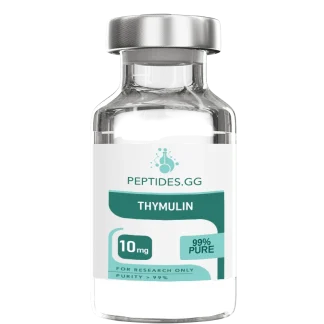
Thymulin
$40.00 Select options This product has multiple variants. The options may be chosen on the product pageSize: 10mg
Certificate of Analysis
Third-party tested · Independent analytical lab
| Tested | Measured | Purity |
|---|---|---|
| Oct 2025 | 20.93mg | 99.89% |
Research Overview
The Crystagen peptide is a synthetic tripeptide bioregulator composed of the amino acid sequence Glutamic Acid-Aspartic Acid-Proline (EDP), developed within the Khavinson peptide bioregulation research program at the St. Petersburg Institute of Bioregulation and Gerontology. Classified as an immune bioregulator, Crystagen is designed as a research tool targeting thymic and immune tissue, with laboratory investigations examining its interactions with T-lymphocyte populations, thymic epithelial cells, and immune regulatory networks. The EDP sequence is hypothesized to exhibit tissue-specific affinity for immune cell types, and research focuses on how this short peptide signal may modulate gene expression programs governing immune cell development, cytokine secretion, and immune surveillance in preclinical models.
Scientific interest in Crystagen stems from the broader Khavinson bioregulation hypothesis, which proposes that short organ-specific peptides function as endogenous molecular messengers capable of influencing tissue homeostasis through targeted gene regulatory interactions. Within immunology research, Crystagen is used as a molecular probe to investigate thymic biology, T-cell ontogeny, and age-associated immune decline. Laboratory studies examining immune bioregulation frequently position Crystagen alongside other immunomodulatory research compounds such as Thymosin Alpha-1 and LL-37, enabling mechanistic comparisons between peptide classes with distinct structural origins and proposed mechanisms of immune modulation.
Preclinical investigations employing Crystagen span immunosenescence research, T-cell development studies, cytokine network analysis, and thymic function models. The tripeptide’s compact molecular size facilitates mechanistic dissection of its cellular interactions and makes it tractable for structure-activity relationship studies where individual residue substitutions are systematically evaluated. Research panels studying thymic bioregulation often include Crystagen alongside related compounds such as Thymogen and Vesilute, allowing cross-tissue bioregulatory comparisons that contextualize immune-specific effects against vascular and other systemic tissue responses.
Molecular Characteristics
Complete Specifications:
- CAS Number: Not formally assigned (research compound)
- Molecular Weight: ~359.33 Da
- Molecular Formula: C₁₄H₂₁N₃O₈
- Sequence: Glu-Asp-Pro (EDP)
- Peptide Length / Classification: Tripeptide; immune bioregulator
- Appearance: White to off-white lyophilized powder
- Solubility: Soluble in sterile water and aqueous buffers at neutral to slightly alkaline pH; limited solubility in non-polar organic solvents
The molecular architecture of Crystagen is defined by three residues that collectively provide a strongly anionic charge profile at physiological pH. The N-terminal glutamic acid and central aspartic acid residues each contribute negatively charged carboxylate side chains, creating an electronegative character across the peptide that is considered relevant to its proposed interactions with positively charged DNA-binding domains of transcription factors in immune cell nuclei. The C-terminal proline residue introduces characteristic backbone rigidity through its cyclic pyrrolidine ring structure, constraining the peptide’s conformational flexibility and potentially stabilizing a specific three-dimensional geometry that supports molecular recognition by target proteins in thymic and lymphoid tissue.
At approximately 359.33 Da, Crystagen is among the smallest molecular weight compounds in the Khavinson bioregulatory peptide family, a property that is analytically advantageous for membrane permeability studies and facilitates straightforward quantification by standard LC-MS/MS methods in complex biological matrices including plasma, tissue homogenate, and cell culture supernatants. The combination of low molecular weight and the conformational rigidity imposed by the proline residue makes Crystagen an interesting subject for computational docking studies aimed at identifying potential nuclear receptor or transcription factor binding partners in immune cell populations.
Pharmacokinetic Profile in Research Models
Absorption and Distribution
- In vitro Caco-2 cell monolayer permeability assays are used to characterize the intestinal absorption potential of Crystagen and assess passive versus active transport contributions to cellular uptake
- Lymphoid organ distribution studies in rodent models examine thymus, spleen, and lymph node accumulation patterns using radiolabeled tracer or LC-MS/MS quantification methodologies
- Plasma protein binding assays using equilibrium dialysis determine the free fraction of Crystagen available for tissue distribution and cellular uptake in experimental systems
- Subcellular fractionation studies in lymphocyte preparations examine the nuclear versus cytoplasmic distribution of Crystagen following cellular internalization, relevant to understanding its proposed transcriptional mechanism
Bioactivity Dynamics
- Primary thymocyte cultures and established T-cell lines (Jurkat, EL-4) are standard in vitro systems for characterizing Crystagen-induced changes in immune gene expression profiles
- Time-course experiments examining cytokine secretion patterns (IL-2, IFN-γ, IL-4, IL-10) in T-cell cultures following Crystagen exposure over 6–72 hour windows
- Flow cytometric analysis of cell surface marker expression (CD3, CD4, CD8, CD25, CD44, CD62L) in Crystagen-treated lymphocyte populations to characterize phenotypic differentiation states
- Proliferation assays using CFSE dilution or BrdU incorporation in mitogen-stimulated T-cell cultures with Crystagen present as an experimental variable
Metabolic Considerations
- The proline C-terminus of Crystagen provides resistance to carboxypeptidase-mediated degradation, a property that may extend intact peptide exposure relative to non-proline-terminated tripeptides in biological matrices
- Plasma stability assays in rodent and human plasma incubated at 37°C followed by LC-MS/MS quantification are performed to determine half-life parameters before initiating in vivo research protocols
- Identification of Crystagen degradation products by high-resolution mass spectrometry supports correct interpretation of biological activity data in complex in vivo experiments where metabolites may exert independent effects
- Lyophilized formulation is the preferred presentation for research use, as it eliminates solution-phase degradation during storage and allows precise gravimetric preparation of research concentrations at point of use
Research Applications
T-Cell Development and Thymic Biology
- Fetal thymic organ culture (FTOC) systems examining how Crystagen influences thymocyte maturation progression through DN1-DN4 and DP/SP developmental checkpoints
- Thymic epithelial cell (TEC) gene expression profiling examining cortical TEC (cTEC) and medullary TEC (mTEC) marker expression following Crystagen treatment in primary thymic stromal preparations
- T-cell receptor (TCR) repertoire diversity analysis in Crystagen-exposed thymocyte cultures using deep sequencing to assess selection checkpoint integrity
- AIRE (autoimmune regulator) expression analysis in mTEC populations as a readout of central tolerance machinery in thymic tissue exposed to Crystagen
Thymic biology is a foundational area of adaptive immune system research, underpinning investigations into T-cell diversity, central tolerance, and the cellular origins of autoimmune conditions. Crystagen serves as a research tool in thymic biology studies by enabling researchers to probe how short immune bioregulatory peptide signals interact with the transcriptional programs governing thymocyte selection and thymic stromal cell function in both young and aged model systems.
Immune Regulation and Cytokine Research
- Multiplex cytokine array analysis of supernatants from Crystagen-treated peripheral blood mononuclear cell (PBMC) cultures stimulated with polyclonal activators (anti-CD3/CD28, PHA, LPS)
- Regulatory T-cell (Treg) phenotype and function assays examining FoxP3 expression, IL-10 secretion, and suppressive activity in Crystagen-exposed CD4+ T-cell populations
- Th1/Th2/Th17 polarization assays in naïve CD4+ T-cell cultures with Crystagen present during cytokine-driven differentiation protocols to map bioregulatory peptide influence on lineage specification
- NF-κB and STAT signaling pathway activity assays using luciferase reporter systems in Crystagen-treated T-cell lines to identify downstream transcription factor targets
Cytokine network regulation is central to understanding immune homeostasis and inflammatory biology. Crystagen is examined in this context as a potential modulator of immune cell secretory phenotype, with researchers comparing its cytokine profile against structurally related thymic peptides such as Thymulin to distinguish EDP-specific regulatory effects from general thymic peptide bioregulatory activity within the same experimental systems.
Immunosenescence Research
- Aged rodent thymic involution models providing in vivo context to examine Crystagen effects on residual thymic tissue architecture, thymocyte output, and recent thymic emigrant (RTE) frequency in peripheral blood
- T-cell receptor excision circle (TREC) quantification as a biomarker of thymic activity and naïve T-cell output in aged animal models administered Crystagen in preclinical research protocols
- Senescence-associated secretory phenotype (SASP) marker profiling (IL-6, IL-8, MMP-3) in aged T-cell populations exposed to Crystagen in vitro to assess immunosenescence pathway interactions
- Epigenetic aging clock analysis in Crystagen-treated immune cell populations using DNA methylation profiling to characterize bioregulatory peptide effects on immune cell epigenetic age estimates
Immunosenescence represents a significant area of translational immunology research, encompassing the age-associated decline in adaptive immune function that increases susceptibility to infectious and neoplastic disease in aged organisms. Crystagen is examined in this research context as a thymic bioregulatory probe, often included in panels alongside KPV and other immunomodulatory research peptides to map complementary versus overlapping mechanisms of immune system support in aged preclinical models.
Innate-Adaptive Immune Interface Research
- Dendritic cell maturation and antigen presentation assays examining MHC-II, CD80, CD86, and CD40 expression in Crystagen-exposed bone marrow-derived dendritic cell cultures
- T-cell priming assays in dendritic cell/naïve T-cell co-culture systems with Crystagen present during the antigen presentation phase to examine effects on immunological synapse formation and T-cell activation thresholds
- Natural killer (NK) cell cytotoxicity assays examining Crystagen effects on NK cell activation markers (NKp46, NKG2D) and target cell lysis efficiency in standard chromium release or flow-based killing assays
- Macrophage polarization studies examining M1 (pro-inflammatory) versus M2 (anti-inflammatory) phenotype markers in Crystagen-treated bone marrow-derived macrophage cultures under LPS or IL-4 stimulation
Gene Expression and Epigenetic Profiling
- Bulk and single-cell RNA sequencing of Crystagen-treated immune cell populations to characterize transcriptome-wide responses and identify cell-type-specific gene regulatory effects within heterogeneous immune preparations
- ChIP-seq analysis targeting histone marks (H3K4me3, H3K27ac, H3K27me3) at immune gene loci in Crystagen-exposed thymocyte and T-cell populations to map epigenetic regulatory landscape changes
- ATAC-seq profiling of chromatin accessibility in Crystagen-treated immune cells to identify cis-regulatory elements that may be responsive to bioregulatory peptide signaling in thymic and peripheral T-cell compartments
- Network analysis of Crystagen-regulated transcriptomes using pathway enrichment tools (GSEA, Reactome, GO) to identify overrepresented biological processes and upstream regulatory nodes
Laboratory Handling and Storage Protocols
Lyophilized Storage
- Store lyophilized Crystagen at −20°C in a sealed, light-protected container with desiccant to maintain powder stability and prevent moisture absorption that could initiate premature hydrolysis
- Avoid storing lyophilized material in frost-free freezers that undergo repeated temperature cycling, as condensation cycles may compromise vial seal integrity over extended storage periods
- Pre-aliquot lyophilized Crystagen into single-use research quantities before use to prevent degradation from repeated freeze-thaw exposure of bulk stock
- Lyophilized Crystagen is stable for up to 24 months at −20°C under recommended storage conditions with packaging integrity maintained throughout the storage period
Quality Assurance and Analytical Testing
The analytical methods below are those commonly used to characterize and verify the identity, purity, and quality of research compounds in this class:
- Purity Analysis (HPLC): Crystagen is characterized by reverse-phase high-performance liquid chromatography (RP-HPLC) with UV detection at 220 nm. The research-grade specification is purity ≥99%, ensuring that research-grade material is free from significant levels of truncated sequences, deletion peptides, or synthesis byproducts that could confound immune cell assay results.
- Structural Verification (ESI-MS): Electrospray ionization mass spectrometry (ESI-MS) confirms the molecular weight and sequence identity consistent with the EDP tripeptide structure. Isotope pattern analysis distinguishes intact Crystagen from potential oxidation or deamidation artifacts that may arise during synthesis or storage.
- Contaminant Testing: Endotoxin can be screened by Limulus amebocyte lysate (LAL) assay. This specification is critical for immune cell research applications, where endotoxin contamination activates TLR4 signaling cascades in macrophages and dendritic cells, generating inflammatory cytokine responses that would substantially confound Crystagen-specific immune endpoint measurements. Residual solvent and heavy metal screening is also available among these methods.
- Documentation: A batch-specific certificate of analysis (CoA) is provided with each research order, documenting HPLC purity chromatograms, ESI-MS data confirming sequence identity, endotoxin test results, and all relevant lot-specific quality control parameters required for institutional research documentation and grant compliance reporting.
Research Considerations
Researchers designing Crystagen-based experiments should account for the following experimental design factors:
- Verify endotoxin levels independently using a sensitive LAL assay when initiating new lot use in immune cell culture systems, as immune cells are highly responsive to even trace LPS contamination that may fall below manufacturer reporting thresholds in some assay formats
- Characterize baseline activation and differentiation state of lymphocyte preparations prior to Crystagen treatment, as activated versus naïve immune cell populations exhibit substantially different baseline transcriptional states that influence experimental endpoint interpretation
- Include solvent-matched vehicle controls and, where appropriate, known immunomodulatory reference compounds in each experimental panel to validate assay sensitivity and biological responsiveness
- Account for donor-to-donor variability when using primary human PBMC preparations; use minimum three independent donor preparations for adequate biological replication in immune endpoint studies
- Validate peptide stability under the specific experimental conditions (temperature, pH, serum concentration) of each assay system before proceeding with definitive endpoint studies
Mechanistic investigations into Crystagen’s immune biology interactions may examine:
- Interactions with transcription factors central to T-cell identity and function, including GATA-3, T-bet, RORγt, and FoxP3, which govern Th2, Th1, Th17, and Treg lineage specification respectively
- Nuclear localization studies using fluorescent Crystagen analogs or proximity ligation assays to determine whether the EDP sequence reaches the nuclear compartment in immune cell populations
- Proteomics approaches including immunoprecipitation-mass spectrometry to identify cellular protein binding partners of Crystagen in thymic and peripheral T-cell lysates
- Comparative structure-activity relationship studies using EDP analogs with single amino acid substitutions to map the contribution of each residue to observed immune cell bioactivity in standardized assay systems
Compliance and Safety Information
- Regulatory Status: Crystagen is supplied exclusively as a research compound for laboratory use. It has not been evaluated or approved by the FDA, EMA, or any other regulatory authority for human or veterinary medical use.
- Intended Use: This material is intended solely for in vitro laboratory research and preclinical investigations conducted by qualified scientific personnel within institutionally approved research programs. All use must comply with applicable institutional biosafety committee (IBC) and institutional review board (IRB) requirements where relevant.
- NOT Intended For: Human consumption, in vivo administration to humans, veterinary use, food, drug, cosmetic, or household applications. Not for use by individuals outside of professional research laboratory settings with appropriate training and institutional oversight.
- Safety Protocols: Handle according to institutional biosafety guidelines. Wear appropriate personal protective equipment including gloves, laboratory coat, and eye protection when handling lyophilized powders and solutions. Consult the material safety data sheet (MSDS) provided with each research shipment. Dispose of all peptide research materials in full compliance with applicable institutional and governmental regulations governing the handling and disposal of synthetic peptide research compounds.