
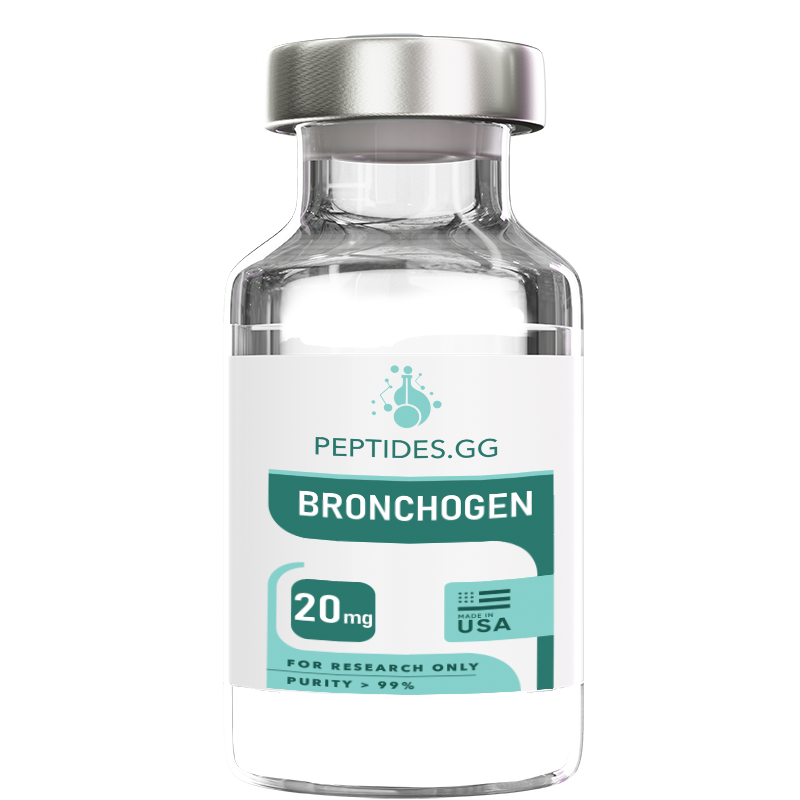
Bronchogen serves as a research tool for investigating lung-specific bioregulation and pulmonary tissue function in laboratory settings.
Research Disclaimer: Peptides.GG sells this and all other peptides for Research Only and not for human consumption.
Bronchogen (Bioregulator)
$55.00
- Free Delivery on all orders over $200
- Earn 5% Store Credit with Every Order
- Same Day Shipping Before 1 PM PST
- 10% Discount for Cryptocurrency Payments
14-day money-back guarantee
If you are not satisfied with the product, simply return it and we will refund your money
Bronchogen serves as a research tool for investigating lung-specific bioregulation and pulmonary tissue function in laboratory settings.
Research Disclaimer: Peptides.GG sells this and all other peptides for Research Only and not for human consumption.
Frequently Asked Questions About Bronchogen (Bioregulator)
What is Bronchogen?
Bronchogen is a defined synthetic tetrapeptide (Ala-Glu-Asp-Leu; AEDL) studied as a Khavinson-class short-peptide bioregulator for respiratory and bronchial research. It is produced by solid-phase peptide synthesis and supplied strictly as a research compound for laboratory use; not for human consumption.
What is the molecular profile of Bronchogen?
Bronchogen is a single defined-sequence synthetic tetrapeptide with the amino acid sequence Ala-Glu-Asp-Leu (AEDL). Its molecular formula is C₁₈H₃₀N₄O₉ and its molecular weight is 446.45 Da. It is produced by solid-phase peptide synthesis and verified by HPLC (≥98% purity) and ESI-MS confirming the 446.45 Da mass.
What is Bronchogen studied for in research?
In preclinical and in vitro research, Bronchogen is used as a respiratory bioregulator research tool to investigate bronchial and pulmonary tissue and related tissue-specific peptide-signaling pathways. Supplied for laboratory research use only; not for human consumption.
Why is Bronchogen considered a respiratory bioregulator?
The Khavinson bioregulation hypothesis proposes that short, organ-specific peptides act as endogenous molecular messengers that influence tissue homeostasis through targeted gene-regulatory interactions. Bronchogen is studied within this framework as a respiratory bioregulator — a research tool for investigating signaling in bronchial and pulmonary tissue.
What size is Bronchogen available in?
Bronchogen is supplied as a lyophilized (freeze-dried) powder in 20mg. The lyophilized format is preferred for research because it eliminates solution-phase degradation during storage and allows precise gravimetric preparation of research concentrations at the point of use.
How is Bronchogen stored and handled in the laboratory?
Bronchogen is supplied as white to off-white lyophilized powder. It is soluble in water, phosphate buffered saline, cell culture media. For research handling, the lyophilized powder is kept sealed, cold, and protected from light until use. Each batch is third-party tested and supplied with a certificate of analysis.
Related products
-

Vilon (Bioregulator)
$60.00 Select options This product has multiple variants. The options may be chosen on the product pageSize: 20mg
-
Cortagen
$45.00 Select options This product has multiple variants. The options may be chosen on the product pageSize: 20mg
-
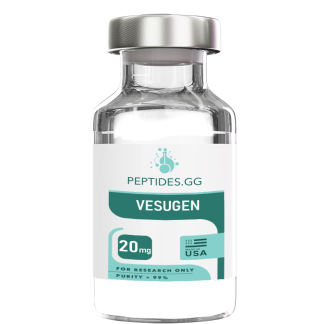
Vesugen (Bioregulator)
$60.00 Select options This product has multiple variants. The options may be chosen on the product pageSize: 20mg
Research Overview
Bronchogen serves as a research tool for investigating lung-specific bioregulation and pulmonary tissue function in laboratory settings. This synthetic peptide bioregulator belongs to the class of Khavinson short peptides originally developed through research on tissue-specific regulatory mechanisms. Respiratory tissue bioregulator research complements Chonluten for digestive mucosal regulation and LL-37 for host defense peptide mechanisms in pulmonary tissue models. The bioregulator concept proposes that short, defined peptide sequences associated with specific organs act as information molecules that can influence cellular function in corresponding target tissues.
Bronchogen research applications extend across multiple areas of pulmonary biology including respiratory epithelium function, bronchial smooth muscle regulation, mucus production and clearance mechanisms, and pulmonary immune responses. Laboratory protocols examine these effects in cell culture systems, tissue explants, and preclinical animal models to understand lung tissue regulation at molecular and cellular levels.
The peptide’s lung-associated bioregulatory profile provides research interest in tissue selectivity and targeted cellular regulation. Studies investigate how the tetrapeptide interacts with pulmonary cells, the mechanisms underlying tissue-specific effects, and potential applications in understanding lung function and respiratory system biology. Research models include bronchial epithelial cell cultures, lung tissue explants, and various respiratory function assessment protocols.
Molecular Characteristics
Defined Synthetic Peptide:
- Classification: Synthetic peptide bioregulator (Khavinson short peptide)
- Source/Origin: Synthetic (solid-phase peptide synthesis)
- Amino Acid Sequence: Ala-Glu-Asp-Leu (AEDL)
- Molecular Formula: C₁₈H₃₀N₄O₉
- Molecular Weight: 446.45 Da
- Form: White to off-white lyophilized powder
- Solubility: Water, phosphate buffered saline, cell culture media
Bronchogen is a single, defined molecular entity: the synthetic tetrapeptide Ala-Glu-Asp-Leu (AEDL). Rather than a complex preparation, it is a precisely specified four-residue sequence assembled by solid-phase peptide synthesis, which allows consistent reproduction of the same molecule across batches while maintaining a defined biological activity profile.
As a short peptide of defined sequence and a molecular weight of 446.45 Da, AEDL belongs to the Khavinson family of short peptide bioregulators. These short peptides are theorized to serve as information molecules, carrying tissue-specific regulatory signals that influence gene expression and cellular function in target tissues.
Bioregulator Peptide Research Background
Bronchogen belongs to the research category of short peptide bioregulators developed to investigate tissue-specific cellular regulation. This research approach emerged from studies on how peptide signals influence cellular differentiation, function, and tissue homeostasis. The bioregulator hypothesis proposes that:
1. Organs are associated with specific peptide signals that regulate cellular function
2. Defined short peptide sequences demonstrate selective affinity for corresponding organs
3. These peptides may influence gene expression and protein synthesis in target cells
4. Bioregulator effects occur through interaction with cellular regulatory mechanisms
Research on lung bioregulators like Bronchogen investigates these mechanisms in pulmonary tissue contexts, examining how peptide signals might modulate respiratory cell function, tissue repair processes, and lung homeostasis in experimental models.
Research Applications
Respiratory Epithelium Research
Bronchogen serves as a research tool for investigating bronchial epithelial cell function and regulation:
- Epithelial Cell Studies: Investigation of airway epithelial cell proliferation, differentiation, and functional characteristics
- Mucociliary Function Research: Studies on ciliated cell function, mucus production, and clearance mechanisms
- Barrier Function Investigation: Research on epithelial barrier integrity, tight junction formation, and permeability regulation
- Cell Type Differentiation: Examination of epithelial cell type specification and maintenance in culture systems
- Regeneration Studies: Investigation of epithelial repair and regeneration processes following injury
Laboratory protocols employ primary bronchial epithelial cell cultures, immortalized respiratory cell lines, and air-liquid interface culture systems to characterize Bronchogen effects on respiratory epithelium function and regulation.
Pulmonary Tissue Regulation Studies
Research applications extend to broader lung tissue regulation mechanisms:
- Gene Expression Research: Investigation of peptide effects on pulmonary cell gene expression profiles
- Protein Synthesis Studies: Examination of tissue-specific protein production and regulation
- Cellular Metabolism Research: Analysis of metabolic pathway modulation in lung cells
- Oxidative Stress Response: Studies on antioxidant systems and oxidative damage protection in respiratory tissues
- Apoptosis Regulation: Investigation of programmed cell death pathways in pulmonary cells
Experimental approaches include transcriptomic analysis, proteomic profiling, and metabolic assays to understand how bioregulator peptides influence lung tissue cellular function at molecular levels.
Respiratory Defense Mechanism Research
Laboratory studies investigate Bronchogen in pulmonary defense and immune function contexts:
- Innate Immunity Research: Examination of airway epithelial cell immune response capabilities
- Antimicrobial Peptide Studies: Investigation of endogenous antimicrobial molecule production
- Inflammatory Mediator Research: Analysis of cytokine and chemokine production in respiratory cells
- Immune Cell Interaction Studies: Research on epithelial-immune cell communication and regulation
- Pathogen Response Investigation: Studies on cellular responses to respiratory pathogens in research models
Research protocols examine how bioregulator peptides might influence pulmonary immune function, inflammatory responses, and defense mechanisms in cell culture and tissue models.
Bronchial Smooth Muscle Research
Bronchogen research applications include airway smooth muscle function investigation:
- Contractility Studies: Research on smooth muscle contraction and relaxation mechanisms
- Receptor Expression Research: Investigation of bronchial smooth muscle receptor profiles
- Calcium Signaling Studies: Examination of intracellular calcium dynamics in airway smooth muscle
- Bronchodilation Mechanisms: Research on pathways regulating airway diameter and resistance
- Remodeling Studies: Investigation of smooth muscle proliferation and airway remodeling processes
Experimental models include isolated bronchial smooth muscle preparations, smooth muscle cell cultures, and contractility measurement systems.
Pulmonary Vascular Research
Laboratory studies examine Bronchogen effects on pulmonary vascular function:
- Endothelial Function Studies: Research on pulmonary endothelial cell characteristics and regulation
- Vascular Tone Investigation: Examination of pulmonary vascular resistance and blood flow regulation
- Angiogenesis Research: Studies on pulmonary vessel formation and vascular remodeling
- Gas Exchange Optimization: Investigation of alveolar-capillary interface function
- Vascular Permeability Studies: Research on pulmonary vascular barrier function and regulation
Research approaches include pulmonary endothelial cell cultures, isolated lung perfusion models, and vascular function assessment protocols.
Lung Aging and Senescence Research
Bronchogen serves as a tool for investigating age-related changes in pulmonary tissue:
- Cellular Senescence Studies: Examination of aging markers in lung cells and tissues
- Telomere Research: Investigation of telomere dynamics in respiratory cells
- Age-Related Function Changes: Studies on declining lung function parameters with aging
- Regenerative Capacity Research: Analysis of age-related changes in lung tissue repair
- Oxidative Damage Accumulation: Investigation of oxidative stress markers in aging lung tissue
Research protocols employ aging models, senescence-associated marker analysis, and comparative studies across different age groups in experimental systems.
Laboratory Handling and Storage Protocols
Lyophilized Powder Storage:
- Store at 2-8°C (refrigerated) in original sealed vial
- Protect from light exposure and moisture
- Do not freeze lyophilized powder
- Stable for 24 months refrigerated as unopened vial
- Record receipt date for laboratory inventory
Handling Precautions:
Bioregulator peptide preparations require careful handling to maintain activity:
- Use sterile technique for cell culture applications
- Avoid prolonged exposure to room temperature
- Minimize exposure to direct light
- Use appropriate peptide-compatible labware (low-binding tubes)
- Follow standard laboratory peptide handling protocols
Quality Assurance and Analytical Testing
Each Bronchogen batch undergoes characterization appropriate for a defined synthetic peptide:
Identity and Purity Analysis:
- High-Performance Liquid Chromatography (HPLC): Purity ≥98%
- Mass confirmation: Electrospray ionization mass spectrometry (ESI-MS) confirming 446.45 Da
- Amino acid analysis: Total amino acid content and composition consistent with Ala-Glu-Asp-Leu (AEDL)
- Peptide content determination: Quantifies actual peptide content by weight
Purity Testing:
- Protein purity: Bradford or BCA assay for total protein content
- Residual proteins: Verification of low molecular weight peptide enrichment
- Non-peptide components: Carbohydrate and lipid content below specified limits
- Heavy metals: Below detection limits per pharmacopeia standards
Contaminant Testing:
- Bacterial endotoxin: <10 EU/mg (LAL method)
- Sterility testing: Sterile filtration and microbiological testing
- Residual solvents: Within acceptable limits
- Water content: Karl Fischer titration (<8%)
Synthesis and Sequence Verification:
- Synthesis route: Solid-phase peptide synthesis under controlled conditions
- Sequence confirmation: Ala-Glu-Asp-Leu (AEDL) verified against specification
- Processing validation: Standardized synthesis and purification protocols
- Batch-to-batch consistency: Quality control testing across production batches
Documentation:
- Certificate of Analysis (COA) with batch-specific data
- HPLC purity chromatogram and ESI-MS spectrum
- Quality control test results
- Storage and handling recommendations
- Lot number traceability
Research Considerations
Experimental Design Factors:
Researchers should consider several factors when designing experiments with Bronchogen:
1. Concentration Selection: Bioregulator peptide research typically employs concentrations ranging from 0.1-10 μg/mL in cell culture studies. Optimal concentration should be determined empirically for specific experimental systems.
2. Treatment Duration: Published research suggests effects may require 24-72 hours to manifest in cell culture models. Time course studies recommended for new applications.
3. Cell Type Specificity: While associated with lung tissue, tissue selectivity should be verified in each experimental system through comparative studies with other cell types.
4. Defined Sequence Considerations: As a single, defined tetrapeptide, Bronchogen offers reproducible composition across batches; mechanism studies can attribute observed effects to the Ala-Glu-Asp-Leu sequence.
5. Standardization Approaches: Use consistent sourcing, handling, and application protocols. Include appropriate controls for peptide vehicle and treatment conditions.
Control Groups:
Appropriate controls for bioregulator peptide research include:
- Vehicle control (vehicle buffer only)
- Non-specific peptide control (scrambled peptides or unrelated bioregulator)
- Positive controls where applicable (known modulators of target pathways)
- Tissue-specific comparisons (same bioregulator concentration in different cell types)
Mechanism Investigation:
Bronchogen mechanisms remain active research areas. Investigated mechanisms include:
- Gene expression modulation through transcription factor regulation
- Epigenetic modifications influencing cellular function
- Cell surface receptor interactions
- Intracellular signaling pathway activation
- Direct nuclear effects on chromatin and gene regulation
Research approaches combine molecular biology techniques, genomic and proteomic analysis, and cellular functional assays to elucidate bioregulator action mechanisms.
Compliance and Safety Information
Regulatory Status:
Bronchogen is provided as a research chemical for in-vitro laboratory studies and preclinical research only. This bioregulator peptide preparation has not been approved by the FDA for human therapeutic use, dietary supplementation, or medical applications.
Intended Use:
- In-vitro cell culture research
- Tissue explant studies
- In-vivo preclinical research in approved animal models
- Laboratory investigation of pulmonary tissue regulation
- Academic and institutional research applications
NOT Intended For:
- Human consumption or administration
- Therapeutic treatment or diagnosis
- Dietary supplementation
- Veterinary therapeutic applications without appropriate oversight
- Any medical or clinical applications
Safety Protocols:
Researchers should follow standard laboratory safety practices:
- Use appropriate personal protective equipment (lab coat, gloves, safety glasses)
- Handle in biosafety cabinet for sterile work
- Follow institutional biosafety guidelines
- Dispose of waste according to chemical waste protocols
- Consult material safety data sheet (MSDS) for additional information
Material Source Considerations:
Bronchogen is a chemically synthesized peptide and contains no animal-derived material. Researchers should:
- Follow institutional guidelines for synthetic research chemicals
- Maintain records of source material certification (Certificate of Analysis)
- Apply appropriate biosafety level for synthetic peptide reagents
—