
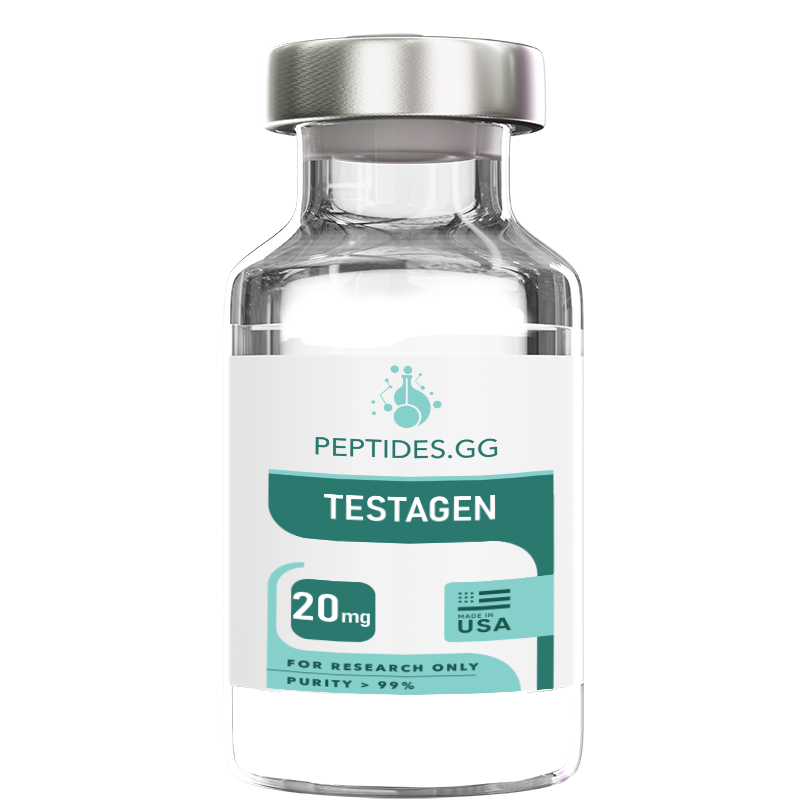
Testagen serves as a research tool for investigating testicular-specific bioregulation and gonadal tissue function in laboratory settings.
Research Disclaimer: Peptides.GG sells this and all other peptides for Research Only and not for human consumption.
Testagen (Bioregulator)
$60.00
- Free Delivery on all orders over $200
- Earn 5% Store Credit with Every Order
- Same Day Shipping Before 1 PM PST
- 10% Discount for Cryptocurrency Payments
14-day money-back guarantee
If you are not satisfied with the product, simply return it and we will refund your money
Testagen serves as a research tool for investigating testicular-specific bioregulation and gonadal tissue function in laboratory settings.
Research Disclaimer: Peptides.GG sells this and all other peptides for Research Only and not for human consumption.
Frequently Asked Questions About Testagen (Bioregulator)
What is Testagen?
Testagen is a defined synthetic tetrapeptide (Lys-Glu-Asp-Gly; KEDG) studied as a Khavinson-class short-peptide bioregulator for testicular and reproductive research. It is produced by solid-phase peptide synthesis and supplied strictly as a research compound for laboratory use; not for human consumption.
What is the molecular profile of Testagen?
Testagen is a single defined-sequence synthetic tetrapeptide with the amino acid sequence Lys-Glu-Asp-Gly (KEDG). Its molecular formula is C₁₇H₂₉N₅O₉ and its molecular weight is 447.44 Da. It is produced by solid-phase peptide synthesis and verified by HPLC (≥98% purity) and ESI-MS confirming the 447.44 Da mass.
What is Testagen studied for in research?
In preclinical and in vitro research, Testagen is used as a reproductive bioregulator research tool to investigate testicular and reproductive tissue and related tissue-specific peptide-signaling pathways. Supplied for laboratory research use only; not for human consumption.
Why is Testagen considered a reproductive bioregulator?
The Khavinson bioregulation hypothesis proposes that short, organ-specific peptides act as endogenous molecular messengers that influence tissue homeostasis through targeted gene-regulatory interactions. Testagen is studied within this framework as a reproductive bioregulator — a research tool for investigating signaling in testicular and reproductive tissue.
What size is Testagen available in?
Testagen is supplied as a lyophilized (freeze-dried) powder in 20mg. The lyophilized format is preferred for research because it eliminates solution-phase degradation during storage and allows precise gravimetric preparation of research concentrations at the point of use.
How is Testagen stored and handled in the laboratory?
Testagen is supplied as white to off-white lyophilized powder. It is soluble in sterile water and physiological buffer systems at neutral pH; limited solubility in non-polar organic solvents. For research handling, the lyophilized powder is kept sealed, cold, and protected from light until use. Each batch is third-party tested and supplied with a certificate of analysis.
Related products
-

Cortagen
$45.00 Select options This product has multiple variants. The options may be chosen on the product pageSize: 20mg
-
Vesugen (Bioregulator)
$60.00 Select options This product has multiple variants. The options may be chosen on the product pageSize: 20mg
-
Bronchogen (Bioregulator)
$55.00 Select options This product has multiple variants. The options may be chosen on the product pageSize: 20mg

Research Overview
Testagen is a synthetic short-peptide bioregulator with the amino acid sequence Lys-Glu-Asp-Gly (KEDG), developed within the Khavinson short-peptide research program established at the St. Petersburg Institute of Bioregulation and Gerontology. Produced by solid-phase peptide synthesis as a single defined tetrapeptide (molecular formula C₁₇H₂₉N₅O₉; molecular weight 447.44 Da), Testagen belongs to the class of low-molecular-weight regulatory peptides designed to model endogenous informational signals relevant to testicular cell biology, including Leydig cell steroidogenesis, Sertoli cell function, and the somatic support architecture that sustains spermatogenesis. Laboratory investigations classify Testagen as a gonadal-targeting peptide bioregulator and examine its interactions with testicular cell populations at transcriptional, proteomic, and functional levels using a range of preclinical model systems.
Scientific interest in Testagen is rooted in the critical importance of testicular function to reproductive physiology and its documented susceptibility to age-related decline. The testes are highly compartmentalized organs in which Leydig cells in the interstitium synthesize testosterone in response to luteinizing hormone (LH) signaling, while Sertoli cells within the seminiferous tubules provide structural and nutritional support for developing germ cells. Khavinson short-peptide research proposes that defined short peptides coordinate tissue homeostasis through autocrine and paracrine gene regulatory signals, and Testagen is studied in this context as a tool for exploring how a single tetrapeptide sequence modulates these distinct cellular programs. Researchers frequently include Testagen in experimental panels alongside prostate-targeting bioregulators such as Prostamax and longevity-associated peptides such as Epitalon, enabling comparative investigation across androgen-sensitive organ systems and aging-related research paradigms.
Preclinical research programs employing Testagen span several areas of reproductive and endocrine biology, including investigations into testosterone biosynthesis regulation, Leydig cell proliferation and differentiation, Sertoli cell gene expression, germ cell development, and age-associated testicular involution. The peptide is also studied alongside hypothalamic-pituitary axis-targeting peptides such as Kisspeptin-10 and Gonadorelin, which act at upstream regulatory nodes of the hypothalamic-pituitary-gonadal axis, allowing investigators to study testicular bioregulatory peptide effects in the context of the broader neuroendocrine environment that governs gonadal function.
Molecular Characteristics
Complete Specifications:
- Classification: Synthetic peptide bioregulator (Khavinson short peptide)
- Source/Origin: Synthetic (solid-phase peptide synthesis)
- Amino Acid Sequence: Lys-Glu-Asp-Gly (KEDG)
- Molecular Formula: C₁₇H₂₉N₅O₉
- Molecular Weight: 447.44 Da
- Appearance: White to off-white lyophilized powder
- Solubility: Soluble in sterile water and physiological buffer systems at neutral pH; limited solubility in non-polar organic solvents
The molecular character of Testagen is defined by its four-residue sequence Lys-Glu-Asp-Gly, which combines a basic lysine residue with two acidic residues (glutamate and aspartate) and a terminal glycine. This compact, charge-rich architecture is characteristic of the Khavinson family of regulatory tetrapeptides and is thought to underlie sequence-specific recognition events in target cells. Despite its small size, the tetrapeptide is studied for its capacity to influence the behavior of multiple testicular cell populations — Leydig cells, Sertoli cells, peritubular myoid cells, and germ cells at various developmental stages — through gene regulatory signaling rather than through the bulk action of a broad peptide pool. This precise, single-sequence definition is considered analytically significant because the biological activity attributed to the peptide can be tied to a known structure, supporting reproducible mechanistic interpretation across studies.
At 447.44 Da, the KEDG tetrapeptide sits at the low-molecular-weight end of bioactive peptides, a scale at which membrane penetration via transporter-mediated mechanisms and direct engagement of nuclear regulatory machinery are both plausible modes of action under investigation. Researchers also study its potential interactions with Sertoli cell surface receptors and extracellular matrix components of the seminiferous tubule basement membrane. Reverse-phase HPLC and ESI-MS provide a precise structural readout of the synthesized peptide across production lots, forming the analytical basis for batch consistency assessment in research-grade Testagen preparations.
Pharmacokinetic Profile in Research Models
Bioavailability and Testicular Tissue Distribution
- Subcutaneous and intraperitoneal administration routes are standard in rodent preclinical models; testicular tissue distribution is assessed by LC-MS/MS measurement of the intact KEDG tetrapeptide in testicular homogenates following systemic administration at defined time points
- The blood-testis barrier formed by Sertoli cell tight junctions represents a critical permeability determinant for systemically administered peptides; in vitro blood-testis barrier permeability models using primary Sertoli cell co-cultures are used to characterize the barrier penetration of the Testagen tetrapeptide
- Interstitial versus intratubular distribution of Testagen is assessed by differential dissection and compartmental analysis of testicular tissue from research animals following peptide administration
- Plasma protein binding of the Testagen peptide is characterized by ultrafiltration assays to determine the free peptide fraction available for tissue uptake and receptor engagement in gonadal tissue
Tissue-Specific Activity Dynamics
- Primary Leydig cell cultures from rat testes and MA-10 Leydig cell lines serve as standard in vitro systems for characterizing Testagen effects on steroidogenic gene expression (StAR, CYP11A1, CYP17A1, HSD3B) and testosterone biosynthesis
- Primary Sertoli cell cultures from prepubertal and adult rodents are used to examine Testagen effects on Sertoli cell marker expression (Fshr, Amh, Claudin-11, WT1) and tight junction integrity as indicators of blood-testis barrier regulatory biology
- Time-course RNA sequencing experiments at multiple intervals post-treatment map the kinetics of early gene responses versus sustained transcriptional program changes in Testagen-exposed testicular cell populations
- Organotypic testicular tissue slice cultures and 3D seminiferous tubule organoid systems provide architectural context for studying Testagen effects on Sertoli-germ cell interactions under conditions that preserve tubule organization
Metabolic Considerations
- As a short synthetic peptide, Testagen is subject to serum protease degradation; plasma stability is assessed by LC-MS/MS time-course assays tracking the intact KEDG tetrapeptide and its cleavage products
- Intracellular peptide catabolism by lysosomal proteases following endocytic uptake in Leydig and Sertoli cells is characterized by HPLC analysis of intracellular extracts at defined post-treatment time points
- Renal filtration is the primary systemic elimination route for the low-molecular-weight tetrapeptide; intracellular and tissue proteolysis contribute additional clearance, generating the elimination profile characterized in rodent pharmacokinetic studies
- High-resolution metabolite identification by mass spectrometry characterizes degradation products of the Testagen tetrapeptide, supporting interpretation of in vivo bioactivity data by distinguishing intact peptide effects from catabolite contributions
Research Applications
Leydig Cell Biology and Steroidogenesis Research
- Steroidogenic enzyme expression profiling (StAR, CYP11A1, CYP17A1, HSD3B, HSD17B3) by qPCR and Western blot in Testagen-treated primary Leydig cells under basal and LH-stimulated conditions
- Testosterone biosynthesis quantification by ELISA or LC-MS/MS in conditioned medium from Leydig cell cultures exposed to graded concentrations of Testagen to establish concentration-response profiles
- LH receptor (LHCGR) expression and cAMP/PKA signaling cascade activity assays in Leydig cells following Testagen treatment, to characterize interactions between the synthetic bioregulatory peptide signal and the primary hormonal drive to steroidogenesis
- Leydig cell proliferation and differentiation assays using BrdU/EdU incorporation and progenitor-to-adult Leydig cell marker transitions (COUP-TFII, HSD3B, CYP17A1 progression) in postnatal testicular cell cultures
Leydig cell steroidogenesis is the central biochemical process supporting testosterone production in the adult testis. Testagen serves as a research tool for investigating how a defined synthetic peptide signal modulates the expression of steroidogenic machinery and the responsiveness of Leydig cells to upstream hormonal inputs, providing a peptide-bioregulation perspective complementary to classical endocrine receptor pharmacology.
Sertoli Cell Function and Blood-Testis Barrier Research
- Tight junction protein expression (Claudin-11, occludin, ZO-1) and TEER measurement in primary Sertoli cell monolayers treated with Testagen to characterize effects on blood-testis barrier regulatory gene programs
- Androgen-binding protein (ABP), inhibin B, activin A, and FSH receptor expression profiling in Sertoli cells exposed to Testagen to assess effects on Sertoli cell secretory identity markers
- Lactate and pyruvate production assays in Testagen-treated Sertoli cells to characterize metabolic support function for germ cells, as Sertoli-derived energy substrates are essential for spermatocyte survival during meiosis
- Phagocytosis assays for residual body engulfment in Sertoli cells following Testagen treatment, probing effects on the cellular clearance function that Sertoli cells perform during spermatid maturation
Spermatogenesis and Germ Cell Biology Models
- Spermatogonial stem cell (SSC) self-renewal and differentiation assays in vitro using GDNF-responsive germline stem cell cultures, examining whether Testagen modulates SSC niche signaling programs
- Meiosis progression marker analysis (SYCP3, MLH1, γH2AX) in spermatocytes from Testagen-treated research animals by immunofluorescence on surface-spread chromosome preparations
- Spermatid differentiation markers (Prm1, Prm2, Tnp1, acrosin) quantification in testicular tissue RNA from aged rodent cohorts enrolled in Testagen preclinical protocols to assess effects on late spermatogenic differentiation gene programs
- Sperm morphology quantification and motility parameter analysis (VCL, VSL, VAP, ALH) by computer-assisted sperm analysis (CASA) in ejaculate samples from research animals in Testagen preclinical cohorts
Spermatogenesis is one of the most complex differentiation processes in mammalian biology, requiring precise coordination of mitosis, meiosis, and spermiogenesis across a precisely organized epithelial architecture. Testagen provides a defined synthetic bioregulatory signal for investigating how short-peptide cues support these developmental programs, with comparative studies alongside hypothalamic-pituitary signaling peptides such as Kisspeptin-10 and Gonadorelin enabling multi-level interrogation of the reproductive axis.
Reproductive Aging and Testicular Senescence Models
- Aged rodent testicular histomorphometry comparing Leydig cell number, seminiferous tubule diameter, and germ cell layer thickness between Testagen-treated and vehicle-control cohorts by blinded histological scoring
- Senescence marker profiling (p21, p16, SA-β-galactosidase activity, SASP cytokine secretion) in aging primary Leydig and Sertoli cell cultures exposed to Testagen at defined concentrations
- Bulk RNA sequencing comparisons between Testagen-treated and vehicle-control testicular tissue from aged rodent research cohorts to identify transcriptional signatures associated with bioregulatory peptide exposure in an aged gonadal context
- Mitochondrial function assays (Seahorse XF analysis) in Leydig cells from aged research animals to characterize bioenergetic phenotypes associated with Testagen exposure in the context of age-related steroidogenic decline
Laboratory Handling and Storage Protocols
Lyophilized Storage
- Store lyophilized Testagen at −20°C in sealed, desiccated, light-protected conditions to preserve the integrity of the tetrapeptide throughout long-term archiving
- Avoid prolonged exposure to temperatures above 25°C; brief room-temperature handling during aliquoting is acceptable when vial seals remain intact until the powder has equilibrated to ambient conditions
- Pre-aliquot bulk lyophilized material into single-experiment quantities before use to eliminate repeated temperature cycling of the primary stock vial
- Lyophilized Testagen is stable for up to 24 months at −20°C under recommended storage conditions with packaging integrity maintained throughout the storage period
Quality Assurance and Analytical Testing
- Purity Analysis (HPLC): Each production lot of Testagen is characterized by reverse-phase HPLC, confirming peptide purity of ≥98% and verifying the absence of synthesis-related and non-peptide contaminant peaks. Chromatographic profile consistency across lots is assessed against a reference lot standard established during initial characterization.
- Mass Spectrometric Identity (ESI-MS): Electrospray ionization mass spectrometry confirms the molecular weight of 447.44 Da, verifying the correct Lys-Glu-Asp-Gly sequence and intact tetrapeptide identity for each production lot.
- Endotoxin Testing: Endotoxin levels are confirmed below 1 EU/mg by the Limulus amebocyte lysate (LAL) assay, essential for Leydig and Sertoli cell culture applications where endotoxin contamination activates NF-κB inflammatory signaling pathways and directly confounds steroidogenic and gene expression endpoint measurements.
- Sequence Verification: Lot-specific documentation confirms the synthetic Lys-Glu-Asp-Gly sequence, solid-phase synthesis methodology, and compliance with applicable standards for research-grade synthetic peptide production and quality control.
- Certificate of Analysis: A batch-specific certificate of analysis accompanies each research shipment, providing HPLC chromatogram, MS identity data, endotoxin test results, and all relevant quality documentation required for institutional research compliance records.
Research Considerations
Investigators designing Testagen-based experiments should address the following experimental design factors:
- Confirm Leydig or Sertoli cell identity by marker expression before initiating Testagen exposure studies; primary testicular cultures frequently contain mixed cell populations that can substantially confound cell-type-specific endpoint interpretation
- Validate Testagen peptide stability in serum-containing versus serum-free culture media prior to concentration-response studies, as protease activity in serum can significantly reduce the effective peptide concentration during steroidogenesis time courses
- Include scrambled-sequence and vehicle-only controls alongside active treatment groups to distinguish sequence-specific biological effects from non-specific responses to vehicle components or trace contaminants
- Anchor independently conducted experiments to a common reference lot of the synthetic peptide to support normalization across studies, even though defined-sequence synthesis minimizes between-lot compositional differences
- Apply statistical power calculations during the experimental design phase, particularly for steroidogenesis endpoint studies where biological variability in testosterone production between primary cell isolations can be substantial
Mechanistic investigations into Testagen’s interactions with testicular cell biology may examine:
- StAR protein expression and mitochondrial cholesterol transport dynamics by proximity ligation assay and split-GFP reconstitution imaging in Leydig cells following Testagen exposure to characterize effects on the rate-limiting step of steroidogenesis
- Epigenetic landscape characterization by ATAC-seq and ChIP-seq for steroidogenic gene loci in Testagen-treated versus vehicle-control Leydig cells to identify chromatin accessibility and histone modification changes associated with peptide exposure
- Receptor identification strategies using photoaffinity labeling or proximity-based proteomics (BioID) to identify the Leydig or Sertoli cell surface or nuclear binding partners responsible for Testagen bioregulatory signaling
- Single-cell transcriptomics in intact testicular tissue dissociates to resolve cell-type-specific transcriptional responses across Leydig, Sertoli, peritubular myoid, and germ cell populations simultaneously in a native tissue context
Compliance and Safety Information
- Regulatory Status: Testagen is supplied exclusively as a research compound for laboratory use. It has not been evaluated or approved by the FDA, EMA, or any other regulatory authority for human or veterinary medical use.
- Intended Use: This material is intended solely for in vitro laboratory research and preclinical investigations conducted by qualified scientific personnel within institutionally approved research frameworks.
- NOT Intended For: Human consumption, in vivo administration to humans, veterinary use, food, drug, cosmetic, or household applications. Not for use outside of professional research laboratory settings.
- Safety Protocols: Handle according to institutional biosafety guidelines. Wear appropriate personal protective equipment (gloves, lab coat, eye protection) when handling lyophilized powders and solutions. Consult the material safety data sheet (MSDS) provided with each shipment. Dispose of all research materials in accordance with applicable institutional and governmental regulations governing peptide research compounds.