
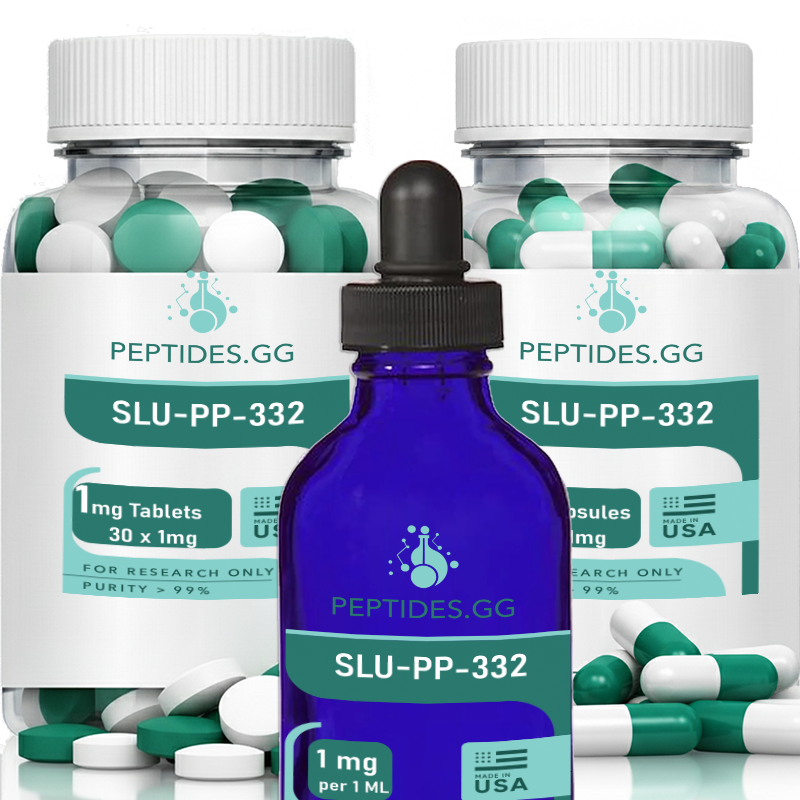
SLU-PP-332 serves as a valuable research tool for investigating mitochondrial uncoupling mechanisms and their effects on cellular metabolism in laboratory settings.
Research Disclaimer: Peptides.GG sells this and all other peptides for Research Only and not for human consumption.
SLU-PP-332
$89.99 – $799.00
- Free Delivery on all orders over $200
- Earn 5% Store Credit with Every Order
- Same Day Shipping Before 1 PM PST
- 10% Discount for Cryptocurrency Payments
14-day money-back guarantee
If you are not satisfied with the product, simply return it and we will refund your money

SLU-PP-332 serves as a valuable research tool for investigating mitochondrial uncoupling mechanisms and their effects on cellular metabolism in laboratory settings.
Research Disclaimer: Peptides.GG sells this and all other peptides for Research Only and not for human consumption.
Frequently Asked Questions About SLU-PP-332
Is SLU-PP-332 a peptide?
No. SLU-PP-332 is a synthetic small-molecule compound, not a peptide. It is classified as a pan-ERR agonist — an agonist of the estrogen-related receptors ERRα, ERRβ and ERRγ, a family of orphan nuclear receptors — with its highest potency at ERRα. Because it is a small molecule rather than an amino-acid chain, it differs structurally from the peptides in this catalog. It is supplied strictly as a research compound for laboratory use and is not for human consumption.
What is the molecular profile of SLU-PP-332?
SLU-PP-332 is a small molecule with molecular formula C₁₈H₁₄N₂O₂, a molecular weight of 290.32 Da, and CAS registry number 303760-60-3. Its lipophilic scaffold is designed to engage the ligand-binding domain of the estrogen-related receptors and stabilize their active conformation. It is supplied as a research-grade powder, verified at ≥99% purity by reversed-phase HPLC with molecular-weight confirmation by mass spectrometry.
How does SLU-PP-332 act in research models?
In laboratory research, SLU-PP-332 binds the estrogen-related receptor ligand-binding domain and acts as a pan-ERR agonist, promoting recruitment of the coactivator PGC-1α. This drives ERR-dependent transcriptional programs governing mitochondrial biogenesis and oxidative metabolism; in rodent studies it has been reported to increase oxidative muscle fibers and running endurance in an ERRα-dependent manner. These mechanisms are investigated in cell-culture and animal models, not in humans.
What is SLU-PP-332 studied for in laboratory research?
In preclinical and in vitro research, SLU-PP-332 is used as a tool compound to probe ERR-driven biology: ERR target-gene expression, mitochondrial content and oxidative-metabolism pathways, and the PGC-1α/ERR axis in skeletal-muscle and exercise-physiology models — where it is often described as an "exercise mimetic" in the research literature. Typical protocols include gene-expression and mitochondrial-function assays in cultured cells and animal models. Supplied for laboratory research use only; not for human consumption.
How does SLU-PP-332 differ in mechanism from a mitochondrial uncoupler such as BAM15?
They act through entirely different mechanisms. SLU-PP-332 is a transcriptional agonist: it binds the estrogen-related receptors and, via PGC-1α coactivation, switches on gene programs that expand mitochondrial capacity over time. BAM15 is described in research as a mitochondrial protonophore (uncoupler) that acts directly at the inner mitochondrial membrane to dissipate the proton gradient. Researchers therefore use them as distinct, non-interchangeable tools when studying mitochondrial and metabolic biology. These mechanisms are studied in laboratory models, not in humans.
What purity is SLU-PP-332, and is it third-party tested?
Each batch of SLU-PP-332 is verified at ≥99% purity by reversed-phase HPLC, with identity confirmed by electrospray-ionization mass spectrometry against its 290.32 Da molecular weight. The material is kept sealed and protected from light and moisture under cool, dry storage appropriate for a small-molecule compound. A Certificate of Analysis accompanies each batch, with third-party analytical verification available on request.
Research References
Peer-reviewed studies and database records underpinning the research described on this page. Links open on PubMed, PubMed Central, or the publisher in a new tab.
- Billon C, et al. Synthetic ERRα/β/γ Agonist Induces an ERRα-Dependent Acute Aerobic Exercise Response and Enhances Exercise Capacity. ACS Chem Biol. 2023. PMID: 36988910 →
- Billon C, et al. A Synthetic ERR Agonist Alleviates Metabolic Syndrome. J Pharmacol Exp Ther. 2024. PMID: 37739806 →
- Okda HE, et al. Chemical optimization of the exercise mimetic SLU-PP-332 enables insight into estrogen-related receptor signaling. Int J Biol Macromol. 2026. PMID: 41850449 →
- Giguère V. Transcriptional control of energy homeostasis by the estrogen-related receptors. Endocr Rev. 2008. PMID: 18664618 →
- Ranhotra HS. The estrogen-related receptors: orphans orchestrating myriad functions. J Recept Signal Transduct Res. 2012. PMID: 22268851 →
- Schreiber SN, et al. The estrogen-related receptor alpha (ERRalpha) functions in PPARgamma coactivator 1alpha (PGC-1alpha)-induced mitochondrial biogenesis. Proc Natl Acad Sci U S A. 2004. PMID: 15087503 →
- Mootha VK, et al. Erralpha and Gabpa/b specify PGC-1alpha-dependent oxidative phosphorylation gene expression that is altered in diabetic muscle. Proc Natl Acad Sci U S A. 2004. PMID: 15100410 →
- Fan W, et al. Estrogen-related receptors regulate innate and adaptive muscle mitochondrial energetics through cooperative and distinct actions. Proc Natl Acad Sci U S A. 2025. PMID: 40354528 →
Related products
-

O-304 (ATX-304)
$139.00 Select options This product has multiple variants. The options may be chosen on the product pageSize: 100mg x 60 Capsules
-
5-Amino-1MQ
Sale!$40.00 – $169.00 Select options This product has multiple variants. The options may be chosen on the product pageSize: 5mg, 50mg, 50mg x 60 Capsules
-
BAM-15
$155.00 – $225.00 Select options This product has multiple variants. The options may be chosen on the product pageSize: 50mg/ML 30ML, 30mg/ML 30ML
Research Overview
SLU-PP-332 is a synthetic small-molecule agonist of the estrogen-related receptors (ERRα, ERRβ and ERRγ), a family of orphan nuclear receptors that act as master regulators of cellular energy metabolism and mitochondrial function. It is a pan-ERR agonist with highest potency at ERRα (reported EC50 in the ~100 nM range) and is widely used as a chemical probe and “exercise mimetic” — a compound that activates the transcriptional programs and metabolic adaptations associated with physical exercise without requiring training. SLU-PP-332 was developed at Saint Louis University.
By binding the ERR ligand-binding domain and promoting coactivator (PGC-1α) recruitment, SLU-PP-332 induces ERR-dependent gene programs governing mitochondrial biogenesis, oxidative phosphorylation and fatty-acid oxidation. In skeletal-muscle models it increases mitochondrial function and cellular respiration, expands fast oxidative (Type IIa) muscle fibers and improves running endurance in mice in an ERRα-dependent manner; it also acutely induces the exercise-responsive gene DDIT4. Exercise-mimetic and metabolic research also employs AICAR for pharmacological AMPK activation and MOTS-c for studying mitochondrial-derived peptide signaling in energy metabolism.
Research applications span mitochondrial biogenesis and bioenergetics, metabolic regulation, thermogenesis, obesity and diabetes research, and investigations of the role of mitochondrial and oxidative metabolism in various disease models. Laboratory studies examine SLU-PP-332’s effects on ERR target-gene expression, mitochondrial content and respiration, substrate utilization, muscle fiber-type composition and whole-organism metabolic parameters in cell culture and preclinical models.
Molecular Characteristics
Complete Specifications:
- CAS Registry Number: 303760-60-3
- Molecular Weight: 290.32 Da
- Molecular Formula: C₁₈H₁₄N₂O₂
- Chemical Class: Synthetic small-molecule estrogen-related receptor (ERR) agonist
- Appearance: Powder (appearance varies by specific formulation)
- Solubility: DMSO, ethanol (organic solvents), limited aqueous solubility
- Mechanism: Pan-agonist of estrogen-related receptors (ERRα/β/γ); promotes PGC-1α coactivation and mitochondrial biogenesis
- Selectivity: Pan-ERR agonist with highest potency at ERRα
The small-molecule structure of SLU-PP-332 enables engagement of the estrogen-related receptor ligand-binding domain. Its lipophilic scaffold supports cell permeability and binding within the ERR ligand pocket, stabilizing the active receptor conformation that favors coactivator (PGC-1α) recruitment. The specific structural features of SLU-PP-332 underlie its pan-ERR agonist profile with greatest potency at ERRα.
Mechanism of ERR (Estrogen-Related Receptor) Activation
Nuclear-Receptor Agonism:
The estrogen-related receptors (ERRα/NR3B1, ERRβ/NR3B2, ERRγ/NR3B3) are orphan nuclear receptors that, with the coactivator PGC-1α, form the principal transcriptional network controlling mitochondrial biogenesis and oxidative metabolism. They are constitutively active and are regulated mainly by coactivator availability rather than by a classical circulating hormone. SLU-PP-332 acts as a synthetic agonist that binds the ERR ligand-binding domain and stabilizes the active conformation:
1. Ligand Binding: SLU-PP-332 occupies the ERR ligand-binding pocket and acts as a pan-agonist across ERRα, ERRβ and ERRγ, with greatest potency at ERRα.
2. Coactivator Recruitment: Agonist binding favors recruitment of PGC-1α and related coactivators to ERR, increasing transcription of ERR target genes.
3. Transcriptional Output: The resulting gene program drives mitochondrial biogenesis, oxidative phosphorylation and fatty-acid oxidation, and acutely induces the exercise-responsive gene DDIT4 — producing an “exercise-mimetic” metabolic phenotype.
This receptor-mediated, transcriptional mechanism is distinct from that of mitochondrial uncouplers: SLU-PP-332 increases oxidative and mitochondrial capacity through gene expression rather than by dissipating the mitochondrial membrane gradient.
SLU-PP-332 Characteristics:
SLU-PP-332 is a well-characterized ERR chemical probe and exercise mimetic. Reported research observations include:
- Pan-agonism of ERRα/β/γ with highest potency at ERRα
- Increased mitochondrial function and cellular respiration in skeletal-muscle cell models
- Expansion of fast oxidative (Type IIa) muscle fibers and improved running endurance in mice (ERRα-dependent)
- Acute induction of the exercise-responsive gene DDIT4
- Increased fatty-acid oxidation and oxidative metabolic capacity
These properties make SLU-PP-332 valuable for research examining ERR-driven mitochondrial biogenesis and exercise-associated metabolic adaptations.
Research Applications
Mitochondrial Bioenergetics Research
SLU-PP-332 enables investigation of fundamental mitochondrial function and bioenergetic principles:
Mitochondrial Respiration Studies:
- Oxygen consumption rate (OCR) measurement using Seahorse XF analyzer or Clark-type electrode
- Assessment of basal respiration, ATP-linked respiration, and maximal respiratory capacity
- concentration-response characterization of ERR-agonist effects on respiration
- Comparison with other ERR agonists and metabolic reference compounds
- Substrate-specific respiration (complex I, complex II, fatty acid oxidation)
Membrane Potential Measurements:
- TMRM (tetramethylrhodamine methyl ester) or JC-1 fluorescent probes
- Flow cytometry analysis of mitochondrial polarization in cell populations
- Confocal microscopy of membrane potential in live cells
- Relationship between SLU-PP-332 concentration and mitochondrial respiratory parameters
- Assessment of mitochondrial mass and respiratory capacity
ATP Production Analysis:
- Cellular ATP content measurement using luciferase-based assays
- ATP/ADP ratio determination
- Real-time ATP production rate measurement
- Relationship between oxygen consumption and ATP synthesis (P/O ratio)
- Effects on cellular energy charge
Mitochondrial Morphology and Dynamics:
- Live-cell imaging of mitochondrial network structure
- Assessment of fusion and fission dynamics
- Effects of ERR activation on mitochondrial morphology
- Relationship between bioenergetic state and mitochondrial dynamics
- Mitochondrial protein import and quality control
Research protocols typically employ isolated mitochondria, permeabilized cells, intact cells, or precision-cut tissue slices to characterize SLU-PP-332’s effects on mitochondrial function across different biological complexity levels.
Metabolic Research Applications
SLU-PP-332 enables investigation of metabolic regulation and energy balance:
Substrate Utilization Studies:
- Glucose oxidation and glycolytic flux measurements
- Fatty acid oxidation assessment using radiolabeled substrates
- Amino acid catabolism studies
- Metabolic flexibility testing (substrate switching capacity)
- Nutrient sensor activation (AMPK, mTOR, sirtuins)
Thermogenesis Research:
- Heat production measurement using calorimetry
- Brown adipose tissue (BAT) activation studies
- UCP1-independent thermogenesis investigation
- Cold-induced thermogenesis models
- Diet-induced thermogenesis studies
Energy Expenditure Analysis:
- Whole-body oxygen consumption and CO₂ production (metabolic cages)
- Respiratory exchange ratio (RER) determination
- Activity-corrected energy expenditure
- Fuel preference analysis
- 24-hour metabolic profiling
Metabolic Disease Models:
- Diet-induced obesity models
- Insulin resistance and type 2 diabetes models
- Non-alcoholic fatty liver disease (NAFLD) studies
- Metabolic syndrome investigations
- Aging and metabolic decline studies
Experimental approaches include cell culture models (adipocytes, hepatocytes, myocytes), tissue explants, and rodent models with comprehensive metabolic phenotyping.
Obesity and Diabetes Research
ERR activation represents a potential research approach for metabolic disease:
Adipose Tissue Research:
- White adipocyte lipolysis and fat oxidation
- Brown adipocyte activation and thermogenic capacity
- Beige/brite adipocyte induction in white adipose tissue
- Adipose tissue gene expression (UCP1, PGC-1α, PPARs)
- Adipokine secretion profiles
Hepatic Metabolism:
- Hepatic glucose production and gluconeogenesis
- Fatty acid synthesis and oxidation balance
- Triglyceride accumulation and lipid droplet dynamics
- Hepatic insulin sensitivity
- Mitochondrial function in NAFLD models
Skeletal Muscle Metabolism:
- Muscle glucose uptake and insulin sensitivity
- Mitochondrial biogenesis and oxidative capacity
- Exercise-mimetic effects
- Muscle fiber type characteristics
- Myokine secretion
Whole-Body Glucose Homeostasis:
- Glucose tolerance tests (GTT, IPGTT)
- Insulin tolerance tests (ITT)
- Hyperinsulinemic-euglycemic clamp studies
- Fasting and postprandial glucose profiles
- HbA1c and fructosamine measurements
Research investigates whether ERR-driven enhancement of oxidative metabolism improves metabolic parameters in disease models.
Cellular Stress and Adaptive Response Research
ERR activation engages metabolic and adaptive-response pathways:
AMPK Activation:
- AMPK phosphorylation status (Thr172)
- Downstream target phosphorylation (ACC, TBC1D1)
- AMPK-dependent gene expression changes
- Metabolic consequences of AMPK activation
- Comparison with pharmacological AMPK activators
Mitochondrial Biogenesis:
- PGC-1α expression and activity
- Mitochondrial DNA copy number
- Mitochondrial protein expression (OXPHOS complexes)
- Citrate synthase and COX enzyme activities
- Mitochondrial mass measurements (MitoTracker, citrate synthase)
Mitochondrial Quality Control:
- Mitophagy induction and flux
- PINK1-Parkin pathway activation
- Mitochondrial protein import efficiency
- Mitochondrial unfolded protein response (UPRmt)
- Proteolytic pathways (Lon protease, ClpP)
Oxidative Stress and Antioxidant Responses:
- Reactive oxygen species (ROS) production measurement
- Antioxidant enzyme expression (SOD, catalase, GPx)
- Glutathione and NADPH levels
- Lipid peroxidation markers
- Nrf2 pathway activation
Research examines how ERR-driven metabolic adaptation engages downstream pathways potentially conferring long-term benefits.
Aging and Longevity Research
Mitochondrial function plays central roles in aging processes:
Mitochondrial Aging:
- Age-related changes in mitochondrial function
- Mitochondrial DNA mutations and damage
- Decline in oxidative capacity with aging
- Mitochondrial-derived reactive oxygen species (mtROS)
- Effects of ERR activation on aging parameters
Healthspan and Lifespan Studies:
- Longevity assessments in model organisms (C. elegans, Drosophila, mice)
- Age-related disease onset and progression
- Physical performance and frailty measurements
- Cognitive function assessments
- Inflammatory markers and immunosenescence
Caloric Restriction Mimetics:
- Comparison of ERR-activation effects with caloric restriction
- Overlapping molecular pathways (sirtuins, AMPK, mTOR)
- Metabolic reprogramming
- Stress resistance and resilience
- Potential caloric restriction-mimetic properties
Research investigates whether ERR-driven metabolic adaptation activates pathways similar to those induced by caloric restriction, potentially extending healthspan.
Neuroscience Research Applications
Mitochondrial function significantly influences neuronal health and function:
Neuronal Bioenergetics:
- Neuronal ATP production and energy status
- Synaptic transmission energy requirements
- Axonal transport energy dependence
- Effects of ERR activation on neuronal function
- Neuroprotection vs. neurotoxicity thresholds
Neurodegenerative Disease Models:
- Parkinson’s disease models (mitochondrial complex I deficiency)
- Alzheimer’s disease models (mitochondrial dysfunction, amyloid beta effects)
- Huntington’s disease models (mutant huntingtin mitochondrial effects)
- ALS models (mitochondrial impairment in motor neurons)
- Potential neuroprotective effects of ERR activation
Neuroinflammation:
- Microglial metabolic phenotypes
- Inflammatory mediator production
- Effects of metabolic modulation on neuroinflammation
- Blood-brain barrier integrity
- Neuron-glia metabolic coupling
Research examines whether mild metabolic stress improves neuronal resilience or potentially provides therapeutic benefits in neurodegenerative models.
Laboratory Handling and Storage Protocols
Powder Storage:
- Store at -20°C in sealed container with desiccant
- Protect from light exposure (use amber container if available)
- Maintain desiccated environment
- Stability data available for storage conditions
- Minimize opening frequency to prevent moisture exposure
- Record receipt and opening dates
Handling Precautions:
- Appropriate personal protective equipment (lab coat, gloves, safety glasses)
- Handle in fume hood or well-ventilated area
- Avoid skin contact and inhalation
- Follow institutional chemical safety protocols
- Dispose as hazardous chemical waste
- Clean spills immediately
- Wash hands thoroughly after handling
Special Considerations:
- Bioactive ERR agonists can affect cellular metabolism and viability at higher concentrations
- Establish concentration-response relationships in each experimental system
- Start with lower concentrations and titrate upward
- Monitor cell viability alongside metabolic measurements
- Include vehicle (DMSO) and reference-compound controls
Quality Assurance and Analytical Testing
Each SLU-PP-332 batch undergoes comprehensive analytical characterization:
Purity Analysis:
- High-Performance Liquid Chromatography (HPLC): ≥99% purity
- Reversed-phase HPLC with appropriate column and mobile phase
- UV detection at compound-specific wavelength
- Multiple peak integration for accurate purity determination
- Impurity identification and quantification
Structural Verification:
- Electrospray Ionization Mass Spectrometry (ESI-MS): Confirms molecular weight (290.32 Da)
- High-resolution mass spectrometry for exact mass determination
- Nuclear Magnetic Resonance (NMR): ¹H-NMR and ¹³C-NMR structural verification
- Infrared spectroscopy for functional group confirmation
- Comparison with reference standards
Contaminant Testing:
- Bacterial endotoxin: <5 EU/mg (LAL method) for cell culture applications
- Heavy metals: Below detection limits per USP standards
- Residual solvents: GC-MS quantification within acceptable limits
- Water content: Karl Fischer titration
- Related substances and degradation products by HPLC
Documentation:
- Certificate of Analysis (COA) provided with each batch
- Analytical chromatograms and spectra available upon request
- Third-party analytical verification available
- Batch-specific QC results traceable by lot number
- Stability data for recommended storage conditions
Research Considerations
Experimental Design Factors:
1. Concentration Selection: Determine appropriate concentration ranges through preliminary concentration-response studies. SLU-PP-332 typically shows effects at μM concentrations in cell culture. Start with broad concentration ranges (e.g., 0.1-100 μM) and narrow based on initial results.
2. Time Course: Effects may be immediate (bioenergetic changes) or delayed (gene expression, adaptive responses). Design time courses appropriate for endpoints measured. Acute measurements (minutes to hours) assess early signaling; chronic treatments (days to weeks) capture transcriptional and mitochondrial-biogenesis responses.
3. Temperature Control: Maintain consistent assay temperature during measurements. Consider temperature and metabolic-state effects when comparing in vitro and in vivo results.
4. Cell Type Considerations: Different cell types show varying responsiveness based on ERR expression and metabolic characteristics. Highly oxidative cells (myotubes, cardiomyocytes, hepatocytes) may respond more than less metabolic cells (fibroblasts).
5. Vehicle Controls: Always include vehicle controls matching DMSO or other solvent concentration. Vehicle effects should be characterized in initial experiments.
6. Positive Controls: Include well-characterized ERR agonists or vehicle controls, plus target-engagement readouts, to validate experimental systems.
Mechanism Validation:
Confirm ERR-mediated mechanism through multiple complementary approaches:
Direct Mitochondrial Effects:
- Oxygen consumption increase
- Increased mitochondrial content and biogenesis markers
- Increased oxidative (ATP-linked) respiratory capacity
- ERR target-gene induction (e.g., PGC-1α program, DDIT4)
- concentration-response relationships for above parameters
Cellular Metabolic Consequences:
- Increased substrate oxidation
- AMPK activation
- Increased fatty-acid oxidation
- Heat production increase
- Nutrient sensor pathway activation
Specificity Controls:
- Effects attenuated by ERR antagonism or ERRα knockdown (confirms ERR dependence)
- Effects mediated by nuclear-receptor transcription rather than direct perturbation of oxidative phosphorylation
- Effects on mitochondria-rich vs. mitochondria-poor cells
- Comparison with structural analogs and inactive compounds
Compliance and Safety Information
Regulatory Status:
SLU-PP-332 is provided as a research chemical for in-vitro laboratory studies and preclinical research only. This compound has not been approved by FDA for human therapeutic use, dietary supplementation, or medical applications.
Intended Use:
- In-vitro cell culture studies of mitochondrial function
- In-vivo preclinical research in approved animal models
- Laboratory investigation of metabolic regulation
- Academic and institutional research applications
- Pharmaceutical research studying ERR/PGC-1α metabolic signaling
NOT Intended For:
- Human consumption or administration
- Therapeutic treatment or diagnosis
- Dietary supplementation or weight loss products
- Performance enhancement
- Veterinary therapeutic applications without appropriate oversight
Safety Protocols:
Researchers should follow standard laboratory safety practices:
- Use appropriate personal protective equipment
- Handle in well-ventilated areas or fume hood
- Follow institutional biosafety and chemical safety guidelines
- Avoid skin contact and inhalation
- Dispose of waste according to hazardous chemical regulations
- Consult safety data sheet (SDS) for specific safety information
Research Safety Considerations:
- Bioactive research compounds can show toxicity at higher concentrations
- Establish safe concentration ranges in each experimental system
- Monitor cellular and animal health parameters carefully
- Establish safe concentration ranges in each experimental system and monitor cellular and animal health parameters
- Treat SLU-PP-332 with appropriate respect as a bioactive research compound
—