

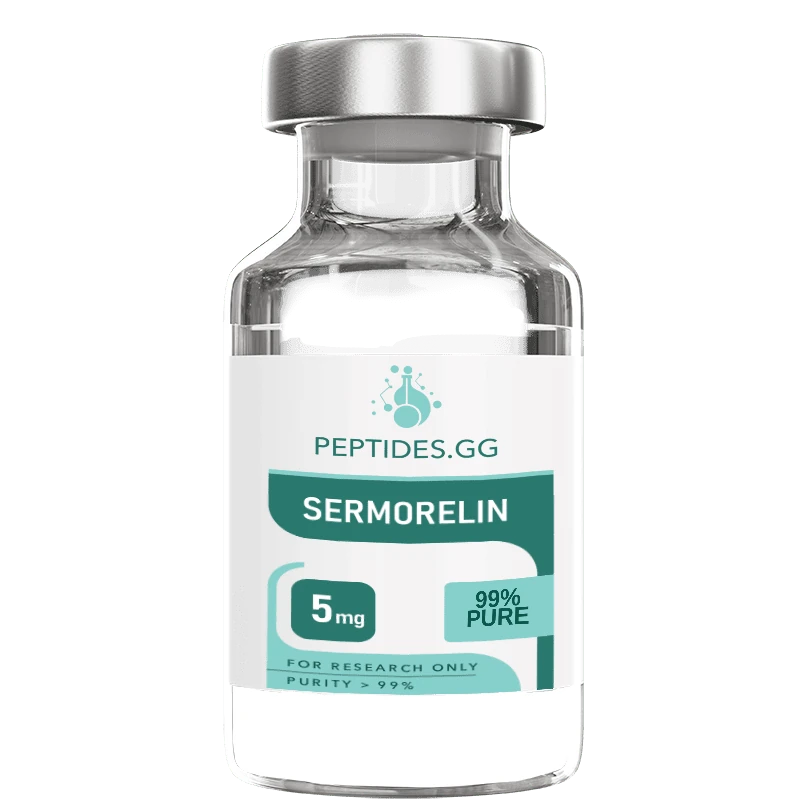
The Sermorelin peptide (GHRH 1-29) serves as a critical research tool for investigating growth hormone axis regulation, pituitary function, and neuroendocrine signaling mechanisms in laboratory settings.
Research Disclaimer: Peptides.GG sells this and all other peptides for Research Only and not for human consumption.
Sermorelin Peptide
$25.00 – $80.00
- Free Delivery on all orders over $200
- Earn 5% Store Credit with Every Order
- Same Day Shipping Before 1 PM PST
14-day money-back guarantee
Not satisfied? Return any unopened product within 14 days of delivery for a full refund — we send the return label.
The Sermorelin peptide (GHRH 1-29) serves as a critical research tool for investigating growth hormone axis regulation, pituitary function, and neuroendocrine signaling mechanisms in laboratory settings.
Research Disclaimer: Peptides.GG sells this and all other peptides for Research Only and not for human consumption.
Related products
-

Vesugen (Bioregulator)
$60.00 Select options This product has multiple variants. The options may be chosen on the product pageSize: 20mg
-
AOD9604
$30.00 – $80.00 Select options This product has multiple variants. The options may be chosen on the product pageSize: 2mg, 5mg, 10mg
Certificate of Analysis
Third-party tested · Independent analytical lab
| Tested | Measured | Purity |
|---|---|---|
| Jun 2026 | 5.39mg | 98.78% |
| Apr 2026 | 5.56mg | 99.31% |
| Feb 2026 | 5.70mg | 99.34% |
| Jan 2026 | 5.50mg | 99.41% |
| Nov 2025 | 5.62mg | 99.01% |
Research Overview
The Sermorelin peptide (GHRH 1-29) serves as a critical research tool for investigating growth hormone axis regulation, pituitary function, and neuroendocrine signaling mechanisms in laboratory settings. As a synthetic analog of the first 29 amino acids of endogenous growth hormone-releasing hormone (GHRH 1-44), Sermorelin retains full biological activity at the GHRH receptor while offering improved stability and standardized research applications. The compound has become fundamental to understanding somatotroph physiology, GH secretion dynamics, and the complex feedback mechanisms governing the growth hormone-IGF-1 axis.
The development of Sermorelin emerged from efforts to identify the minimal bioactive sequence of hypothalamic GHRH. Research demonstrated that the N-terminal 29 amino acids contain all structural elements necessary for receptor binding and signal transduction, while the C-terminal 15 amino acids of native GHRH primarily contribute to peptide stability rather than receptor activation. This truncated analog provides researchers with a well-characterized, reproducible tool for probing GHRH receptor biology.
Laboratory studies investigate Sermorelin’s effects on GHRH receptor binding kinetics, intracellular signaling cascades (cAMP/PKA pathway), pituitary somatotroph responsiveness, GH pulse dynamics, and downstream IGF-1 production. Research protocols examine these effects in pituitary cell cultures, hypothalamic-pituitary explants, and whole-animal models. The extensive body of Sermorelin research has established fundamental principles of neuroendocrine regulation applicable to understanding aging, metabolic disorders, and growth pathologies. GHRH receptor research is complemented by GHSR-targeted secretagogues such as Ipamorelin, which initiates GH secretion through the ghrelin receptor pathway, enabling dual-axis stimulation studies.
Molecular Characteristics
Sermorelin Acetate:
- Synonyms: GHRH (1-29) NH₂, GRF (1-29) NH₂, Geref, Gerel
- CAS Number: 86168-78-7
- Molecular Weight: 3357.9 Da (free base)
- Molecular Formula: C₁₄₉H₂₄₆N₄₄O₄₂S
- Amino Acid Sequence: Tyr-Ala-Asp-Ala-Ile-Phe-Thr-Asn-Ser-Tyr-Arg-Lys-Val-Leu-Gly-Gln-Leu-Ser-Ala-Arg-Lys-Leu-Leu-Gln-Asp-Ile-Met-Ser-Arg-NH₂
- Structure: Linear 29-amino acid peptide with C-terminal amidation
- Isoelectric Point: Approximately 10.0
- Receptor Target: Growth Hormone-Releasing Hormone Receptor (GHRHR)
- Research Applications: Pituitary function studies, GH axis research, aging models, metabolic investigations
Sermorelin represents the fully functional bioactive core of endogenous GHRH. The C-terminal amidation is essential for full biological activity, protecting against carboxypeptidase degradation and optimizing receptor interaction. The N-terminal tyrosine residue is critical for receptor binding affinity, while the amphipathic α-helical structure spanning residues 6-29 facilitates membrane interaction and receptor activation.
Structural Features Critical for Activity:
- N-terminal Region (1-8): Contains essential receptor binding determinants; Tyr¹ and Ala² are critical for high-affinity binding
- Central Helical Domain (6-29): Forms amphipathic α-helix essential for receptor activation
- C-terminal Amide: Required for full potency; free acid forms show reduced activity
- Met²⁷: Oxidation-sensitive residue; methionine sulfoxide formation reduces activity
- Basic Residues (Arg¹¹, Lys¹², Arg²⁰, Lys²¹): Contribute to receptor interaction and peptide solubility
Comparison to Related GHRH Analogs:
- GHRH (1-44): Full-length native hormone; additional C-terminal residues provide increased stability but identical receptor potency
- CJC-1295: Modified GHRH analog with Drug Affinity Complex (DAC) for extended half-life; used in comparative pharmacokinetic studies
- Modified GRF (1-29) / CJC-1295 without DAC: Tetrasubstituted analog (Ala², Gln⁸, Ala¹⁵, Leu²⁷) with enhanced stability
- Tesamorelin: GHRH analog with trans-3-hexenoic acid modification; FDA-approved for lipodystrophy research
Mechanism of Action
Sermorelin exerts its biological effects through specific activation of the growth hormone-releasing hormone receptor (GHRHR), a class B G protein-coupled receptor (GPCR) expressed predominantly on pituitary somatotroph cells. Understanding this mechanism provides fundamental insights into neuroendocrine regulation and GPCR signaling.
Receptor Binding and Activation:
The GHRHR belongs to the secretin receptor family of GPCRs, characterized by a large extracellular N-terminal domain essential for peptide ligand binding. Sermorelin binding involves a two-step mechanism: initial interaction of the peptide’s N-terminus with the receptor’s extracellular domain, followed by insertion of the peptide’s helical region into the transmembrane core to trigger receptor activation. This binding induces conformational changes that promote G protein coupling.
Intracellular Signaling Cascade:
- G Protein Coupling: GHRHR primarily couples to Gαs, activating adenylyl cyclase
- cAMP Production: Adenylyl cyclase activation increases intracellular cyclic AMP concentrations
- PKA Activation: Elevated cAMP activates protein kinase A (PKA)
- CREB Phosphorylation: PKA phosphorylates CREB (cAMP response element-binding protein), promoting GH gene transcription
- Calcium Influx: Secondary activation of voltage-gated calcium channels and phospholipase C contributes to GH release
- GH Exocytosis: Increased intracellular calcium triggers fusion of GH-containing secretory granules with plasma membrane
Pituitary Somatotroph Effects:
- Acute GH Release: Rapid exocytosis of preformed GH from secretory granules (minutes)
- GH Gene Transcription: Increased GH mRNA synthesis via CREB-mediated transcription (hours)
- Somatotroph Proliferation: Mitogenic effects promoting somatotroph cell division (days to weeks)
- Somatotroph Differentiation: Effects on pituitary progenitor cell commitment to somatotroph lineage
Regulation and Feedback Mechanisms:
Sermorelin’s effects occur within the context of complex neuroendocrine feedback systems:
- Somatostatin Opposition: Hypothalamic somatostatin (SRIF) opposes GHRH action, creating pulsatile GH secretion patterns
- IGF-1 Negative Feedback: Circulating IGF-1 inhibits both hypothalamic GHRH release and pituitary GH secretion
- GH Short-Loop Feedback: GH itself exerts negative feedback at hypothalamic and pituitary levels
- Ghrelin Synergy: Ghrelin (growth hormone secretagogue) acts synergistically with GHRH to amplify GH release
Research Applications
GHRH Receptor Biology Research
Sermorelin provides essential tools for dissecting GHRHR structure-function relationships and GPCR pharmacology principles:
Receptor Binding and Affinity Studies:
- Radioligand binding assays using [¹²⁵I]-Sermorelin or [¹²⁵I]-GHRH analogs
- Competition binding experiments determining Ki values for GHRH analogs
- Surface plasmon resonance (SPR) kinetic analysis of receptor-ligand interactions
- Fluorescence polarization assays using labeled peptide analogs
- Structure-activity relationship studies comparing Sermorelin to modified analogs
Research protocols typically employ pituitary membrane preparations, GHRHR-transfected cell lines (HEK293, CHO), or native pituitary cells. Binding studies establish receptor pharmacology and guide development of modified GHRH analogs with improved properties.
Receptor Signaling Studies:
- cAMP accumulation assays (ELISA, HTRF, or luminescence-based detection)
- Intracellular calcium mobilization (Fura-2, Fluo-4 fluorescent indicators)
- PKA activity assays and CREB phosphorylation (Western blot, ELISA)
- β-arrestin recruitment assays for receptor desensitization studies
- Receptor internalization and trafficking (confocal microscopy, flow cytometry)
- BRET/FRET-based biosensors detecting receptor conformational changes
Receptor Regulation Research:
- Desensitization kinetics following prolonged Sermorelin exposure
- Receptor downregulation and recovery time courses
- G protein-coupled receptor kinase (GRK) involvement in receptor phosphorylation
- β-arrestin-mediated receptor internalization mechanisms
- Receptor recycling vs. degradation pathways
Growth Hormone Secretion Research
Sermorelin enables detailed investigation of GH secretion dynamics and somatotroph function:
In Vitro Pituitary Studies:
- Primary pituitary cell cultures from rodent or other species
- Pituitary adenoma cell lines (GH3, MtT/S) for somatotroph-specific studies
- GH secretion assays (ELISA, radioimmunoassay) following Sermorelin stimulation
- Concentration-response relationships for GH release
- Temporal dynamics of GH secretion (perifusion systems for real-time monitoring)
- Interaction studies with somatostatin, ghrelin, and other regulators
GH Gene Expression Research:
- GH mRNA quantification (RT-qPCR) following Sermorelin treatment
- GH promoter-reporter assays examining transcriptional regulation
- CREB binding to GH gene promoter (ChIP assays)
- Pit-1 transcription factor interaction studies
- Time-course analysis of transcriptional vs. secretory responses
Pulsatile Secretion Models:
- Hypothalamic-pituitary co-culture systems
- Pulsatile Sermorelin administration protocols
- Combined GHRH/somatostatin infusion paradigms
- GH pulse frequency and amplitude analysis
- Deconvolution analysis of secretory dynamics
In Vivo Research Applications
Sermorelin serves as a standardized tool for probing GH axis function in whole-animal models:
GH Stimulation Testing Protocols:
- Acute GH release assays following bolus Sermorelin administration
- Dose-response relationships in various species (rodents, large animals)
- Serial blood sampling for GH kinetic analysis
- Comparison of subcutaneous, intravenous, and intranasal administration
- Assessment of pituitary reserve and somatotroph responsiveness
Chronic Administration Studies:
- Effects on endogenous GH pulsatility patterns
- IGF-1 axis activation (serum IGF-1, IGFBP-3 measurements)
- Tissue-specific IGF-1 expression analysis
- Body composition effects (lean mass, fat mass, bone density)
- Metabolic parameter monitoring (glucose homeostasis, lipid profiles)
Pharmacokinetic Studies:
- Plasma half-life determination (typically 10-20 minutes)
- Bioavailability assessment by various routes
- Distribution and tissue uptake studies
- Metabolite identification and clearance mechanisms
- Comparison with longer-acting GHRH analogs
Aging and Somatopause Research
Sermorelin provides tools for investigating age-related decline in GH axis function:
Somatotroph Function in Aging:
- Comparison of young vs. aged pituitary responsiveness to Sermorelin
- Age-related changes in GHRHR expression and signaling
- Somatotroph number and function with aging
- Hypothalamic GHRH neuron changes in aged animals
- Contribution of increased somatostatin tone to somatopause
GH Axis Restoration Studies:
- Effects of Sermorelin on GH secretion in aged rodent models
- IGF-1 axis restoration with chronic GHRH stimulation
- Pituitary plasticity and somatotroph recovery in aged animals
- Comparison of physiologic (pulsatile) vs. continuous administration
Age-Related Tissue Effects:
- Skeletal muscle mass and protein synthesis in aged models
- Bone density and turnover markers
- Adipose tissue distribution and metabolism
- Cognitive function and hippocampal neurogenesis
- Cardiac function and cardiovascular parameters
- Immune function and thymic regeneration
Age-related GH decline research complements longevity studies using Epitalon, which targets telomerase activation and pineal melatonin production through bioregulatory mechanisms independent of the somatotropic axis.
Metabolic Research Applications
Sermorelin enables investigation of GH effects on metabolism and body composition:
Glucose and Lipid Metabolism:
- Insulin sensitivity and glucose tolerance studies
- Lipolysis and adipocyte biology
- Hepatic glucose production and glycogen metabolism
- Lipid oxidation and energy expenditure
- Interaction with insulin signaling pathways
Body Composition Research:
- DEXA or MRI analysis of lean mass and fat mass changes
- Visceral vs. subcutaneous adipose tissue distribution
- Skeletal muscle protein synthesis rates (stable isotope studies)
- Muscle fiber type composition and cross-sectional area
Obesity and Metabolic Syndrome Models:
- GH axis function in diet-induced obesity models
- Sermorelin effects in genetically obese rodents (ob/ob, db/db)
- Interaction with leptin and adiponectin signaling
- Effects on hepatic steatosis and NAFLD models
Metabolic research also investigates Tesamorelin, a modified GHRH analog with enhanced stability and potency for visceral adiposity and lipodystrophy research, providing pharmacokinetic advantages over native GHRH.
Bone and Musculoskeletal Research
Sermorelin facilitates investigation of GH/IGF-1 axis effects on skeletal tissues:
Bone Formation Research:
- Osteoblast proliferation and differentiation studies
- Local IGF-1 production in bone tissue
- Bone formation markers (P1NP, osteocalcin, alkaline phosphatase)
- Micro-CT analysis of bone microarchitecture
- Biomechanical testing of bone strength
Growth Plate Research:
- Chondrocyte proliferation and hypertrophy
- Longitudinal bone growth in juvenile animal models
- IGF-1 and IGFBP expression in growth plate cartilage
- Comparison with direct GH and IGF-1 administration
Skeletal Muscle Research:
- Muscle protein synthesis and degradation pathways
- Satellite cell activation and muscle regeneration
- Atrophy prevention in disuse and cachexia models
- mTOR pathway activation in skeletal muscle
- Muscle-specific IGF-1 isoform expression
Neuroendocrine and CNS Research
Sermorelin enables investigation of GH axis interactions with central nervous system function:
Hypothalamic Regulation:
- GHRH neuron physiology and regulation
- Interaction with somatostatin neurons
- Feedback regulation of hypothalamic GHRH release
- Circadian and sleep-related GH secretion patterns
Cognitive and Neuroprotective Research:
- Effects on hippocampal neurogenesis
- Learning and memory studies in aged animal models
- Synaptic plasticity and long-term potentiation
- Neuroprotection in injury and neurodegeneration models
- BDNF and other neurotrophic factor interactions
Sleep Architecture Research:
- Effects on slow-wave sleep and GH pulsatility
- Circadian regulation of GHRH sensitivity
- Sleep deprivation effects on GH axis responsiveness
Sleep and circadian research intersects with investigations using DSIP (Delta Sleep-Inducing Peptide), which modulates sleep architecture through distinct neuropeptide pathways.
Laboratory Handling and Storage Protocols
Lyophilized Powder Storage:
- Store at -20°C or below in original sealed container
- Protect from light exposure (peptides are photosensitive)
- Maintain desiccated environment to prevent moisture absorption
- Stability: 24+ months at -20°C when properly stored
- Allow vial to equilibrate to room temperature before opening to prevent condensation
- Minimize opening frequency; use small aliquots if multiple uses anticipated
- Record receipt date and opened date on container
Reconstitution Guidelines:
- Recommended solvent: Sterile bacteriostatic water (0.9% benzyl alcohol) or sterile water for injection
- Alternative solvents: PBS (pH 7.4), 0.1% BSA in saline for dilute working solutions
- Recommended stock concentration: 1-5 mg/mL
- Add solvent slowly along vial wall to minimize foaming
- Gently swirl to dissolve; DO NOT vortex vigorously (peptide degradation risk)
- Allow complete dissolution before use (solution should be clear)
- Filter sterilize through 0.22 μm low protein-binding filter if required for cell culture
Reconstituted Solution Storage:
- Store at 4°C for short-term use (up to 2-4 weeks with bacteriostatic water)
- Aliquot into single-use volumes to avoid repeated freeze-thaw cycles
- Store aliquots at -20°C for extended storage (up to 3 months)
- Avoid more than 2-3 freeze-thaw cycles (peptide degradation)
- Use polypropylene tubes (low peptide binding); avoid glass for dilute solutions
- Protect from light using amber tubes or foil wrapping
- Label each aliquot with compound name, concentration, date, and lot number
Working Solution Preparation:
- Dilute stock solutions into appropriate buffer or cell culture medium immediately before use
- For cell culture: use serum-free or low-serum medium to prevent binding to serum proteins
- Add BSA (0.1-0.5%) or similar carrier protein to prevent adsorption at low concentrations
- Prepare fresh working solutions for each experiment when possible
- Use working solutions within 4-8 hours of preparation
- Include vehicle control matching exact buffer composition
Stability Considerations:
- Methionine Oxidation: Met²⁷ susceptible to oxidation; avoid exposure to oxidizing conditions
- Deamidation: Asn residues may undergo deamidation at elevated pH or temperature
- Proteolysis: Add protease inhibitors if preparing tissue homogenates or biological samples
- Adsorption: Peptides adsorb to plastic and glass surfaces at low concentrations; use carrier proteins
- pH Sensitivity: Optimal stability at pH 4-6; avoid strongly alkaline conditions
Handling Precautions:
- Wear appropriate personal protective equipment (lab coat, gloves, safety glasses)
- Handle lyophilized powder in low-humidity environment when possible
- Use calibrated pipettes for accurate volume delivery
- Verify peptide concentration spectrophotometrically if critical (A280 using molar extinction coefficient)
- Follow institutional chemical safety protocols
- Dispose of waste according to institutional guidelines
Quality Assurance and Analytical Testing
The analytical methods below are those commonly used to characterize and verify the identity, purity, and quality of research compounds in this class:
Purity Analysis:
- High-Performance Liquid Chromatography (HPLC): ≥99% purity target
- Analytical method: Reversed-phase HPLC with C18 column
- UV detection at 220 nm and 280 nm (tyrosine absorbance)
- Gradient elution with acetonitrile/water/TFA mobile phase
- Peak integration for accurate purity determination
- Detection of truncated sequences, deletion peptides, and oxidation products
Identity Confirmation:
- Electrospray Ionization Mass Spectrometry (ESI-MS): Confirms molecular weight ([M+H]⁺, multiply charged ions)
- Expected mass: 3357.9 Da (monoisotopic)
- MALDI-TOF MS for rapid identity confirmation
- MS/MS sequencing for amino acid sequence verification when required
- Comparison to reference standard retention time and mass spectrum
Amino Acid Analysis:
- Acid hydrolysis followed by amino acid quantification
- Confirms amino acid composition matches expected sequence
- Used for accurate peptide content determination
- Distinguishes peptide content from total powder weight (counterions, moisture)
Peptide Content Determination:
- Net peptide content typically 80-95% of total weight
- Remainder consists of acetate counterions, water, and residual TFA
- Important for accurate concentration calculations
- UV spectrophotometry using molar extinction coefficient (ε280 = 2,560 M⁻¹cm⁻¹ for tyrosine residues)
Contaminant Testing:
- Bacterial endotoxin — Limulus amebocyte lysate (LAL) method
- Critical for cell culture and in vivo applications
- Residual solvents: GC-MS analysis for TFA, acetonitrile, other synthesis solvents
- Residual TFA content typically <1% w/w
- Water content: Karl Fischer titration
Bioactivity Assessment (optional):
- cAMP stimulation assay in GHRHR-expressing cells
- GH release assay in primary pituitary cells or pituitary cell lines
- Receptor binding assay comparing to reference standard
- EC50 determination for functional potency
Documentation:
- Certificate of Analysis (COA) provided with each batch
- HPLC chromatograms and mass spectra available upon request
- Third-party analytical verification available
- Lot number uniquely identifies each batch for traceability
- Stability data for recommended storage conditions
Research Considerations
Experimental Design Factors:
1. Concentration Range Selection: Establish full concentration-response curves for each experimental system. In vitro studies typically use 0.1 nM to 1 μM range. EC50 values for cAMP stimulation typically 0.1-1 nM in GHRHR-expressing cells. Include at least 6-8 concentration points with half-log dilution intervals.
2. Time Course Design: Sermorelin effects span multiple time scales. Acute signaling (cAMP, calcium) occurs within seconds to minutes. GH release from preformed granules peaks at 15-30 minutes. Transcriptional effects require hours (GH mRNA). Proliferative effects require days. Design time courses appropriate for endpoints measured.
3. Pulsatile vs. Continuous Exposure: In vivo GH secretion is pulsatile, not continuous. Continuous GHRH exposure leads to receptor desensitization. Consider pulsatile administration protocols (e.g., every 2-3 hours) for chronic studies. Compare pulsatile vs. continuous paradigms if receptor regulation is relevant.
4. Species Considerations: Sermorelin sequence is identical to human GHRH(1-29); cross-reactivity with rodent and other mammalian GHRHR is excellent. Verify receptor homology and response in non-traditional model species. Consider species-specific differences in GH axis regulation.
5. Control Conditions: Include vehicle controls matching exact buffer composition. Positive controls: native GHRH (1-44) if available, or reference Sermorelin. Negative controls: GHRHR antagonist (if investigating receptor-dependence) or receptor knockout/knockdown. Include scrambled peptide controls for non-specific peptide effects.
6. Cell System Selection: Primary pituitary cells provide physiologically relevant responses but show donor variability. Pituitary cell lines (GH3, MtT/S) offer reproducibility but may differ from primary cells. GHRHR-transfected cell lines (HEK293, CHO) enable receptor-specific studies. Validate GHRHR expression level in chosen system.
7. Phenol Red and Serum Considerations: Standard culture conditions may contain factors affecting peptide stability or response. Serum contains proteases that degrade peptides. Consider serum-free conditions or protease inhibitors for extended incubations. Document culture conditions thoroughly.
Common Experimental Pitfalls:
1. Peptide Adsorption: Sermorelin binds to plastic and glass surfaces, especially at low concentrations (<100 nM). Include carrier protein (0.1% BSA) in dilute solutions. Pre-coat tubes with BSA solution if necessary. Prepare fresh dilutions for each experiment.
2. Concentration Calculation Errors: Remember peptide content is <100% of powder weight. Calculate based on net peptide content from COA. Verify concentration spectrophotometrically for critical experiments.
3. Peptide Degradation: Sermorelin is susceptible to proteolysis, oxidation, and deamidation. Avoid repeated freeze-thaw cycles. Store reconstituted peptide properly. Verify activity of stored solutions periodically. Use fresh stock solutions for critical experiments.
4. Receptor Desensitization: Prolonged GHRH exposure causes receptor downregulation. Acute studies should limit exposure time to avoid desensitization artifacts. Wash cells between treatments if sequential stimulation is required.
5. Inadequate Equilibration: Allow sufficient time for receptor binding equilibrium. Pre-warm solutions to 37°C before adding to cells. Consider temperature effects on binding kinetics.
6. Incomplete Cell Model Characterization: Verify GHRHR expression before functional studies. Confirm downstream signaling pathway integrity. Compare responses to published values for validation.
Mechanism Investigation Approaches:
Comprehensive mechanism studies require multi-level investigation:
Level 1 – Receptor Interaction:
- Radioligand or fluorescent ligand binding assays
- SPR kinetics for association/dissociation rates
- Competition binding with GHRH analogs and antagonists
Level 2 – Receptor Signaling:
- cAMP accumulation assays
- Calcium mobilization measurements
- PKA activation and CREB phosphorylation
- β-arrestin recruitment and receptor internalization
Level 3 – Gene Expression:
- GH mRNA quantification (RT-qPCR)
- Transcriptome profiling (RNA-seq)
- Promoter-reporter assays
- ChIP for transcription factor binding
Level 4 – Hormone Secretion:
- GH release assays (ELISA, RIA)
- Time-course and dose-response characterization
- Secretory granule dynamics
Level 5 – Systemic Effects:
- Circulating GH and IGF-1 measurements
- Tissue-specific IGF-1 expression
- Physiological endpoints (growth, metabolism, body composition)
Compliance and Safety Information
Regulatory Status:
Sermorelin is provided as a research chemical for in-vitro laboratory studies and preclinical research only. While Sermorelin was previously FDA-approved as a diagnostic agent for GH deficiency assessment (Geref Diagnostic), this approval has been discontinued and no Sermorelin products are currently FDA-approved for human use. Research-grade Sermorelin is manufactured and supplied for research purposes exclusively and does not meet pharmaceutical GMP standards required for human use.
Intended Use:
- In-vitro cell culture studies of GHRH receptor biology
- In-vivo preclinical research in approved animal models with appropriate IACUC approval
- Laboratory investigation of GH axis regulation mechanisms
- Academic and institutional research applications
- Pharmaceutical research and drug discovery programs
- Biochemical assays and molecular biology studies
- Educational and training purposes in research laboratory settings
NOT Intended For:
- Human consumption or administration
- Therapeutic treatment, diagnosis, or disease prevention
- Dietary supplementation or athletic performance enhancement
- Anti-aging interventions or aesthetic applications
- Veterinary therapeutic applications without appropriate veterinary oversight
- Compounding for human or animal therapeutic use
- Any application outside of controlled laboratory research setting
Regulatory Compliance:
Researchers must comply with all applicable regulations including:
- Institutional Review Board (IRB) approval for human-derived materials
- Institutional Animal Care and Use Committee (IACUC) protocols for animal studies
- Institutional Biosafety Committee (IBC) approval where applicable
- FDA, DEA, and EPA regulations as applicable
- Local and state regulations governing research chemical use
- Export control regulations if shipping internationally
- OSHA laboratory safety standards
Safety Profile:
Sermorelin is a peptide with biological activity at low concentrations. While peptides generally present lower acute toxicity than small molecule drugs, appropriate handling precautions are warranted:
Personal Protective Equipment (PPE):
- Laboratory coat with long sleeves
- Nitrile or latex gloves
- Safety glasses or goggles
- Handle lyophilized powder carefully to avoid inhalation
Handling Precautions:
- Avoid skin contact with concentrated solutions
- Work in well-ventilated areas
- Wash hands thoroughly after handling
- Follow institutional chemical safety protocols
- Keep Safety Data Sheet (SDS) accessible
Waste Disposal:
- Dispose of unused material according to institutional guidelines
- Peptides are generally biodegradable
- Follow local regulations for laboratory waste disposal
- Do not dispose of concentrated solutions down laboratory drains
- Collect waste in appropriate containers for disposal
Spill Response:
- Absorb liquid spills with appropriate absorbent material
- Carefully contain powder spills avoiding dispersion
- Clean area with detergent solution
- Dispose of cleaning materials as chemical waste
Storage and Security:
- Store in secure, access-controlled laboratory freezer
- Maintain inventory records
- Label all containers with compound name and hazard information
- Keep away from unauthorized personnel
—