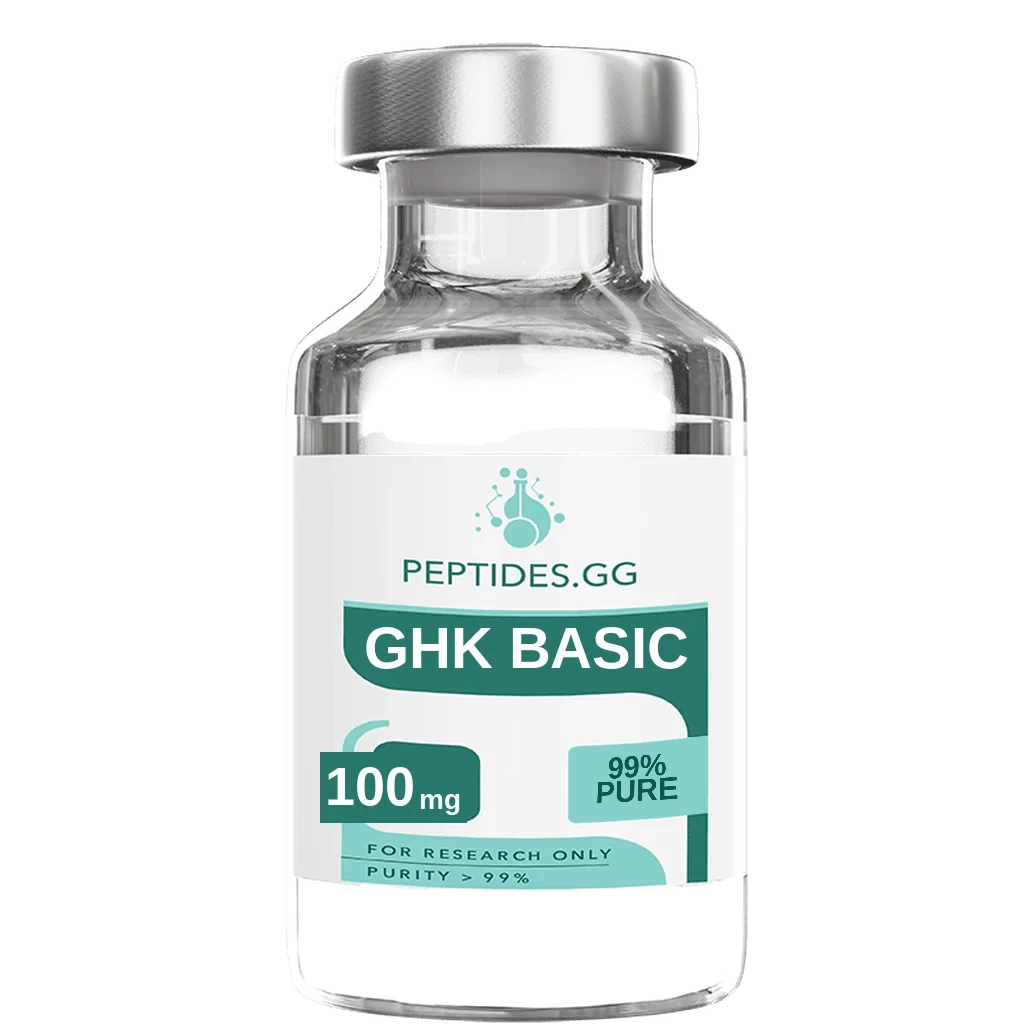
The GHK Basic peptide (glycyl-L-histidyl-L-lysine) is a synthetic copper-binding tripeptide, supplied here in its metal-free (copper-free) “basic” form as a lyophilized research chemical for in vitro laboratory investigation. Third-party lab tested for purity.
Peptides.GG is a chemical supplier and is not a compounding pharmacy under 503A or 503B. Statements have not been evaluated by the US FDA. Products are not intended to diagnose, treat, cure, or prevent any disease. For research use only — not for human consumption.
GHK Basic Peptide
$79.00
- Free Delivery on all orders over $200
- Earn 5% Store Credit with Every Order
- Same Day Shipping Before 1 PM PST
- 10% Discount for Cryptocurrency Payments
14-day money-back guarantee
If you are not satisfied with the product, simply return it and we will refund your money
The GHK Basic peptide (glycyl-L-histidyl-L-lysine) is a synthetic copper-binding tripeptide, supplied here in its metal-free (copper-free) “basic” form as a lyophilized research chemical for in vitro laboratory investigation. Third-party lab tested for purity.
Peptides.GG is a chemical supplier and is not a compounding pharmacy under 503A or 503B. Statements have not been evaluated by the US FDA. Products are not intended to diagnose, treat, cure, or prevent any disease. For research use only — not for human consumption.
Frequently Asked Questions About GHK Basic
What is GHK (GHK Basic)?
GHK is a naturally occurring tripeptide (glycyl-L-histidyl-L-lysine) first identified in human plasma, whose levels decline with age. "GHK Basic" is the metal-free form of the peptide — the GHK sequence supplied without a bound copper ion. It is studied strictly as a research tool for copper-coordination chemistry and tissue-remodeling biology, and is supplied for laboratory use only, not for human consumption.
How does GHK Basic differ from GHK-Cu?
GHK Basic is the metal-free apo-peptide (CAS 49557-75-7); GHK-Cu is the pre-formed peptide–copper(II) complex (CAS 89030-95-5), which carries a characteristic blue-green color. They share the same Gly-His-Lys peptide backbone, but GHK Basic contains no copper, allowing a laboratory to control copper stoichiometry itself.
What is the molecular profile of GHK?
The GHK tripeptide has the sequence Gly-His-Lys (glycyl-L-histidyl-L-lysine), molecular formula C₁₄H₂₄N₆O₄, and an average molecular weight of 340.38 Da (monoisotopic 340.186 Da). Its CAS number is 49557-75-7, distinct from the GHK-Cu copper complex (89030-95-5).
What is GHK studied for in research?
In preclinical and in vitro research, the GHK peptide is used to investigate copper binding and delivery, extracellular-matrix remodeling, collagen and matrix-metalloproteinase regulation, antioxidant and anti-inflammatory pathways, and gene-expression effects. Supplied for laboratory research use only; not for human consumption.
What size is GHK Basic available in?
GHK Basic is supplied as a lyophilized powder in a 100 mg size. The lyophilized format limits solution-phase degradation during storage and allows precise gravimetric preparation of research concentrations at the point of use.
How is GHK stored and handled in the laboratory?
GHK Basic is a white lyophilized powder soluble in water and standard aqueous buffers. It is kept sealed, cold, and protected from light and moisture until use. Each batch is third-party tested with a Certificate of Analysis.
Related products
-

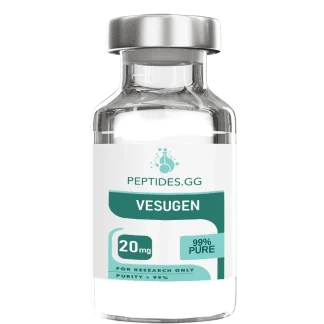
Vesugen (Bioregulator)
$60.00 Select options This product has multiple variants. The options may be chosen on the product pageSize: 20mg
-
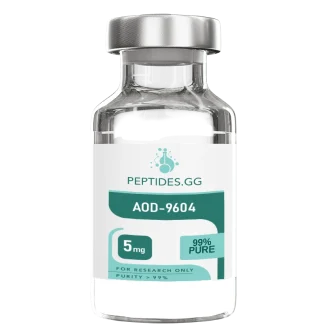
AOD9604
$30.00 – $80.00 Select options This product has multiple variants. The options may be chosen on the product pageSize: 2mg, 5mg, 10mg
Research Overview
The GHK peptide is a naturally occurring tripeptide — glycyl-L-histidyl-L-lysine — first identified in human plasma, where its concentration is observed to decline with age. “GHK Basic” refers to the metal-free apo-peptide: the GHK sequence supplied without a bound copper ion, in contrast to the pre-formed GHK-Cu complex. In this metal-free form the peptide is studied as a research tool for examining copper coordination chemistry, gene-expression effects, and tissue-remodeling pathways under controlled laboratory conditions.
Molecular Structure and Copper Coordination
The GHK sequence (Gly-His-Lys) presents a well-characterized copper(II)-binding motif. The N-terminal glycine amino group together with the histidine imidazole nitrogen coordinate Cu²⁺ in a square-planar geometry with very high affinity (stability constant on the order of 10¹⁶). Because the apo-peptide is supplied metal-free, researchers can study copper binding from the unbound starting state — introducing defined amounts of copper in vitro to follow complex formation, or examining copper-independent activity of the peptide directly.
Research Applications
In preclinical and in vitro research, the GHK tripeptide is examined for roles in extracellular-matrix remodeling, collagen synthesis and matrix-metalloproteinase regulation, antioxidant and anti-inflammatory signaling, and gene-expression modulation. Tissue-repair investigations frequently position GHK alongside BPC-157 and TB-500, which are studied for complementary repair-related mechanisms, providing researchers a panel of small peptides for comparative work.
Relationship to GHK-Cu
The defining difference between GHK Basic and GHK-Cu is the copper ion. GHK Basic is the metal-free peptide (CAS 49557-75-7); GHK-Cu is the pre-formed peptide–copper(II) complex (CAS 89030-95-5), recognizable by its characteristic blue-green color. Supplying the apo-peptide lets a laboratory control the copper stoichiometry itself rather than receiving a fixed pre-formed complex.
Laboratory Handling
GHK Basic is supplied as a white lyophilized (freeze-dried) powder, soluble in water and standard aqueous buffers. The lyophilized format limits solution-phase degradation during storage and supports precise gravimetric preparation of research concentrations at the point of use. The powder is kept sealed, cold, and protected from light and moisture until use. Each batch is third-party tested with a Certificate of Analysis.