

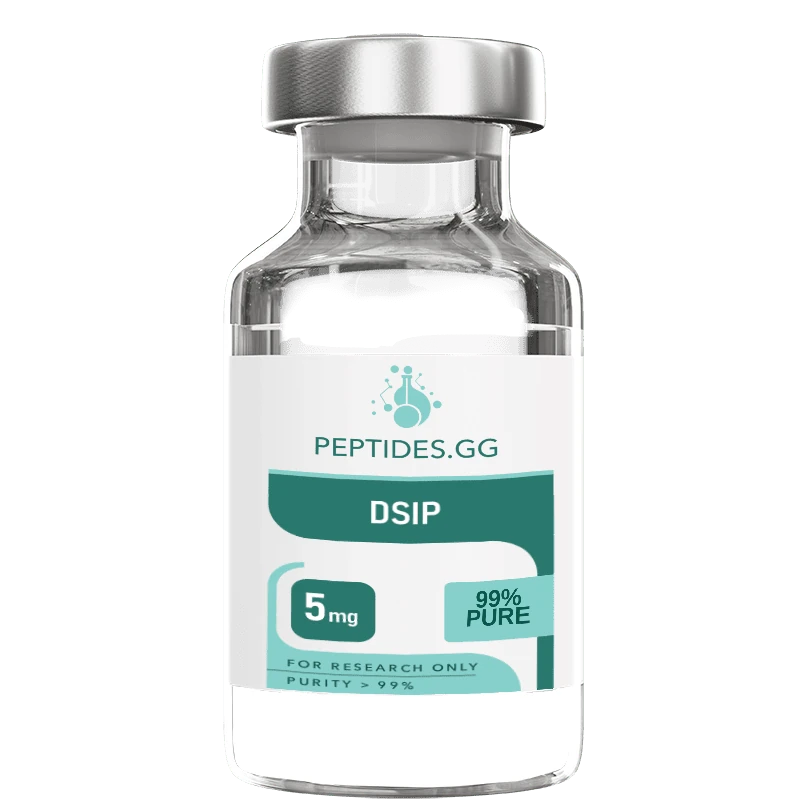
The DSIP peptide (Delta Sleep-Inducing Peptide) is a synthetic nonapeptide supplied as a lyophilized research chemical for in vitro laboratory investigation. Third-party lab tested for purity.
Peptides.GG is a chemical supplier and is not a compounding pharmacy under 503A or 503B. Statements have not been evaluated by the US FDA. Products are not intended to diagnose, treat, cure, or prevent any disease. For research use only — not for human consumption.
DSIP (Delta Sleep-Inducing Peptide)
$33.00 – $75.00
- Free Delivery on all orders over $200
- Earn 5% Store Credit with Every Order
- Same Day Shipping Before 1 PM PST
14-day money-back guarantee
Not satisfied? Return any unopened product within 14 days of delivery for a full refund — we send the return label.
The DSIP peptide (Delta Sleep-Inducing Peptide) is a synthetic nonapeptide supplied as a lyophilized research chemical for in vitro laboratory investigation. Third-party lab tested for purity.
Peptides.GG is a chemical supplier and is not a compounding pharmacy under 503A or 503B. Statements have not been evaluated by the US FDA. Products are not intended to diagnose, treat, cure, or prevent any disease. For research use only — not for human consumption.
Frequently Asked Questions About DSIP Delta Sleep-Inducing Peptide
What is DSIP?
DSIP (delta sleep-inducing peptide) is an endogenous nonapeptide first isolated in the 1970s and studied as a research tool in neuropeptide and neuroendocrine research. It is a naturally occurring peptide whose physiological role is still being characterized, which makes it a subject of ongoing mechanism research rather than a compound with a single defined receptor. It is supplied strictly as a research compound for laboratory use and is not for human consumption.
What is the molecular profile of DSIP?
DSIP is a nonapeptide with the sequence Trp-Ala-Gly-Gly-Asp-Ala-Ser-Gly-Glu, molecular formula C₃₅H₄₈N₁₀O₁₅, and a molecular weight of 848.81 Da. Its small, relatively simple amino-acid composition — without cysteine or a disulfide bridge — is characteristic of this neuropeptide. It is supplied as a white to off-white lyophilized powder, soluble in water and bacteriostatic water, and verified at ≥99% purity by reversed-phase HPLC.
Where does the name "delta sleep-inducing peptide" come from?
The name is historical and comes from how the peptide was discovered. In the 1970s, Schoenenberger and Monnier isolated DSIP from the cerebral venous blood of rabbits during experimentally induced low-frequency brain states, and named it for its association with electroencephalogram (EEG) delta-wave activity observed in those animal experiments. The name reflects that original research context and is not a description of any effect in humans.
How is DSIP studied in research models?
In laboratory research, DSIP is used as a neuropeptide tool to investigate neuromodulatory and neuroendocrine pathways. Studies have mapped its distribution in the brain, examined its transport across the blood-brain barrier in animal models, and explored its behavior in stress and neurochemical research; because its precise receptor and mechanism remain incompletely defined, it is frequently studied as an open mechanistic question. These investigations are conducted in cell-culture and animal models, not in humans.
What is DSIP studied for in laboratory research?
In preclinical and in vitro research, DSIP is used as a reference peptide for neuropeptide distribution and immunohistochemical mapping, neuroendocrine and stress-model research, blood-brain-barrier transport studies, and synthesis and analog chemistry. Typical protocols include peptide-stability assays and comparative studies of DSIP analogs. Supplied for laboratory research use only; not for human consumption.
What purity is DSIP, and how is it stored?
Each batch of DSIP is verified at ≥99% purity by reversed-phase HPLC, with identity confirmed by electrospray-ionization mass spectrometry against its 848.81 Da molecular weight and amino-acid analysis. The lyophilized powder is kept sealed and desiccated at -20°C to -80°C, protected from light and moisture, with stability data available for 24+ months at -20°C. A Certificate of Analysis accompanies each batch, with third-party analytical verification available on request.
Research References
Peer-reviewed studies and database records underpinning the research described on this page. Links open on PubMed, PubMed Central, or the publisher in a new tab.
- Schoenenberger GA, et al. Characterization of a delta-electroencephalogram (-sleep)-inducing peptide. Proc Natl Acad Sci U S A. 1977. PMID: 265572 →
- Monnier M, et al. The delta sleep inducing peptide (DSIP). Comparative properties of the original and synthetic nonapeptide. Experientia. 1977. PMID: 862769 →
- Schoenenberger GA, et al. The delta EEG (sleep)-inducing peptide (DSIP). XI. Amino-acid analysis, sequence, synthesis and activity of the nonapeptide. Pflugers Arch. 1978. PMID: 568769 →
- Graf MV, Kastin AJ. Delta-sleep-inducing peptide (DSIP): a review. Neurosci Biobehav Rev. 1984. PMID: 6145137 →
- Graf MV, Kastin AJ. Delta-sleep-inducing peptide (DSIP): an update. Peptides. 1986. PMID: 3550726 →
- Charnay Y, et al. Immunohistochemical mapping of delta sleep-inducing peptide in the cat brain and hypophysis. J Chem Neuroanat. 1990. PMID: 2222894 →
- Prudchenko IA, et al. Synthesis and biological properties of new analogs of delta-sleep peptide. I. Antiepileptic effect. Bioorg Khim. 1993. PMID: 8484813 →
- Monnier M, et al. Transport of the synthetic peptide DSIP through the blood-brain barrier in rabbit. Experientia. 1977. PMID: 590449 →
Related products
-

NA Selank Amidate
$40.00 – $65.00 Select options This product has multiple variants. The options may be chosen on the product pageSize: 10mg, 30mg
-
N-Acetyl Semax Amidate
$69.00 Select options This product has multiple variants. The options may be chosen on the product pageSize: 30mg
Certificate of Analysis
Third-party tested · Independent analytical lab
| Tested | Measured | Purity |
|---|---|---|
| Jul 2026 | 6.12mg | 99.66% |
| Jun 2026 | 5.96mg | 99.65% |
| May 2026 | 6.22mg | 99.74% |
| Jan 2026 | 5.97mg | 99.73% |
| Dec 2025 | 6.42mg | 99.49% |
| Oct 2025 | 6.10mg | 99.63% |
| Tested | Measured | Purity |
|---|---|---|
| Jul 2026 | 11.85mg | 99.62% |
| Jun 2026 | 12.25mg | 99.63% |
| Apr 2026 | 12.36mg | 99.67% |
| Jan 2026 | 12.15mg | 99.61% |
Research Overview
The DSIP peptide serves as a valuable research tool for investigating sleep mechanisms, stress-protective pathways, and neuroendocrine regulation in laboratory settings. This nonapeptide was originally isolated from rabbit cerebral venous blood during sleep experiments, where it demonstrated sleep-promoting properties when administered to other animals. Sleep architecture research intersects with neuroendocrine studies using growth hormone secretagogues like GHRP-2, which has demonstrated effects on sleep stage duration and quality through GHSR-mediated pathways. Research applications have expanded significantly beyond sleep studies to encompass stress response, pain modulation, neuroprotection, and metabolic regulation investigations. Neuropeptide research positions DSIP alongside Selank for GABAergic anxiolytic studies and Pinealon for pineal gland-derived bioregulatory mechanisms affecting sleep-wake cycles.
The peptide’s unusual structural features include N-terminal tryptophan and a distribution of charged and uncharged residues creating amphipathic characteristics potentially relevant for membrane interactions and receptor binding. DSIP’s mechanisms of action remain subjects of active research, with proposed interactions including opioid receptors, GABAergic systems, and direct membrane effects on neuronal excitability.
Laboratory studies investigate DSIP’s effects on sleep architecture (delta wave sleep, REM sleep, sleep continuity), circadian rhythm regulation, stress-induced physiological changes, hypothalamic-pituitary-adrenal (HPA) axis function, and neuronal protection against various insults. Research demonstrates DSIP’s ability to normalize disturbed sleep patterns, enhance stress resilience, and provide neuroprotection in experimental models.
Molecular Characteristics
Complete Specifications:
- Chemical Name: Delta Sleep-Inducing Peptide, DSIP
- Molecular Weight: 848.81 Da
- Molecular Formula: C₃₅H₄₈N₁₀O₁₅
- Amino Acid Sequence: Trp-Ala-Gly-Gly-Asp-Ala-Ser-Gly-Glu
- Peptide Classification: Neuropeptide, sleep-regulating peptide
- Appearance: White to off-white lyophilized powder
- Solubility: Water, bacteriostatic water, phosphate buffered saline
- Net Charge: -2 at physiological pH (due to aspartic acid and glutamic acid residues)
The peptide’s 9-amino acid structure demonstrates high conservation across mammalian species, suggesting evolutionary importance for physiological function. The N-terminal tryptophan residue is critical for biological activity, as deletion or modification significantly reduces DSIP’s effects in research models. The central glycine-glycine motif provides conformational flexibility potentially important for receptor interactions. The C-terminal acidic residues contribute to water solubility and may participate in ion interactions.
Pharmacokinetic Profile in Research Models
DSIP pharmacokinetic characterization in preclinical research reveals properties important for experimental design:
Absorption and Distribution:
- Multiple administration routes: Intravenous, intraperitoneal, intracerebroventricular, intranasal
- Blood-brain barrier penetration: Limited but detectable CNS entry with systemic administration
- Peripheral effects: Significant biological activities observed with peripheral administration
- Tissue distribution: Detected in brain, liver, kidney, and endocrine organs
Metabolism and Elimination:
- Plasma half-life: 15-30 minutes following IV administration
- Metabolic degradation: Susceptible to peptidase activity
- Modified analogs: Investigations into metabolically stable DSIP derivatives
- Biological activity duration: Effects persist beyond plasma presence, suggesting tissue binding or secondary messenger activation
Temporal Dynamics:
- Sleep effects: Observable within 30-90 minutes post-administration
- Stress-protective effects: Both acute and delayed protective responses documented
- Circadian interactions: DSIP effects may vary with time of administration
- Chronic administration: Repeated administration does not produce tolerance in most research models
These pharmacokinetic characteristics inform research protocol design, particularly regarding administration timing relative to sleep/wake cycles, stress challenges, or other experimental interventions.
Research Applications
Sleep Architecture Research
DSIP serves as a research tool for investigating sleep mechanisms and regulation:
- Delta Sleep Studies: Investigation of slow-wave sleep (SWS) promotion and enhancement
- Sleep Stage Analysis: Research on REM sleep, NREM sleep, and stage transitions
- Sleep Continuity: Studies examining sleep fragmentation and consolidation
- Circadian Rhythm Research: Investigation of sleep-wake cycle regulation and phase shifts
- Sleep Deprivation Models: Research on recovery sleep and sleep debt mechanisms
Research protocols employ electroencephalography (EEG), electromyography (EMG), polysomnographic recordings, and activity monitoring to characterize DSIP’s effects on sleep architecture in rodent and other animal models.
Stress Response and Adaptation Research
Laboratory studies investigate DSIP’s stress-protective and adaptive functions:
- Acute Stress Models: Investigation of stress hormone modulation and immediate stress responses
- Chronic Stress Studies: Research on adaptation to repeated or prolonged stress exposure
- HPA Axis Regulation: Analysis of cortisol/corticosterone, ACTH, and CRH modulation
- Oxidative Stress Protection: Studies examining antioxidant enzyme expression and ROS management
- Stress Resilience: Investigation of protective mechanisms preventing stress-induced pathology
Experimental paradigms include restraint stress, cold stress, oxidative stress models, and chronic unpredictable stress protocols, with outcomes measured through hormone assays, behavioral testing, and molecular stress markers.
Neuroendocrine Regulation Research
DSIP provides a tool for investigating hypothalamic-pituitary function:
- Growth Hormone Studies: Investigation of GH secretion patterns and somatotroph function
- Gonadotropin Research: Studies on LH, FSH regulation and reproductive hormone cycles
- Thyroid Function: Research on TSH and thyroid hormone interactions
- Prolactin Modulation: Investigation of prolactin release and lactotroph regulation
- Stress Hormone Research: Analysis of cortisol, corticosterone, and stress axis function
Laboratory investigations examine DSIP’s effects on pituitary hormone release, hypothalamic releasing factors, and feedback regulation mechanisms using hormonal assays, tissue culture systems, and in vivo endocrine challenge protocols.
Neuroprotection Research Applications
Research applications extend to neuronal protection mechanism investigation:
- Oxidative Stress Models: Studies on protection against ROS, lipid peroxidation, and oxidative damage
- Ischemic Injury Research: Investigation in stroke models and oxygen-glucose deprivation
- Excitotoxicity Studies: Research on glutamate-induced neurotoxicity protection
- Mitochondrial Function: Investigation of bioenergetics and mitochondrial protection
- Inflammatory Modulation: Studies examining neuroinflammation and microglial activation
Experimental models include primary neuronal cultures under stress conditions, hippocampal slice preparations, and in vivo neurological injury models assessing DSIP’s neuroprotective efficacy.
Pain Modulation Research
DSIP demonstrates analgesic properties in experimental pain models:
- Acute Pain Models: Investigation using thermal, mechanical, and chemical nociception tests
- Chronic Pain Research: Studies in neuropathic pain, inflammatory pain, and chronic pain models
- Opioid System Interactions: Research on endogenous opioid pathway modulation
- Central Pain Processing: Investigation of spinal and supraspinal analgesic mechanisms
- Tolerance and Dependence: Studies examining whether DSIP produces tolerance or dependence
Research protocols employ various pain assessment methods (tail-flick, hot plate, von Frey filaments, formalin test) combined with molecular analysis to characterize DSIP’s analgesic mechanisms.
Metabolic and Cardiovascular Research
Laboratory studies investigate DSIP’s peripheral physiological effects:
- Glucose Metabolism: Research on insulin secretion and glucose homeostasis
- Lipid Metabolism: Investigation of lipid profiles and metabolic regulation
- Blood Pressure Studies: Research on cardiovascular parameters and vascular function
- Body Temperature: Investigation of thermoregulation and metabolic rate
- Immune Function: Studies on immune cell activity and inflammatory responses
Experimental approaches examine DSIP’s systemic effects beyond CNS actions, providing insights into peptide’s diverse physiological roles.
Laboratory Handling and Storage Protocols
Lyophilized Powder Storage:
- Store at -20°C to -80°C in original sealed vial
- Protect from light exposure and moisture
- Desiccated storage environment required
- Stability data available for 12+ months at -20°C
Stability Considerations:
DSIP demonstrates moderate stability in solution. The N-terminal tryptophan may be susceptible to oxidation; storage under inert atmosphere may be beneficial for long-term storage. Standard peptide handling protocols should be followed to maintain biological activity.
Quality Assurance and Analytical Testing
The analytical methods below are those commonly used to characterize and verify the identity, purity, and quality of research compounds in this class:
Purity Analysis:
- High-Performance Liquid Chromatography (HPLC): ≥99% purity
- Analytical method: Reversed-phase HPLC with UV detection at 214nm and 280nm (tryptophan)
- Multiple peak integration to ensure accurate purity determination
Structural Verification:
- Electrospray Ionization Mass Spectrometry (ESI-MS): Confirms molecular weight 848.81 Da
- Amino acid analysis: Verifies sequence composition
- Peptide content determination: Quantifies actual peptide content by weight
Contaminant Testing:
- Bacterial endotoxin — Limulus amebocyte lysate (LAL) method
- Residual solvents: TFA and acetonitrile within acceptable limits
- Water content: Karl Fischer titration (<8%)
Documentation:
- Certificate of Analysis (COA) provided with each batch
- Third-party analytical verification available upon request
- Stability data documented for recommended storage conditions
- Batch-specific QC results traceable by lot number
Research Considerations
Experimental Design Factors:
Researchers should consider several factors when designing DSIP experiments:
1. Circadian Timing: DSIP effects may vary with circadian phase. Standardize administration timing relative to light-dark cycles.
2. Baseline Conditions: Consider baseline sleep quality, stress state, and physiological conditions which may influence DSIP responsiveness.
3. Concentration Selection: Determine appropriate concentrations based on research objectives, species, and administration route. Published literature shows broad concentration ranges.
4. Temporal Measurements: DSIP’s effects manifest over different timescales. Sleep studies require hours of recording; stress-protective effects may require days.
5. Control Groups: Include appropriate vehicle controls, time-matched controls, and comparative compounds (benzodiazepines for sleep, other stress-protective agents).
Mechanism Investigation:
DSIP’s mechanisms of action remain incompletely understood. Proposed mechanisms include:
- GABA receptor modulation and GABAergic neurotransmission enhancement
- Opioid receptor interactions (delta and other opioid receptor subtypes)
- Serotonergic system modulation
- Direct membrane effects on neuronal excitability
- Stress hormone regulation at hypothalamic and pituitary levels
- Antioxidant and free radical scavenging activities
Multi-level experimental approaches combining behavioral, electrophysiological, hormonal, and molecular analyses provide insights into DSIP’s complex actions.
Compliance and Safety Information
Regulatory Status:
DSIP is provided as a research chemical for in-vitro laboratory studies and preclinical research only. This product has not been approved by the FDA for human therapeutic use, dietary supplementation, or medical applications.
Intended Use:
- In-vitro cell culture studies
- In-vivo preclinical research in approved animal models
- Laboratory investigation of biological mechanisms
- Academic and institutional research applications
NOT Intended For:
- Human consumption or administration
- Therapeutic treatment or diagnosis
- Dietary supplementation
- Veterinary therapeutic applications without appropriate oversight
Safety Protocols:
Researchers should follow standard laboratory safety practices when handling DSIP:
- Use appropriate personal protective equipment (lab coat, gloves, safety glasses)
- Handle in well-ventilated areas or fume hood
- Follow institutional biosafety guidelines
- Dispose of waste according to local regulations for biological/chemical waste
- Consult material safety data sheet (MSDS) for additional safety information
—