
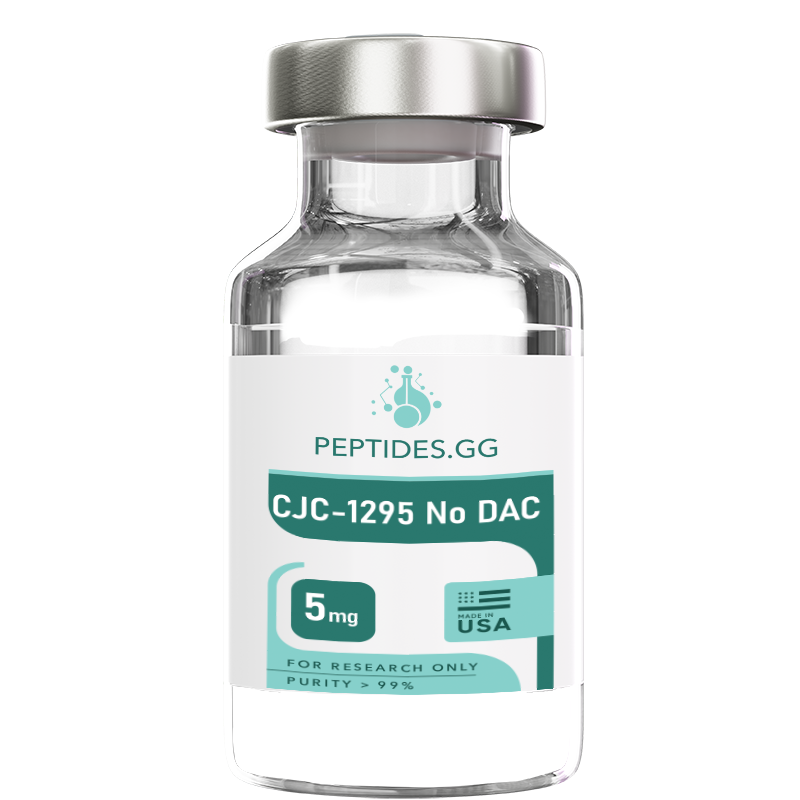
CJC-1295 (With DAC) serves as a valuable research tool for investigating sustained growth hormone releasing hormone receptor stimulation and long-term GH/IGF-1 axis modulation in laboratory settings.
Research Disclaimer: Peptides.GG sells this and all other peptides for Research Only and not for human consumption.
CJC-1295 with DAC
$45.00
- Free Delivery on all orders over $200
- Earn 5% Store Credit with Every Order
- Same Day Shipping Before 1 PM PST
- 10% Discount for Cryptocurrency Payments
14-day money-back guarantee
If you are not satisfied with the product, simply return it and we will refund your money

CJC-1295 (With DAC) serves as a valuable research tool for investigating sustained growth hormone releasing hormone receptor stimulation and long-term GH/IGF-1 axis modulation in laboratory settings.
Research Disclaimer: Peptides.GG sells this and all other peptides for Research Only and not for human consumption.
Frequently Asked Questions About CJC-1295 with DAC
What is CJC-1295 with DAC?
CJC-1295 with DAC is a synthetic growth hormone-releasing hormone analog built on the modified GHRH 1-29 sequence and fitted with a Drug Affinity Complex (DAC). The DAC group binds to serum albumin in the bloodstream, creating a slowly released depot that gives the peptide a markedly extended half-life and sustained activity at the GHRH receptor. It is studied as a research tool for prolonged GHRH-receptor stimulation and GH/IGF-1 axis dynamics, and is supplied strictly for laboratory use, not for human consumption.
What does the "DAC" in CJC-1295 with DAC mean?
DAC stands for Drug Affinity Complex — a chemical group conjugated to the modified GHRH 1-29 peptide that binds to circulating serum albumin. Because albumin has a long lifespan in the bloodstream, the bound peptide is protected from rapid clearance and released gradually, which research models report extends the plasma half-life to roughly 6-8 days, compared with about 30-60 minutes for the No DAC version. This is the defining structural difference between the two CJC-1295 variants.
What is the molecular profile of CJC-1295 with DAC?
The base peptide of CJC-1295 with DAC has the same modified GHRH 1-29 sequence used in the No DAC version, carried under CAS registry number 863288-34-0 for the base sequence; with the DAC modification its molecular weight is approximately 3,647.2 Da and the base molecular formula is C₁₆₅H₂₆₉N₄₇O₄₆. It is supplied as a white to off-white lyophilized powder soluble in water, bacteriostatic water, and phosphate-buffered saline, verified by HPLC at ≥99% purity.
How does CJC-1295 with DAC differ from the No DAC version?
Both versions share an identical modified GHRH 1-29 backbone and the same GHRH-receptor signaling mechanism; they differ only in the DAC group. With DAC, albumin binding produces sustained GHRH-receptor stimulation over several days, making it a tool for studying continuous or chronic GH-axis activation. Without DAC, the peptide acts over a much shorter window, better suited to modeling natural pulsatile secretion. Both are supplied strictly for laboratory research use.
How does CJC-1295 with DAC act in research models?
In laboratory research, CJC-1295 with DAC binds the GHRH receptor on pituitary somatotrophs and engages the same adenylyl cyclase / cAMP / protein kinase A signaling cascade as native GHRH, with the DAC-albumin depot maintaining receptor engagement over days rather than minutes. Studies examine sustained somatotroph stimulation, cumulative IGF-1 production, receptor regulation during chronic stimulation, and feedback through somatostatin. These mechanisms are studied in cell-culture and animal models, not in humans.
How is CJC-1295 with DAC stored, and what purity is it?
CJC-1295 with DAC is supplied as a lyophilized powder and kept sealed and desiccated at -20°C to -80°C, protected from light and moisture, with stability data available for 24+ months at -20°C. Each batch is verified at ≥99% purity by reversed-phase HPLC (UV at 214 nm), with identity confirmed by electrospray-ionization mass spectrometry including the DAC modification and amino-acid analysis of the sequence. A Certificate of Analysis accompanies each batch, with third-party verification available on request.
Research References
Peer-reviewed studies and database records underpinning the research described on this page. Links open on PubMed, PubMed Central, or the publisher in a new tab.
- Jetté L, et al. Human growth hormone-releasing factor (hGRF)1-29-albumin bioconjugates activate the GRF receptor on the anterior pituitary in rats: identification of CJC-1295 as a long-lasting GRF analog. Endocrinology. 2005. PMID: 15817669 →
- Teichman SL, et al. Prolonged stimulation of growth hormone (GH) and insulin-like growth factor I secretion by CJC-1295, a long-acting analog of GH-releasing hormone, in healthy adults. J Clin Endocrinol Metab. 2006. PMID: 16352683 →
- Alba M, et al. Once-daily administration of CJC-1295, a long-acting growth hormone-releasing hormone (GHRH) analog, normalizes growth in the GHRH knockout mouse. Am J Physiol Endocrinol Metab. 2006. PMID: 16822960 →
- Ionescu M, et al. Pulsatile secretion of growth hormone (GH) persists during continuous stimulation by CJC-1295, a long-acting GH-releasing hormone analog. J Clin Endocrinol Metab. 2006. PMID: 17018654 →
- Gaylinn BD, et al. Growth hormone releasing hormone receptor. Recept Channels. 2002. PMID: 12529933 →
- Mayo KE, et al. Growth hormone-releasing hormone: synthesis and signaling. Recent Prog Horm Res. 1995. PMID: 7740167 →
- Møller N, et al. Effects of growth hormone on glucose, lipid, and protein metabolism in human subjects. Endocr Rev. 2009. PMID: 19240267 →
- Frohman LA, et al. Growth hormone-releasing hormone and pituitary development, hyperplasia and tumorigenesis. Trends Endocrinol Metab. 2002. PMID: 12163232 →
Related products
-

ACE-031
$139.00 Select options This product has multiple variants. The options may be chosen on the product pageSize: 1mg
-
Ipamorelin
$59.00 Select options This product has multiple variants. The options may be chosen on the product pageSize: 10mg
-
CJC-1295 No DAC
$36.00 – $65.00 Select options This product has multiple variants. The options may be chosen on the product pageSize: 5mg, 10mg
Research Overview
CJC-1295 (With DAC) serves as a valuable research tool for investigating sustained growth hormone releasing hormone receptor stimulation and long-term GH/IGF-1 axis modulation in laboratory settings. This modified GHRH analog incorporates both amino acid substitutions for enhanced stability and a Drug Affinity Complex (DAC) moiety that enables albumin binding for dramatically extended plasma half-life. Research applications have expanded to encompass investigations of sustained somatotroph stimulation, chronic GH elevation effects, and long-term metabolic and anabolic pathway modulation.
The peptide’s development addressed the challenge of maintaining elevated GH levels for extended research periods. While CJC-1295 without DAC requires multiple daily administrations, the DAC modification enables less frequent administration while maintaining sustained biological activity. The maleimidoproprionic acid component of DAC forms a stable bond with cysteine residues on serum albumin, creating a peptide-albumin complex that slowly releases active peptide over time. Laboratory studies investigate CJC-1295 with DAC’s effects on sustained GH secretion patterns, cumulative IGF-1 elevation, and long-term metabolic outcomes.
CJC-1295 with DAC research demonstrates the peptide’s ability to maintain elevated GH and IGF-1 levels for days following single administration in animal models. This property makes it particularly valuable for investigating chronic GH elevation effects distinct from physiological pulsatile patterns. Researchers investigating pulsatile GH stimulation may compare findings with the Ipamorelin CJC-1295 Blend, which models the synergistic GHRH and GHRP pulsatile approach. Studies examine the peptide’s effects in various research contexts including body composition alterations, metabolic adaptations, and anabolic process modulation over extended timeframes.
Molecular Characteristics
Complete Specifications:
- CAS Registry Number: 863288-34-0 (base peptide sequence)
- Molecular Weight: Approximately 3,647.2 Da (including DAC modification)
- Base Molecular Formula: C₁₆₅H₂₆₉N₄₇O₄₆
- Amino Acid Count: 29 amino acids (modified GHRH 1-29) + DAC moiety
- Peptide Classification: Synthetic GHRH analog with Drug Affinity Complex
- Appearance: White to off-white lyophilized powder
- Solubility: Water, bacteriostatic water, phosphate buffered saline
The peptide’s structure consists of the 29-amino acid modified GHRH sequence with strategic substitutions at positions 2, 8, 15, and 27, identical to CJC-1295 No DAC. The distinguishing feature is the Drug Affinity Complex (DAC) consisting of maleimidoproprionic acid conjugated to lysine residues. This modification enables reversible binding to serum albumin through reactive thiol groups, creating a depot effect that slowly releases free peptide. The DAC-albumin interaction is non-covalent and reversible, with continuous equilibrium between bound and free peptide maintaining sustained biological activity.
Pharmacokinetic Profile in Research Models
CJC-1295 (With DAC) pharmacokinetic characterization in preclinical research reveals important properties for experimental design:
Absorption and Extended Half-Life:
- Plasma half-life: Approximately 6-8 days in research models (versus 30-60 minutes for No DAC version)
- Single administration provides sustained activity for multiple days
- Albumin binding creates depot effect with slow release kinetics
- Subcutaneous administration demonstrates excellent bioavailability
GH and IGF-1 Elevation Dynamics:
- Sustained GH elevation beginning within hours of administration
- Peak GH levels occur 6-48 hours post-administration depending on model
- Elevated GH maintained for multiple days
- Cumulative IGF-1 elevation peaking 2-4 days post-administration
- IGF-1 levels remain elevated 1-2 weeks in some animal models
Distribution and Elimination:
- Extensive binding to serum albumin (>90% protein bound)
- Slow release from albumin-bound state maintains free peptide levels
- Wide tissue distribution as free peptide released from albumin complex
- Prolonged clearance enables less frequent experimental administration
These pharmacokinetic characteristics inform research protocol design, particularly for studies examining chronic GH elevation effects, body composition changes over extended periods, and metabolic adaptations to sustained GH/IGF-1 elevation.
Research Applications
Sustained GH Axis Investigation
CJC-1295 with DAC serves as a research tool for investigating long-term GH axis stimulation. Laboratory studies examine the peptide’s effects on:
- Chronic Somatotroph Stimulation: Investigation of prolonged pituitary cell activation, receptor regulation, and sustained signaling pathway engagement
- Sustained versus Pulsatile GH Patterns: Comparative research on physiological pulsatile release versus maintained elevation on downstream effects
- IGF-1 Production Dynamics: Studies on hepatic IGF-1 synthesis in response to sustained GH elevation and feedback mechanisms
- GHRH Receptor Regulation: Research on receptor expression, desensitization, and responsiveness during chronic stimulation
- Negative Feedback Investigation: Studies examining long-term feedback regulation including somatostatin modulation
Research protocols typically employ extended experimental designs spanning days to weeks in animal models to characterize sustained GH axis activation effects.
Long-Term Metabolic Research
Substantial research focuses on extended metabolic pathway investigation:
- Sustained Lipolysis Studies: Research on prolonged adipose tissue lipolysis, fat oxidation, and metabolic adaptation
- Chronic Glucose Metabolism Effects: Investigation of long-term GH effects on insulin sensitivity, glucose handling, and diabetogenic potential
- Protein Metabolism Research: Studies on cumulative effects of sustained GH/IGF-1 elevation on protein synthesis, nitrogen balance, and lean tissue
- Energy Expenditure Investigation: Research on basal metabolic rate changes and substrate utilization shifts with chronic GH elevation
- Lipid Profile Alterations: Studies examining long-term effects on cholesterol, triglycerides, and lipoprotein metabolism
Laboratory protocols investigate these metabolic effects using extended observation periods, serial measurements, and comprehensive metabolic phenotyping in animal models.
Body Composition Research Applications
Laboratory studies investigate CJC-1295 with DAC in body composition research:
- Fat Mass Reduction Studies: Research on sustained lipolysis effects, adipose tissue loss, and regional fat distribution changes
- Lean Mass Accretion Research: Investigation of muscle protein synthesis, muscle fiber hypertrophy, and nitrogen retention over extended periods
- Bone Density Studies: Research on osteoblast activity, bone formation markers, and skeletal effects of sustained GH/IGF-1 elevation
- Body Composition Remodeling: Studies examining simultaneous fat loss and lean mass gain during chronic GH elevation
- Regional Fat Distribution Research: Investigation of visceral versus subcutaneous adipose tissue responses
Experimental models include body composition assessment techniques (DEXA, MRI, CT) in longitudinal animal studies examining changes over weeks to months.
Anabolic Process Investigation
Research applications extend to long-term anabolic pathway investigation:
- Sustained Muscle Protein Synthesis: Examination of cumulative protein accretion, myofibrillar protein content, and fiber size increases
- Collagen Synthesis Research: Studies on connective tissue collagen production, extracellular matrix remodeling, and tissue structural changes
- IGF-1 Signaling Pathway Studies: Investigation of sustained IGF-1 receptor activation, downstream kinase engagement, and anabolic gene expression
- mTOR Pathway Research: Studies examining mechanistic target of rapamycin pathway activation and regulation during chronic GH/IGF-1 elevation
- Muscle Fiber Type Investigation: Research on fiber type distribution, oxidative capacity, and contractile protein expression changes
Laboratory protocols investigate anabolic effects using muscle tissue analysis, protein synthesis measurement techniques, and molecular pathway assessment.
Aging and Regeneration Research
Emerging research areas include age-related process investigation:
- GH Restoration Studies: Research on effects of sustained GH elevation in models of age-related GH decline
- Tissue Maintenance Research: Investigation of chronic GH effects on tissue homeostasis, repair capacity, and cellular turnover
- Metabolic Aging Research: Studies examining reversal or prevention of age-related metabolic changes
- Cellular Senescence Investigation: Research on GH/IGF-1 effects on senescent cell markers and tissue aging characteristics
- Regenerative Capacity Studies: Investigation of tissue repair and regeneration in contexts of sustained GH/IGF-1 elevation
Research in this area examines potential benefits and risks of sustained GH elevation in aging models and age-related decline scenarios.
Laboratory Handling and Storage Protocols
Lyophilized Powder Storage:
- Store at -20°C to -80°C in original sealed vial
- Protect from light exposure and moisture
- Desiccated storage environment recommended
- Stability data available for 24+ months at -20°C
Stability Considerations:
CJC-1295 with DAC demonstrates good stability as a lyophilized powder. The DAC modification enhances in vivo stability through albumin binding, while the base peptide modifications confer protease resistance.
Quality Assurance and Analytical Testing
Each CJC-1295 (With DAC) batch undergoes comprehensive analytical characterization:
Purity Analysis:
- High-Performance Liquid Chromatography (HPLC): ≥99% purity
- Analytical method: Reversed-phase HPLC with UV detection at 214nm
- Multiple peak integration to ensure accurate purity determination
Structural Verification:
- Electrospray Ionization Mass Spectrometry (ESI-MS): Confirms molecular weight including DAC modification
- Amino acid analysis: Verifies sequence composition
- Peptide content determination: Quantifies actual peptide content by weight
Contaminant Testing:
- Bacterial endotoxin: <5 EU/mg (LAL method)
- Heavy metals: Below detection limits per USP standards
- Residual solvents: TFA and acetonitrile within acceptable limits
- Water content: Karl Fischer titration (<8%)
Documentation:
- Certificate of Analysis (COA) provided with each batch
- Third-party analytical verification available upon request
- Stability data documented for recommended storage conditions
- Batch-specific QC results traceable by lot number
Research Considerations
Experimental Design Factors:
Researchers should consider several factors when designing CJC-1295 with DAC experiments:
1. administration Schedule: Extended half-life enables once or twice weekly administration in most research models. Consider steady-state achievement requires multiple administrations over 2-3 weeks.
2. Timeline Planning: Effects accumulate over days to weeks. Plan experimental endpoints to capture both acute and chronic effects. IGF-1 measurements are particularly valuable given sustained elevation.
3. Comparative Studies: Direct comparison with No DAC version enables investigation of pulsatile versus sustained GH pattern effects on various outcomes.
4. Washout Periods: Extended half-life requires longer washout periods (2-3 weeks) between experimental phases or treatment groups.
5. Combination Considerations: Less commonly combined with GHRPs (such as Ipamorelin) compared to No DAC version, as sustained elevation differs from synergistic pulsatile stimulation.
Mechanism Investigation:
CJC-1295 with DAC’s mechanisms include:
- GHRH receptor activation (identical to No DAC version) — similar to the clinical-stage GHRH analog Tesamorelin
- Albumin binding via DAC moiety creating depot effect
- Sustained adenylyl cyclase/cAMP/PKA pathway activation
- Prolonged GH gene transcription and protein synthesis
- Cumulative IGF-1 production from sustained GH elevation
The DAC modification affects pharmacokinetics rather than fundamental receptor signaling mechanisms.
Compliance and Safety Information
Regulatory Status:
CJC-1295 (With DAC) is provided as a research chemical for in-vitro laboratory studies and preclinical research only. This product has not been approved by the FDA for human therapeutic use, dietary supplementation, or medical applications.
Intended Use:
- In-vitro cell culture studies
- In-vivo preclinical research in approved animal models
- Laboratory investigation of biological mechanisms
- Academic and institutional research applications
NOT Intended For:
- Human consumption or administration
- Therapeutic treatment or diagnosis
- Dietary supplementation
- Veterinary therapeutic applications without appropriate oversight
Safety Protocols:
Researchers should follow standard laboratory safety practices when handling CJC-1295 (With DAC):
- Use appropriate personal protective equipment (lab coat, gloves, safety glasses)
- Handle in well-ventilated areas or fume hood
- Follow institutional biosafety guidelines
- Dispose of waste according to local regulations for biological/chemical waste
- Consult material safety data sheet (MSDS) for additional safety information
—