
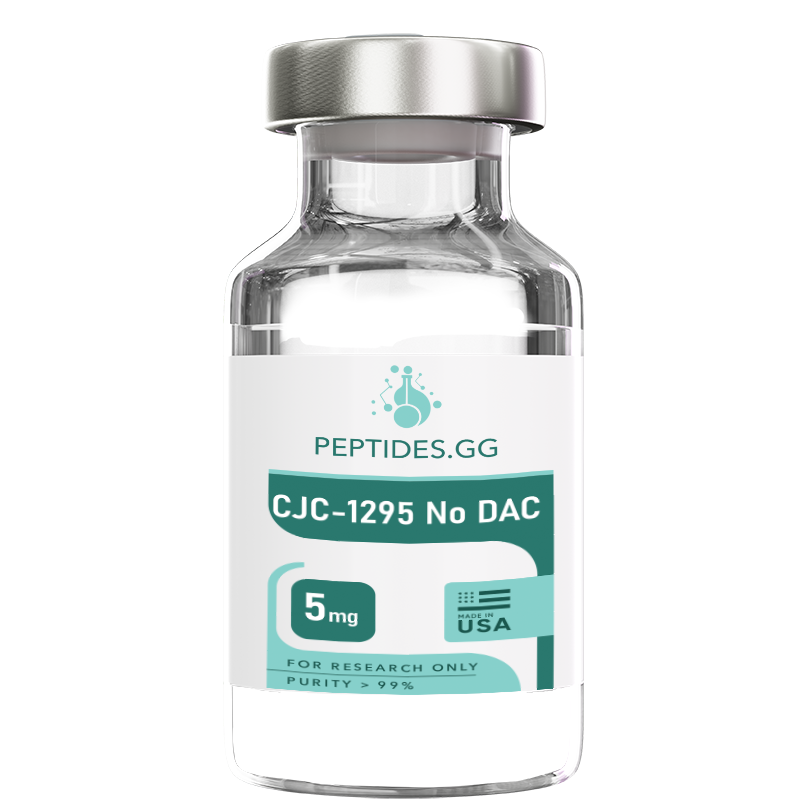
CJC-1295 (No DAC) serves as a valuable research tool for investigating growth hormone releasing hormone receptor signaling and pulsatile growth hormone secretion mechanisms in laboratory settings.
Research Disclaimer: Peptides.GG sells this and all other peptides for Research Only and not for human consumption.
CJC-1295 No DAC
$36.00 – $65.00
- Free Delivery on all orders over $200
- Earn 5% Store Credit with Every Order
- Same Day Shipping Before 1 PM PST
- 10% Discount for Cryptocurrency Payments
14-day money-back guarantee
If you are not satisfied with the product, simply return it and we will refund your money
CJC-1295 (No DAC) serves as a valuable research tool for investigating growth hormone releasing hormone receptor signaling and pulsatile growth hormone secretion mechanisms in laboratory settings.
Research Disclaimer: Peptides.GG sells this and all other peptides for Research Only and not for human consumption.
Frequently Asked Questions About CJC-1295 No DAC
What is CJC-1295 (No DAC)?
CJC-1295 (No DAC) is a synthetic analog of growth hormone-releasing hormone based on the first 29 amino acids of GHRH (the biologically active GHRH 1-29 region). It carries four amino-acid substitutions — D-Ala at position 2, Gln at position 8, Ala at position 15, and Leu at position 27 — that increase resistance to enzymatic breakdown while preserving binding to the GHRH receptor. It is studied as a research tool for GHRH-receptor signaling and pulsatile growth-hormone secretion, and is supplied strictly for laboratory use, not for human consumption.
Is CJC-1295 No DAC the same as Modified GRF (1-29) / Mod GRF 1-29?
Yes — "CJC-1295 No DAC" and "Modified GRF (1-29)" (often written Mod GRF 1-29) are common names for the same tetra-substituted GHRH 1-29 analog, defined by the D-Ala (position 2), Gln (8), Ala (15), and Leu (27) substitutions. The "No DAC" label specifies that it does not carry the Drug Affinity Complex used in the longer-acting CJC-1295 with DAC variant. Both names refer to a research compound supplied for laboratory use only.
What is the molecular profile of CJC-1295 No DAC?
CJC-1295 No DAC is a 29-amino-acid peptide with molecular formula C₁₅₂H₂₅₂N₄₄O₄₂, a molecular weight of 3,367.9 Da, and CAS registry number 863288-34-0. The D-Ala substitution at position 2 confers resistance to dipeptidyl peptidase-IV (DPP-IV), the enzyme that rapidly degrades native GHRH, while the additional substitutions further stabilize the sequence. It is supplied as a white to off-white lyophilized powder soluble in water, bacteriostatic water, and phosphate-buffered saline, verified by HPLC at ≥99% purity.
How does CJC-1295 No DAC differ from CJC-1295 with DAC?
Both share the same modified GHRH 1-29 peptide backbone; the difference is the Drug Affinity Complex (DAC). The "with DAC" version adds a DAC group that binds serum albumin and extends its half-life to several days, producing sustained GHRH-receptor stimulation, whereas the No DAC version lacks that group and is reported to have a much shorter half-life in research models (on the order of about 30 minutes), better suited to studying pulsatile rather than continuous receptor activation. Both are supplied strictly for laboratory research use.
How does CJC-1295 No DAC act in research models?
In laboratory research, CJC-1295 No DAC binds the GHRH receptor — a class B G-protein-coupled receptor on pituitary somatotrophs — activating adenylyl cyclase, raising cAMP, and stimulating protein kinase A and CREB-mediated growth-hormone gene transcription. Studies examine its effects on somatotroph responsiveness, GH/IGF-1 axis dynamics, and receptor desensitization, often comparing it with native GHRH and with GHRP compounds that act through the separate ghrelin-receptor pathway. These mechanisms are studied in cell-culture and animal models, not in humans.
How is CJC-1295 No DAC stored, and what purity is it?
CJC-1295 No DAC is supplied as a lyophilized powder and kept sealed and desiccated at -20°C to -80°C, protected from light and moisture, with stability data available for 24+ months at -20°C; its protease-resistant substitutions contribute to good lyophilized stability. Each batch is verified at ≥99% purity by reversed-phase HPLC (UV at 214 nm), with identity confirmed by electrospray-ionization mass spectrometry against its 3,367.9 Da molecular weight and amino-acid analysis. A Certificate of Analysis accompanies each batch, with third-party verification available on request.
Research References
Peer-reviewed studies and database records underpinning the research described on this page. Links open on PubMed, PubMed Central, or the publisher in a new tab.
- Bongers J, et al. Kinetics of dipeptidyl peptidase IV proteolysis of growth hormone-releasing factor and analogs. Biochim Biophys Acta. 1992. PMID: 1353684 →
- Bai JP, et al. The involvement of dipeptidyl peptidase IV in brush-border degradation of GRF(1-29)NH2 by intestinal mucosal cells. J Pharm Pharmacol. 1995. PMID: 8583376 →
- Zhou F, et al. Structural basis for activation of the growth hormone-releasing hormone receptor. Nat Commun. 2020. PMID: 33060564 →
- Gaylinn BD, et al. Growth hormone releasing hormone receptor. Recept Channels. 2002. PMID: 12529933 →
- Müller EE, et al. Neuroendocrine control of growth hormone secretion. Physiol Rev. 1999. PMID: 10221989 →
- Bluet-Pajot MT, et al. Hypothalamic and hypophyseal regulation of growth hormone secretion. Cell Mol Neurobiol. 1998. PMID: 9524732 →
- Mayo KE, et al. Growth hormone-releasing hormone: synthesis and signaling. Recent Prog Horm Res. 1995. PMID: 7740167 →
- Møller N, et al. Effects of growth hormone on glucose, lipid, and protein metabolism in human subjects. Endocr Rev. 2009. PMID: 19240267 →
Related products
-

PEG MGF
$40.00 Select options This product has multiple variants. The options may be chosen on the product pageSize: 2mg
-
ACE-031
$139.00 Select options This product has multiple variants. The options may be chosen on the product pageSize: 1mg
-
Ipamorelin
$59.00 Select options This product has multiple variants. The options may be chosen on the product pageSize: 10mg
Research Overview
CJC-1295 (No DAC) serves as a valuable research tool for investigating growth hormone releasing hormone receptor signaling and pulsatile growth hormone secretion mechanisms in laboratory settings. This modified GHRH analog incorporates four amino acid substitutions designed to enhance metabolic stability while preserving the natural pulsatile pattern of GH release. Research applications have expanded to encompass investigations of somatotroph cell function, IGF-1 pathway activation, and downstream metabolic and anabolic signaling cascades.
The peptide’s development focused on overcoming limitations of native GHRH, which exhibits a plasma half-life of only 7-10 minutes due to rapid enzymatic degradation by dipeptidyl peptidase-IV (DPP-IV) and other proteases. Strategic amino acid substitutions at key positions confer resistance to enzymatic cleavage while maintaining high-affinity binding to GHRH receptors on anterior pituitary somatotrophs. Laboratory studies investigate CJC-1295 No DAC’s effects on GH secretion dynamics, receptor desensitization patterns, and downstream pathway activation.
CJC-1295 No DAC research demonstrates the peptide’s ability to stimulate physiological pulsatile GH release rather than sustained elevation. This property makes it particularly valuable for investigating natural GH secretion patterns and their metabolic consequences. Studies examine the peptide’s effects in cell culture systems expressing GHRH receptors, pituitary explants, and preclinical animal models.
Molecular Characteristics
Complete Specifications:
- CAS Registry Number: 863288-34-0
- Molecular Weight: 3,367.9 Da
- Molecular Formula: C₁₅₂H₂₅₂N₄₄O₄₂
- Amino Acid Count: 29 amino acids (modified GHRH 1-29)
- Peptide Classification: Synthetic GHRH analog
- Appearance: White to off-white lyophilized powder
- Solubility: Water, bacteriostatic water, phosphate buffered saline
The peptide’s 29-amino acid structure represents the biologically active portion of the full-length GHRH molecule (44 amino acids), as the C-terminal region is not required for receptor activation. Critical modifications include D-Ala substitution at position 2 (conferring DPP-IV resistance), Gln substitution at position 8, Ala substitution at position 15, and Leu substitution at position 27. These modifications enhance stability without requiring the Drug Affinity Complex moiety present in the DAC version. The absence of DAC results in a shorter half-life enabling more frequent pulsatile stimulation patterns in research protocols.
Pharmacokinetic Profile in Research Models
CJC-1295 (No DAC) pharmacokinetic characterization in preclinical research reveals important properties for experimental design:
Absorption and Half-Life:
- Plasma half-life: Approximately 30 minutes to 1 hour (significantly longer than native GHRH)
- Sufficient duration for pulsatile GH stimulation in research models
- Multiple daily administrations enable investigation of natural pulsatile patterns
- Subcutaneous bioavailability demonstrated in animal models
GH Stimulation Dynamics:
- Rapid GH elevation following administration (peak within 30-60 minutes)
- Return to baseline within 2-3 hours enabling repeat administration
- Preserves natural pulsatile GH secretion pattern
- Minimal receptor desensitization with appropriate administration intervals
Distribution and Elimination:
- Rapid distribution to target tissues
- Primarily renal elimination after proteolytic degradation
- No significant tissue accumulation observed
- Clearance allows for flexible experimental administration schedules
These pharmacokinetic characteristics inform research protocol design, particularly regarding administration frequency for investigating pulsatile versus sustained GH elevation effects. The intermediate half-life between native GHRH and CJC-1295 with DAC provides experimental flexibility.
Research Applications
Growth Hormone Axis Investigation
CJC-1295 No DAC serves as a research tool for investigating fundamental GH secretion mechanisms. Laboratory studies examine the peptide’s effects on:
- Somatotroph Cell Function: Investigation of pituitary cell responsiveness, receptor activation dynamics, and intracellular signaling cascades
- Pulsatile GH Secretion Studies: Analysis of physiological pulsatile release patterns versus sustained elevation
- GHRH Receptor Signaling: Research on receptor binding kinetics, signal transduction pathways, and downstream gene expression
- GH/IGF-1 Axis Dynamics: Studies on growth hormone effects on IGF-1 production, feedback regulation, and metabolic effects
- Receptor Desensitization Research: Investigation of receptor internalization, resensitization, and long-term responsiveness
Research protocols typically employ primary pituitary cell cultures, immortalized somatotroph cell lines, and in vivo animal models to characterize CJC-1295 No DAC’s effects on GH axis function.
Metabolic Research Applications
Substantial research focuses on metabolic pathway investigation:
- Lipolysis Mechanism Studies: Research on growth hormone effects on adipose tissue lipolysis and fat oxidation pathways
- Glucose Metabolism Research: Investigation of GH effects on glucose uptake, insulin sensitivity, and hepatic glucose production
- Protein Synthesis Studies: Analysis of GH/IGF-1 pathway effects on muscle protein synthesis and nitrogen retention
- Energy Expenditure Research: Studies examining GH influence on basal metabolic rate and substrate utilization
- Lipid Profile Studies: Investigation of GH effects on cholesterol metabolism and lipid distribution
Laboratory protocols investigate these metabolic effects in cell culture models (adipocytes, hepatocytes, myocytes), tissue explants, and metabolic assessment in animal models.
Anabolic Pathway Research
Laboratory studies investigate CJC-1295 No DAC in anabolic process research:
- Muscle Protein Metabolism: Studies on protein synthesis pathways, myofibrillar protein accretion, and muscle fiber characteristics
- Bone Formation Research: Investigation of osteoblast activity, bone mineral density changes, and skeletal modeling
- Collagen Synthesis Studies: Research on connective tissue collagen production and extracellular matrix remodeling
- IGF-1 Signaling Pathways: Examination of IGF-1 receptor activation, downstream kinase cascades, and anabolic gene expression
- mTOR Pathway Investigation: Studies on mechanistic target of rapamycin activation and regulation by GH/IGF-1
Experimental models include muscle cell cultures, bone cell systems, and in vivo assessment of anabolic markers in research animals.
Body Composition Research
Research applications extend to body composition investigation:
- Fat Mass Regulation Studies: Examination of adipose tissue dynamics, adipocyte size, and fat distribution patterns
- Lean Mass Investigation: Research on muscle mass maintenance, protein balance, and nitrogen retention
- Regional Fat Distribution: Studies on visceral versus subcutaneous adipose tissue regulation
- Adipokine Modulation: Investigation of leptin, adiponectin, and other adipose-derived hormone regulation
- Metabolic Flexibility Research: Studies examining substrate switching and metabolic adaptation
Laboratory protocols investigate body composition changes using various analytical techniques in preclinical models.
Aging Research Applications
Emerging research areas include age-related process investigation:
- GH Secretion Decline Studies: Research on age-related changes in somatotroph responsiveness and GH pulsatility
- IGF-1 Level Investigation: Studies examining factors influencing IGF-1 production across lifespan
- Cellular Senescence Research: Investigation of GH/IGF-1 pathway effects on cellular aging markers
- Tissue Maintenance Studies: Research on GH influence on tissue homeostasis and regenerative capacity
- Metabolic Aging Research: Studies examining age-related metabolic changes and GH axis involvement
Research in this area examines age-related alterations in GH axis function and potential mechanisms underlying these changes in experimental models.
Laboratory Handling and Storage Protocols
Lyophilized Powder Storage:
- Store at -20°C to -80°C in original sealed vial
- Protect from light exposure and moisture
- Desiccated storage environment recommended
- Stability data available for 24+ months at -20°C
Stability Considerations:
CJC-1295 No DAC demonstrates good stability as a lyophilized powder under proper storage conditions. The modifications conferring protease resistance contribute to enhanced stability compared to native GHRH.
Quality Assurance and Analytical Testing
Each CJC-1295 (No DAC) batch undergoes comprehensive analytical characterization:
Purity Analysis:
- High-Performance Liquid Chromatography (HPLC): ≥99% purity
- Analytical method: Reversed-phase HPLC with UV detection at 214nm
- Multiple peak integration to ensure accurate purity determination
Structural Verification:
- Electrospray Ionization Mass Spectrometry (ESI-MS): Confirms molecular weight 3,367.9 Da
- Amino acid analysis: Verifies sequence composition and modifications
- Peptide content determination: Quantifies actual peptide content by weight
Contaminant Testing:
- Bacterial endotoxin: <5 EU/mg (LAL method)
- Heavy metals: Below detection limits per USP standards
- Residual solvents: TFA and acetonitrile within acceptable limits
- Water content: Karl Fischer titration (<8%)
Documentation:
- Certificate of Analysis (COA) provided with each batch
- Third-party analytical verification available upon request
- Stability data documented for recommended storage conditions
- Batch-specific QC results traceable by lot number
Research Considerations
Experimental Design Factors:
Researchers should consider several factors when designing CJC-1295 No DAC experiments:
1. administration Frequency: The shorter half-life compared to CJC-1295 with DAC enables multiple daily administrations to investigate pulsatile GH patterns. Consider timing relative to circadian rhythms in animal models.
2. Combination Studies: CJC-1295 No DAC is often investigated in combination with GHRP compounds (GHRP-2, GHRP-6, Ipamorelin, Hexarelin) that act synergistically to amplify GH release through complementary receptor pathways.
3. Timing of Measurements: Peak GH levels occur 30-60 minutes post-administration in most models. IGF-1 measurements may require longer intervals (hours to days) as hepatic production responds to cumulative GH exposure.
4. Model Selection: Choose appropriate cell culture systems (pituitary cells, hepatocytes, myocytes), tissue preparations, or animal models based on specific research questions.
5. Control Groups: Include vehicle controls, positive controls (native GHRH where appropriate), and potentially comparative GHRH analogs.
Mechanism Investigation:
CJC-1295 No DAC’s mechanisms have been characterized:
- GHRH receptor (class B GPCR) binding and activation
- Adenylyl cyclase activation and cAMP elevation
- Protein kinase A pathway stimulation
- CREB phosphorylation and GH gene transcription
- Synergistic interactions with ghrelin receptor pathway
The peptide’s modifications affect pharmacokinetics and stability rather than fundamental signaling mechanisms, which remain consistent with native GHRH receptor activation.
Compliance and Safety Information
Regulatory Status:
CJC-1295 (No DAC) is provided as a research chemical for in-vitro laboratory studies and preclinical research only. This product has not been approved by the FDA for human therapeutic use, dietary supplementation, or medical applications.
Intended Use:
- In-vitro cell culture studies
- In-vivo preclinical research in approved animal models
- Laboratory investigation of biological mechanisms
- Academic and institutional research applications
NOT Intended For:
- Human consumption or administration
- Therapeutic treatment or diagnosis
- Dietary supplementation
- Veterinary therapeutic applications without appropriate oversight
Safety Protocols:
Researchers should follow standard laboratory safety practices when handling CJC-1295 (No DAC):
- Use appropriate personal protective equipment (lab coat, gloves, safety glasses)
- Handle in well-ventilated areas or fume hood
- Follow institutional biosafety guidelines
- Dispose of waste according to local regulations for biological/chemical waste
- Consult material safety data sheet (MSDS) for additional safety information
—