

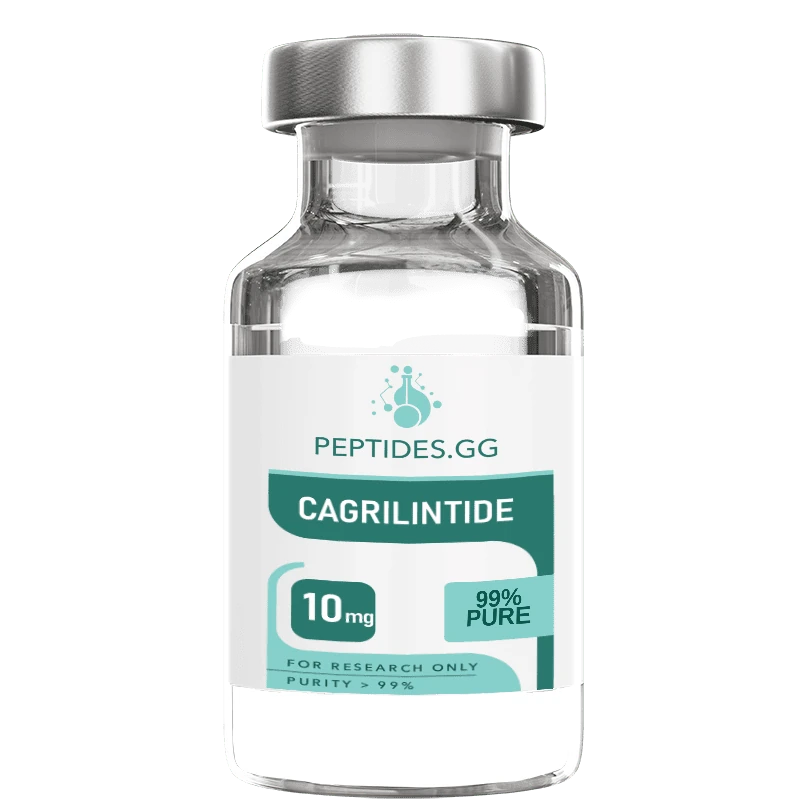
The Cagrilintide peptide serves as a valuable research tool for investigating amylin biology and its role in metabolic regulation in laboratory settings.
Research Disclaimer: Peptides.GG sells this and all other peptides for Research Only and not for human consumption.
Cagrilintide Peptide
$100.00 – $155.00
- Free Delivery on all orders over $200
- Earn 5% Store Credit with Every Order
- Same Day Shipping Before 1 PM PST
14-day money-back guarantee
Not satisfied? Return any unopened product within 14 days of delivery for a full refund — we send the return label.

The Cagrilintide peptide serves as a valuable research tool for investigating amylin biology and its role in metabolic regulation in laboratory settings.
Research Disclaimer: Peptides.GG sells this and all other peptides for Research Only and not for human consumption.
Frequently Asked Questions About Cagrilintide
What is cagrilintide?
Cagrilintide is a synthetic long-acting analog of human amylin (islet amyloid polypeptide), studied as a research tool for amylin-receptor pharmacology and integrated metabolic regulation. Known in the research literature by the development code AM833, it is engineered to remain stable and soluble where native amylin tends to aggregate, which makes it a practical model compound for amylin biology in experimental systems. It is supplied strictly as a research compound for laboratory use and is not for human consumption.
What is the molecular profile of cagrilintide?
Cagrilintide is an acylated peptide with molecular formula C₁₉₄H₃₁₂N₅₄O₅₉S₂, an approximate molecular weight of ~4,409 Da, and CAS registry number 1415456-99-3. It incorporates a fatty acid acylation that enables albumin binding for an extended profile, together with amino-acid substitutions — including proline residues — that disrupt β-sheet formation. It is supplied as a white to off-white lyophilized powder, soluble in water and bacteriostatic water, and verified at ≥99% purity by reversed-phase HPLC.
What does "cagrilintide acetate" refer to?
Cagrilintide acetate refers to the acetate salt form of the peptide. Like many synthetic peptides, cagrilintide is commonly isolated and supplied as an acetate salt, which is the standard counter-ion produced during purification; the acetate form describes the same active peptide sequence and molecular profile. It remains a research compound for laboratory use only.
How does cagrilintide act in research models?
In laboratory research, cagrilintide acts as an agonist at amylin receptors — receptor complexes formed from the calcitonin receptor paired with receptor-activity-modifying proteins (RAMPs) — and engages related calcitonin-family signaling. Studies use it to investigate amylin-system contributions to satiety signaling and energy balance in animal models, often alongside GLP-1 receptor agonists in combination research. These mechanisms are investigated in cell-culture and animal models, not in humans.
How is cagrilintide designed to resist amyloid aggregation?
Native human amylin (islet amyloid polypeptide) is prone to β-sheet stacking and amyloid-fibril formation, which complicates its use in research. Cagrilintide incorporates amino-acid substitutions — notably proline residues — that interrupt the β-sheet arrangement, so the analog remains monomeric and soluble in solution while retaining receptor activity. This aggregation resistance is a defining feature of its design and a frequent subject of stability research.
What purity is cagrilintide, and how is it stored?
Each batch of cagrilintide is verified at ≥99% purity by reversed-phase HPLC, with identity confirmed by electrospray-ionization mass spectrometry against its ~4,409 Da molecular weight. The lyophilized powder is kept sealed and desiccated at -20°C to -80°C, protected from light and moisture, with stability data available for 24+ months at -20°C. A Certificate of Analysis accompanies each batch, with third-party analytical verification available on request.
Research References
Peer-reviewed studies and database records underpinning the research described on this page. Links open on PubMed, PubMed Central, or the publisher in a new tab.
- Enebo LB, et al. Safety, tolerability, pharmacokinetics, and pharmacodynamics of concomitant administration of multiple doses of cagrilintide with semaglutide 2·4 mg for weight management: a randomised, controlled, phase 1b trial. Lancet. 2021. PMID: 33894838 →
- Lau DCW, et al. Once-weekly cagrilintide for weight management in people with overweight and obesity: a multicentre, randomised, double-blind, placebo-controlled and active-controlled, dose-finding phase 2 trial. Lancet. 2021. PMID: 34798060 →
- Kruse T, et al. Development of Cagrilintide, a Long-Acting Amylin Analogue. J Med Chem. 2021. PMID: 34288673 →
- Akter R, et al. Islet Amyloid Polypeptide: Structure, Function, and Pathophysiology. J Diabetes Res. 2016. PMID: 26649319 →
- Hay DL, et al. Amylin receptors: molecular composition and pharmacology. Biochem Soc Trans. 2004. PMID: 15494035 →
- Christopoulos G, et al. Multiple amylin receptors arise from receptor activity-modifying protein interaction with the calcitonin receptor gene product. Mol Pharmacol. 1999. PMID: 10385705 →
- Hay DL, et al. Amylin: Pharmacology, Physiology, and Clinical Potential. Pharmacol Rev. 2015. PMID: 26071095 →
- Lutz TA. Control of energy homeostasis by amylin. Cell Mol Life Sci. 2012. PMID: 22193913 →
- Boyle CN, et al. Amylin - Its role in the homeostatic and hedonic control of eating and recent developments of amylin analogs to treat obesity. Mol Metab. 2018. PMID: 29203236 →
Related products
-

Survodutide
$110.00 Select options This product has multiple variants. The options may be chosen on the product pageSize: 10mg
-
Mazdutide
$100.00 Select options This product has multiple variants. The options may be chosen on the product pageSize: 6mg
Certificate of Analysis
Third-party tested · Independent analytical lab
| Tested | Measured | Purity |
|---|---|---|
| May 2026 | 11.23mg | 99.87% |
| Feb 2026 | 11.97mg | 99.94% |
| Nov 2025 | 11.69mg | 99.53% |
Research Overview
The Cagrilintide peptide serves as a valuable research tool for investigating amylin biology and its role in metabolic regulation in laboratory settings. This synthetic peptide represents a long-acting analog of human amylin (islet amyloid polypeptide, IAPP), a 37-amino acid hormone co-secreted with insulin from pancreatic beta cells. Research applications encompass amylin receptor pharmacology, satiety signaling mechanisms, gastric emptying modulation, glucose homeostasis contribution, and synergistic effects with other metabolic hormones in experimental systems. Metabolic peptide research positions Cagrilintide alongside GLP-1 receptor agonists such as Semaglutide for combination studies, and triple-agonist compounds like Retatrutide that engage multiple incretin receptors simultaneously.
The peptide’s development addresses limitations of native amylin including aggregation propensity, short half-life (minutes), and need for frequent administration in research protocols. Laboratory studies investigate cagrilintide’s effects on food intake regulation, meal-associated hormone responses, gastric motility, pancreatic hormone secretion, and integrated metabolic control. Research protocols examine these effects in cell culture systems expressing amylin receptors, isolated tissue preparations, and preclinical animal models. Dual-pathway metabolic research is also investigated using Tirzepatide, which combines GIP and GLP-1 receptor agonism in a single molecule for complementary multi-receptor studies.
Cagrilintide research demonstrates potent and sustained amylin receptor activation with particular interest in combination studies with GLP-1 receptor agonists. The peptide’s structure incorporates modifications preventing amyloid fibril formation, fatty acid acylation enabling albumin binding, and amino acid substitutions enhancing stability. These modifications collectively extend half-life from minutes to days, enabling weekly administration in chronic metabolic studies.
Molecular Characteristics
Complete Specifications:
- CAS Registry Number: 1415456-99-3
- Molecular Weight: ~4,409 Da
- Molecular Formula: C₁₉₄H₃₁₂N₅₄O₅₉S₂
- Base Structure: Human amylin (IAPP) analog
- Peptide Classification: Long-acting acylated amylin receptor agonist
- Appearance: White to off-white lyophilized powder
- Solubility: Water, bacteriostatic water, phosphate buffered saline
- Receptor Target: Amylin receptor (calcitonin receptor + RAMP heterodimers)
The peptide’s structure is based on human amylin with strategic modifications that prevent aggregation while maintaining high-affinity receptor binding. Native human amylin is notoriously prone to forming amyloid fibrils, particularly at physiological pH and concentrations. Cagrilintide incorporates amino acid substitutions (including proline residues) that disrupt β-sheet formation and prevent aggregation. Additionally, fatty acid acylation at a specific lysine residue enables reversible albumin binding, dramatically extending systemic exposure. These modifications transform an unstable, short-lived hormone into a stable, long-acting research tool.
Pharmacokinetic Profile in Research Models
Cagrilintide pharmacokinetic characterization in preclinical research reveals important properties for experimental design:
Absorption and Bioavailability:
- Subcutaneous bioavailability: High (>80% in preclinical models)
- Slow absorption from injection site due to albumin binding
- Sustained plasma concentrations enabling weekly administration
- Multiple administration routes investigated: SC, IV, IP in experimental protocols
Distribution and Elimination:
- Plasma half-life: ~150-170 hours (approximately 6-7 days in rodent models)
- Volume of distribution: Limited due to albumin binding
- Plasma protein binding: >99% (albumin-mediated)
- Elimination: Proteolytic degradation and renal clearance
- Steady-state: Achieved after 4-5 weeks in repeated administration studies
Receptor Pharmacology:
- Amylin receptor activation: High potency agonist
- Receptor composition: Calcitonin receptor (CTR) + RAMP1, RAMP2, or RAMP3
- Primary target: CTR/RAMP1 and CTR/RAMP3 heterodimers
- Functional activity: Robust cAMP and other signaling pathway activation
- No aggregation: Monomeric in solution, preventing amyloid formation
Metabolic Pathway:
- Primary degradation: Proteolytic cleavage by peptidases
- Enhanced stability: Modifications confer protease resistance
- Albumin binding: Reversible association extends duration
- No significant hepatic metabolism
These pharmacokinetic characteristics enable chronic administration protocols examining sustained amylin receptor activation effects on appetite, gastric emptying, and glucose homeostasis over weeks to months.
Research Applications
Amylin Receptor Pharmacology and Signaling Studies
Cagrilintide serves as a research tool for investigating amylin receptor biology. Laboratory studies examine:
- Receptor Composition Research: Investigation of calcitonin receptor and RAMP heterodimerization, tissue-specific receptor subtype distribution
- Signal Transduction Studies: Examination of cAMP/PKA pathway activation, calcium signaling, MAPK pathway engagement, and β-arrestin recruitment
- Receptor Desensitization: Research on receptor internalization, recycling, and long-term activation effects on receptor expression
- Structure-Activity Relationships: Analysis of modifications affecting receptor affinity, agonist efficacy, and pharmacological profile
- Cross-Receptor Interactions: Investigation of potential interactions between amylin and calcitonin receptor signaling
Research protocols typically employ cell lines expressing recombinant human amylin receptors (CTR + RAMP combinations) with functional assays measuring cAMP accumulation, calcium mobilization, and signaling pathway activation.
Appetite Regulation and Satiety Signaling Research
Given amylin’s physiological role in satiety, substantial research focuses on appetite regulation:
- Central Appetite Circuits: Investigation of area postrema amylin receptor activation, hindbrain-hypothalamus communication, and neuropeptide modulation
- Meal Termination Studies: Research on meal size reduction, satiation signal integration, and post-ingestive feedback mechanisms
- Food Reward Pathways: Examination of hedonic eating behavior, palatability responses, and mesolimbic dopamine system interactions
- Macronutrient Selection: Studies on food preference, carbohydrate vs. fat intake, and nutrient-specific satiety
- Leptin Synergy: Investigation of amylin-leptin interactions and potential synergistic appetite suppression mechanisms
Research in this area investigates amylin’s role as a satiety signal and its integration with other appetite-regulating hormones including leptin, GLP-1, and insulin.
Gastric Emptying and Gastrointestinal Motility Research
Laboratory studies investigate cagrilintide’s effects on gastric function:
- Gastric Emptying Rate: Examination of solid and liquid phase gastric emptying, emptying kinetics, and concentration-response relationships
- Gastric Motility: Research on antral contractions, pyloric sphincter function, and gastric accommodation
- Nutrient Absorption: Studies on postprandial glucose excursions, nutrient delivery to small intestine, and absorption kinetics
- GLP-1 Secretion: Investigation of ileal brake mechanism, L-cell stimulation by delayed nutrient delivery, and incretin hormone responses
- Vagal Signaling: Research on vagal afferent activation, brainstem integration, and neural control of gastric function
Experimental models examine mechanisms of gastric emptying modulation and its contribution to glucose homeostasis and satiety effects.
Glucose Homeostasis and Pancreatic Hormone Research
Cagrilintide research extends to glucose regulation investigation:
- Postprandial Glucose: Examination of meal-related glucose excursions, peak glucose reduction, and glucose excursion area under curve
- Glucagon Suppression: Research on postprandial glucagon suppression, alpha cell function modulation, and inappropriate glucagon secretion
- Insulin Sensitivity: Studies on peripheral insulin action, glucose uptake, and insulin receptor signaling
- Beta Cell Function: Investigation of insulin secretion patterns, beta cell stress reduction, and co-secretion of insulin and amylin
- Hepatic Glucose Production: Research on gluconeogenesis suppression and hepatic insulin sensitivity
Research addresses amylin’s physiological role as a partner hormone to insulin in regulating postprandial glucose metabolism.
Combination Studies with Incretin Agonists
A major research area involves investigating cagrilintide in combination with GLP-1 or multi-incretin agonists:
- Synergy Investigation: Examination of additive vs. synergistic effects when amylin and GLP-1 pathways are activated simultaneously
- Complementary Mechanisms: Research on distinct mechanisms (amylin: gastric emptying, satiety; GLP-1: insulin secretion, glucagon suppression, appetite)
- Metabolic Outcomes: Studies comparing single agents vs. combinations on body weight, glucose control, and metabolic parameters
- Receptor Distribution: Investigation of tissue-specific expression patterns and complementary sites of action
- Optimal Combinations: Research on amount ratios, timing, and formulation for combination approaches
This research area explores whether amylin receptor agonism provides benefits beyond incretin agonism alone, particularly for appetite suppression and weight management research.
Metabolic Disease Model Research
Laboratory studies investigate cagrilintide in metabolic disease models:
- Obesity Models: Research in diet-induced obesity, genetic obesity models examining body weight, food intake, and metabolic improvements
- Diabetes Models: Studies in T2D models assessing glucose control, insulin sensitivity, and pancreatic function
- NAFLD Research: Investigation of hepatic steatosis, liver triglycerides, and mechanisms of liver fat reduction
- Cardiovascular Models: Examination of cardiovascular risk factors, blood pressure, lipid profiles in metabolic disease contexts
- Metabolic Syndrome: Research on integrated metabolic improvements encompassing multiple disease features
Experimental protocols assess cagrilintide effects across multiple metabolic parameters with comparison to other metabolic hormone therapies.
Laboratory Handling and Storage Protocols
Lyophilized Powder Storage:
- Store at -20°C to -80°C in original sealed vial
- Protect from light and moisture
- Desiccated storage environment required
- Stability data available for 24+ months at -20°C
- Minimize temperature fluctuations
Stability Considerations:
Cagrilintide’s modifications prevent aggregation and amyloid formation that plagues native amylin. The peptide remains monomeric in solution, maintaining biological activity throughout recommended storage periods.
Quality Assurance and Analytical Testing
The analytical methods below are those commonly used to characterize and verify the identity, purity, and quality of research compounds in this class:
Purity Analysis:
- HPLC: ≥99% purity
- Reversed-phase HPLC with gradient elution
- UV detection at 214nm
- Related substance quantification
Structural Verification:
- ESI-MS: Confirms molecular weight
- Peptide mapping: Sequence confirmation
- Peptide content: 80-85% by weight (typical)
- Fatty acid modification verification
Aggregation Analysis:
- Size exclusion chromatography: Confirms monomeric state
- Thioflavin T assay: Absence of amyloid formation
- Dynamic light scattering: Particle size analysis
Contaminant Testing:
- Bacterial endotoxin — Limulus amebocyte lysate (LAL) method
- Residual solvents: Per ICH guidelines
- Water content: <6% (Karl Fischer)
Biological Activity:
- Amylin receptor activation: cAMP assay verification
- Potency determination relative to reference standard
Documentation:
- Certificate of Analysis with complete data
- Third-party verification available
- Stability data included
- Batch-specific traceability
Research Considerations
Experimental Design Factors:
Researchers should consider several factors when designing cagrilintide experiments:
1. Concentration Selection: In vitro studies typically use 0.01-100 nM ranges. In vivo studies require concentration optimization based on research objectives and model system.
2. Temporal Considerations: Extended half-life enables weekly administration but requires 4-5 weeks for steady-state. Gastric emptying effects may be acute while metabolic effects develop over time.
3. Combination Studies: When combining with GLP-1 agonists, consider amount ratios, potential synergies, and overlapping vs. complementary mechanisms.
4. Model Selection: Choose appropriate systems based on research questions:
- Cell lines: CTR/RAMP expressing cells for receptor pharmacology
- Primary tissues: Brain slices, gastric muscle for functional studies
- Animal models: DIO, db/db mice for metabolic research
- Gastric emptying: Specialized techniques (acetaminophen absorption, scintigraphy)
5. Control Groups: Include vehicle controls, native amylin comparisons (acknowledging aggregation issues), and pramlintide (short-acting amylin analog) comparators.
Mechanism Investigation:
Cagrilintide mechanisms involve multiple systems:
- CNS Effects: Area postrema amylin receptor activation, hindbrain signaling, hypothalamic integration
- Gastric Actions: Direct effects on gastric smooth muscle, neural pathways, motility regulation
- Pancreatic Effects: Potential direct effects on islets, hormone secretion modulation
- Peripheral Tissues: Adipose, muscle, liver receptor expression and potential direct effects
Combination Rationale:
Research investigates amylin + GLP-1 combinations based on complementary mechanisms:
- Amylin: Gastric emptying, meal-related satiety, postprandial glucagon suppression
- GLP-1: Insulin secretion, tonic appetite suppression, beta cell protection
- Together: Potentially superior effects on weight and glucose vs. either alone
Compliance and Safety Information
Regulatory Status:
Cagrilintide is provided as a research chemical for in-vitro laboratory studies and preclinical research only. Not approved for human therapeutic use or dietary supplementation.
Intended Use:
- In-vitro cell culture and receptor studies
- In-vivo preclinical research with IACUC approval
- Amylin receptor pharmacology investigation
- Academic and institutional research only
NOT Intended For:
- Human consumption or administration
- Therapeutic treatment or diagnosis
- Dietary supplementation
- Veterinary therapeutic use
- Non-research applications
Safety Protocols:
- Appropriate PPE required
- Handle in well-ventilated areas
- Follow institutional biosafety guidelines
- Proper waste disposal
- Consult SDS for safety information
—