

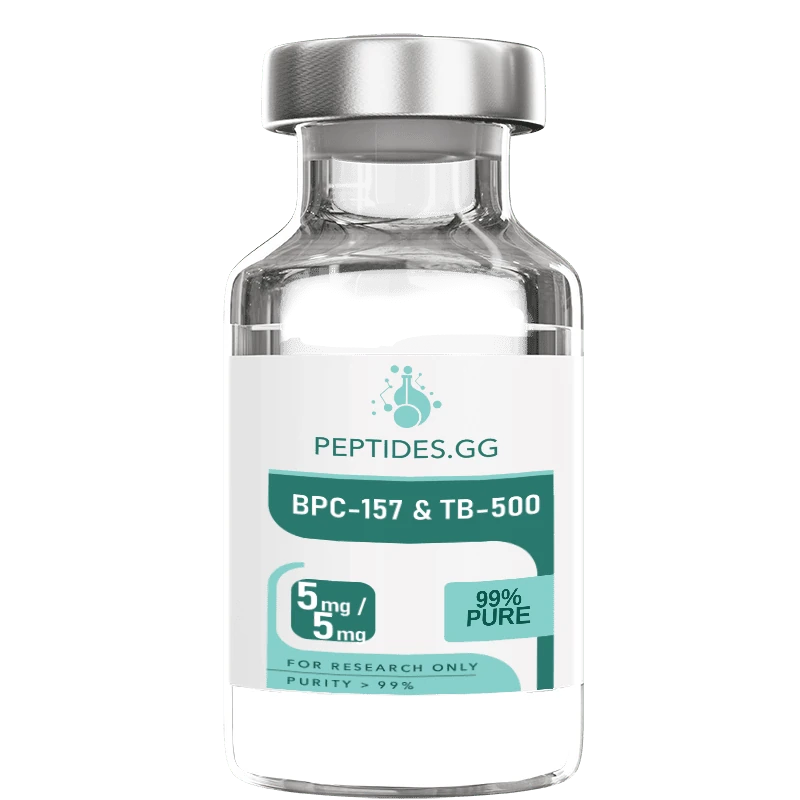
The BPC-157 TB-500 Blend, a two-peptide research blend, supplied as a lyophilized research chemical for in vitro laboratory investigation. Third-party lab tested for purity.
Peptides.GG is a chemical supplier and is not a compounding pharmacy under 503A or 503B. Statements have not been evaluated by the US FDA. Products are not intended to diagnose, treat, cure, or prevent any disease. For research use only — not for human consumption.
BPC-157 TB-500 Blend
$80.00 – $140.00
- Free Delivery on all orders over $200
- Earn 5% Store Credit with Every Order
- Same Day Shipping Before 1 PM PST
- 10% Discount for Cryptocurrency Payments
14-day money-back guarantee
Not satisfied? Return any unopened product within 14 days of delivery for a full refund — we send the return label.
The BPC-157 TB-500 Blend, a two-peptide research blend, supplied as a lyophilized research chemical for in vitro laboratory investigation. Third-party lab tested for purity.
Peptides.GG is a chemical supplier and is not a compounding pharmacy under 503A or 503B. Statements have not been evaluated by the US FDA. Products are not intended to diagnose, treat, cure, or prevent any disease. For research use only — not for human consumption.
Frequently Asked Questions About BPC-157 + TB-500 Blend
What is the BPC-157 + TB-500 blend?
The BPC-157 + TB-500 blend is a dual-component research formulation combining two complementary tissue-repair peptides: BPC-157, a gastric-derived pentadecapeptide, and TB-500, the active 43-amino acid region of thymosin beta-4. It is supplied as a single lyophilized blend, strictly as a research compound for laboratory use investigating tissue-repair and cytoprotective mechanisms, and is not for human consumption.
What is in the BPC-157 + TB-500 blend?
The blend contains two distinct peptides. BPC-157 is a 15-amino acid pentadecapeptide derived from a partial sequence of a human gastric protective protein (Gly-Glu-Pro-Pro-Pro-Gly-Lys-Pro-Ala-Asp-Asp-Ala-Gly-Leu-Val; molecular formula C₆₂H₉₈N₁₆O₂₂; molecular weight 1,419.55 Da; CAS 137525-51-0). TB-500 is the active 43-amino acid region of thymosin beta-4, containing the LKKTET actin-binding domain (molecular formula C₂₁₂H₃₅₀N₅₆O₇₈S; molecular weight 4,963.4 Da; CAS 77591-33-4).
What is the BPC-157 + TB-500 blend studied for in research?
In preclinical and in vitro research, the BPC-157 + TB-500 blend is used to investigate complementary tissue-repair pathways — cytoprotection, angiogenesis, actin-mediated cellular migration, and functional regeneration across gastrointestinal, musculoskeletal, cardiovascular, and neurological systems. Research models include immortalized cell lines (HUVECs, C2C12 myoblasts, H9c2 cardiac cells, 3T3 fibroblasts) and in vivo injury systems. Supplied for laboratory research use only; not for human consumption.
Why are BPC-157 and TB-500 combined in one blend?
The two peptides drive tissue repair through distinct but complementary mechanisms. BPC-157, derived from a human gastric protective protein, contributes remarkable enzymatic stability, cytoprotection, and angiogenesis across multiple organ systems; TB-500 provides actin sequestration through its LKKTET domain, driving cellular migration, proliferation, and survival with sustained activity. Because of their roughly 3.5-fold molecular-weight difference, an equal-molar formulation corresponds to an approximately 3.5:1 mass ratio (TB-500:BPC-157), and combining the two enables investigation of coordinated repair mechanisms that neither peptide models alone.
What sizes are in the BPC-157 + TB-500 blend?
The blend is supplied as a single lyophilized (freeze-dried) vial and is offered in two sizes: 5 mg BPC-157 with 5 mg TB-500 (10 mg total), and 10 mg BPC-157 with 10 mg TB-500 (20 mg total). The lyophilized format limits solution-phase degradation during storage and allows precise gravimetric preparation of research concentrations at the point of use.
How is the BPC-157 + TB-500 blend stored and handled in the laboratory?
The blend is a white to off-white lyophilized powder soluble in water, bacteriostatic water, and phosphate-buffered saline. Both peptides show reasonable stability as lyophilized powders; the powder is kept sealed, desiccated, and cold (-20°C to -80°C) until use. Each batch is third-party tested with a Certificate of Analysis.
Related products
-

TB-500 Thymosin Beta-4
$65.00 Select options This product has multiple variants. The options may be chosen on the product pageSize: 10mg
-
GHK-Cu
$53.00 – $65.00 Select options This product has multiple variants. The options may be chosen on the product pageSize: 50mg, 100mg
-
KPV
$50.00 – $120.00 Select options This product has multiple variants. The options may be chosen on the product pageSize: 10mg, 30mg
Research Overview
The BPC-157 + TB-500 Blend represents a groundbreaking advancement in peptide research formulation, combining two of the most extensively characterized tissue repair peptides into a single, synergistic research tool. This sophisticated peptide complex leverages complementary mechanisms to provide unprecedented opportunities for investigating comprehensive tissue protection, repair, and regeneration processes in laboratory settings. The formulation represents decades of accumulated research into individual peptide mechanisms and their potential synergistic interactions.
BPC-157, derived from partial sequence of human gastric protective protein BPC, contributes remarkable stability characteristics and diverse tissue protective properties spanning gastrointestinal, musculoskeletal, cardiovascular, and neurological systems. TB-500, representing the active 43-amino acid region of thymosin beta-4, provides well-documented actin-binding capabilities, cellular migration enhancement, and wound healing acceleration properties. When combined in this research blend, these peptides demonstrate enhanced research applications exceeding individual peptide capabilities, creating opportunities for comprehensive multi-pathway tissue repair investigations.
The blend formulation addresses a fundamental research need for investigating complex tissue repair processes that involve multiple simultaneous cellular mechanisms. Natural tissue repair requires coordinated activation of protective pathways, angiogenesis, cellular migration, proliferation, matrix deposition, and remodeling—processes that BPC-157 and TB-500 influence through distinct mechanisms. This combination enables researchers to model more physiologically relevant repair scenarios than possible with single peptides.
Individual Component Molecular Characteristics
BPC-157 Component Properties
Complete Specifications:
- CAS Registry Number: 137525-51-0
- Molecular Weight: 1,419.55 Da
- Molecular Formula: C₆₂H₉₈N₁₆O₂₂
- Amino Acid Sequence: Gly-Glu-Pro-Pro-Pro-Gly-Lys-Pro-Ala-Asp-Asp-Ala-Gly-Leu-Val
- Sequence Length: 15 amino acids (pentadecapeptide)
- PubChem CID: 9941957
- Key Structural Features: Three proline residues (positions 3, 4, 5, 8) conferring conformational stability
- pH Stability Range: 1.5-12.0 (exceptional for peptides)
- Enzymatic Resistance: Enhanced due to proline content and conformational constraints
The BPC-157 component contributes exceptional stability characteristics to the blend formulation. The peptide maintains biological activity across extreme pH ranges including gastric acid conditions (pH 1.5), unusual for most peptides. Three proline residues create conformational rigidity that contributes to enzymatic degradation resistance. Research applications focus on tissue protection mechanisms, angiogenesis pathway investigation, gastrointestinal barrier integrity studies, and protective signaling cascade analysis.
TB-500 Component Properties
Complete Specifications:
- CAS Registry Number: 77591-33-4
- Molecular Weight: 4,963.4 Da
- Molecular Formula: C₂₁₂H₃₅₀N₅₆O₇₈S
- Amino Acid Count: 43 amino acids
- PubChem CID: 16132341
- Key Functional Domain: Actin-binding domain (LKKTET sequence)
- Critical Residues: Single cysteine residue (potential disulfide formation)
- Plasma Half-Life: ~1-2 h plasma (human PK); prolonged tissue retention via actin binding
- Primary Mechanism: G-actin sequestration preventing F-actin polymerization
The TB-500 component provides critical cellular migration and wound healing research capabilities. The peptide contains a highly conserved actin-binding domain that sequesters G-actin monomers, preventing polymerization into F-actin filaments. This fundamental mechanism influences downstream cellular processes including migration, proliferation, differentiation, and survival. Research applications focus on cellular migration pathway analysis, wound closure mechanism studies, cardiac tissue protection research, and musculoskeletal repair investigations.
Synergistic Mechanism Research Opportunities
Complementary Tissue Repair Pathway Investigation
The BPC-157 + TB-500 Blend enables investigation of complementary tissue repair mechanisms operating through distinct molecular pathways:
BPC-157 Pathway Contributions:
- Angiogenesis pathway activation through VEGF modulation research
- Nitric oxide pathway investigation in endothelial function
- FAK-paxillin signaling cascade studies in cellular adhesion
- Growth factor receptor expression research (EGF, FGF pathways)
- Protective gene expression investigation in tissue injury models
TB-500 Pathway Contributions:
- Actin cytoskeleton dynamics research in cellular migration
- Cell motility pathway investigation through actin sequestration
- Extracellular matrix remodeling studies involving MMP modulation
- Inflammatory resolution pathway research through mediator regulation
- Stem cell mobilization and differentiation mechanism investigation
Synergistic Research Opportunities:
- Simultaneous angiogenesis and cellular migration pathway analysis
- Coordinated tissue protection and regeneration mechanism studies
- Multi-phase wound healing research from protection through complete restoration
- Combined immediate protective response and sustained regenerative process investigation
- Complex tissue remodeling studies involving multiple cellular populations
Enhanced Bioavailability and Stability Research
Research demonstrates enhanced handling and stability characteristics in the combined formulation:
BPC-157 Stability Enhancement of Blend:
- pH tolerance (1.5-12.0) extends formulation stability range
- Temperature resistance contributes to handling flexibility
- Enzymatic degradation resistance may provide protective effects
- Gastric acid stability enables oral administration route research
TB-500 Extended Activity Profile:
- Short plasma half-life (~1-2 h) with prolonged tissue retention provides a sustained biological-activity window
- Cellular uptake and potential intracellular accumulation
- Tissue retention extends biological effect duration
- Reduced administration frequency in long-term studies
The combination creates research advantages through BPC-157’s exceptional stability potentially protecting TB-500 during handling and storage, while TB-500’s prolonged tissue retention enables investigation of long-duration tissue repair processes. This synergy provides experimental design flexibility unavailable with individual peptides.
Comprehensive Research Applications
Advanced Tissue Repair and Regeneration Studies
The peptide blend provides exceptional capabilities for investigating comprehensive tissue repair mechanisms spanning multiple phases and processes:
Multi-Phase Wound Healing Research:
- Hemostasis and Inflammation Phase: Investigation of immediate protective responses, inflammatory cell recruitment, and barrier restoration
- Proliferation Phase: Research on cellular migration, angiogenesis, granulation tissue formation, and epithelialization
- Remodeling Phase: Studies on collagen reorganization, tissue maturation, and functional restoration
- Complete Healing Assessment: Comprehensive analysis from injury through complete structural and functional recovery
Tissue-Specific Repair Applications:
- Cutaneous Wound Research: Dermal and epidermal healing mechanism investigation in various wound models
- Mucosal Healing Studies: Gastrointestinal, oral, and respiratory mucosa repair research
- Internal Organ Repair: Liver, kidney, pancreatic tissue recovery mechanism investigation
- Complex Tissue Injuries: Multi-tissue damage models requiring coordinated repair responses
Research protocols employ diverse models including excisional wounds, incisional wounds, burn injuries, pressure ulcers, and diabetic wound models to characterize comprehensive healing mechanisms.
Cardiovascular and Vascular Research
The blend offers unique capabilities for cardiovascular tissue investigation combining vascular protective and regenerative mechanisms:
Cardiac Tissue Research:
- Myocardial Protection Studies: Investigation of cardioprotective mechanisms in ischemia-reperfusion injury models
- Cardiomyocyte Survival Research: Studies examining cardiac cell protection against hypoxia, oxidative stress, and toxins
- Cardiac Remodeling Investigation: Research on post-infarction remodeling, fibrosis prevention, and functional recovery
- Contractile Function Studies: Analysis of cardiac contractility preservation and restoration mechanisms
- Arrhythmia Research: Investigation of electrical remodeling and arrhythmogenic substrate prevention
Vascular System Research:
- Angiogenesis Studies: Comprehensive investigation of blood vessel formation, sprouting, and network development
- Endothelial Function Research: Analysis of vascular endothelial cell protection, nitric oxide production, and barrier integrity
- Vascular Repair Studies: Investigation of blood vessel healing following injury or surgical intervention
- Collateral Circulation: Research on alternative blood flow pathway development in ischemic conditions
- Microcirculation Studies: Capillary network formation and function investigation in tissue repair
Laboratory protocols utilize cardiac cell cultures (cardiomyocytes, cardiac fibroblasts), endothelial cell systems, isolated heart preparations, and in vivo cardiac injury models including coronary ligation, ischemia-reperfusion, and toxic injury models.
Musculoskeletal Recovery Research
Comprehensive musculoskeletal research applications spanning connective tissue, muscle, and bone:
Tendon and Ligament Research:
- Healing Mechanism Studies: Investigation of tendon/ligament repair processes, collagen synthesis, and fiber organization
- Biomechanical Recovery: Research on mechanical strength restoration, tensile properties, and functional load-bearing capacity
- Tendinopathy Models: Studies investigating chronic tendon pathology, inflammation, and degenerative changes
- Surgical Repair Enhancement: Research on post-surgical healing acceleration and complication prevention
- Enthesis Research: Investigation of tendon-to-bone attachment site healing and integration
Muscle Tissue Research:
- Muscle Fiber Regeneration: Studies on satellite cell activation, myoblast proliferation, and myotube formation
- Contusion Injury Models: Research on muscle crush injuries, recovery timelines, and functional restoration
- Laceration Repair: Investigation of severe muscle damage healing and scar tissue prevention
- Atrophy Prevention: Studies on muscle preservation during immobilization or denervation
- Contractile Function Restoration: Research on force generation recovery and muscle performance
Bone Healing Research:
- Fracture Repair Studies: Investigation of bone healing phases, callus formation, and remodeling
- Osteoblast Activity: Research on bone-forming cell function, differentiation, and matrix production
- Angiogenesis in Bone: Studies on blood vessel formation critical for bone regeneration
- Non-Union Prevention: Investigation of factors promoting successful bone healing
- Osteointegration Research: Analysis of bone-implant integration and fixation
Experimental models include Achilles tendon injuries, rotator cuff repairs, ACL reconstructions, gastrocnemius strains, tibial fractures, and femoral defect models with outcomes measured through histology, immunohistochemistry, biomechanical testing, and functional assessments.
Gastrointestinal Research Applications
Specialized research applications leveraging BPC-157’s gastric origin and TB-500’s tissue repair capabilities:
Gastric Protection Studies:
- Mucosal Barrier Research: Investigation of protective mechanisms maintaining gastric mucosa integrity
- Ulcer Healing Studies: Research on gastric and duodenal ulcer repair mechanisms
- NSAID-Induced Damage: Studies on protective mechanisms against non-steroidal anti-inflammatory drug injury
- Stress Ulcer Prevention: Investigation of stress-induced gastric damage protection
- Helicobacter Pylori Models: Research on infection-related gastric injury and healing
Intestinal Barrier Function:
- Tight Junction Research: Investigation of intestinal permeability regulation and barrier maintenance
- IBD Models: Studies in inflammatory bowel disease experimental models (colitis, Crohn’s)
- Intestinal Wound Healing: Research on epithelial repair following injury or surgical resection
- Microbiome Interactions: Investigation of peptide effects on gut barrier in microbiome context
- Nutrient Absorption: Studies on absorptive function preservation during inflammation or injury
Liver and Pancreatic Research:
- Hepatoprotection Studies: Investigation of liver protective mechanisms against toxins, ischemia, fibrosis
- Liver Regeneration: Research on hepatocyte proliferation and liver mass restoration
- Pancreatic Protection: Studies on pancreatic tissue protection in pancreatitis models
- Biliary System Research: Investigation of bile duct healing and function preservation
Laboratory protocols employ gastric ulcer models, colitis induction, intestinal resection models, hepatotoxin challenges, and pancreatitis induction with outcomes assessed through histology, permeability assays, and functional measurements.
Neurological Recovery Research
Emerging research applications in nervous system protection and repair:
Central Nervous System Research:
- Neuroprotection Studies: Investigation of neuronal protection mechanisms against ischemia, excitotoxicity, oxidative stress
- Traumatic Brain Injury: Research on TBI pathophysiology, secondary injury prevention, and recovery promotion
- Stroke Models: Studies in cerebral ischemia-reperfusion injury and penumbra protection
- Spinal Cord Injury: Investigation of spinal cord trauma, inflammation, and regeneration mechanisms
- Blood-Brain Barrier: Research on BBB integrity, permeability, and repair following injury
Peripheral Nervous System Research:
- Nerve Regeneration Studies: Investigation of peripheral nerve repair, axonal regrowth, and functional recovery
- Nerve Crush/Transection Models: Research on severe peripheral nerve injury and surgical repair
- Neuropathic Pain: Studies investigating mechanisms of nerve injury-induced pain and resolution
- Neuromuscular Junction: Research on motor endplate repair and neuromuscular transmission restoration
Neurodegenerative Research:
- Neuroinflammation Studies: Investigation of inflammatory processes in neurodegeneration
- Synaptic Protection: Research on synapse preservation and synaptic plasticity
- Glial Cell Function: Studies on astrocyte and microglia roles in neuroprotection and repair
- Cognitive Function Models: Investigation of learning, memory, and cognitive performance in injury models
Experimental models include middle cerebral artery occlusion (MCAO), controlled cortical impact, spinal cord contusion, sciatic nerve injury, and various neurotoxin models with outcomes measured through neurological scoring, behavioral testing, electrophysiology, and histological analysis.
Laboratory Handling and Storage Protocols
Lyophilized Powder Storage:
- Store at -20°C to -80°C in original sealed vials
- Protect from light exposure (amber vials or foil wrapping)
- Maintain desiccated environment (store with desiccant packets)
- Avoid temperature fluctuations during storage
- Stability data: 12+ months at -20°C, 24+ months at -80°C
- Record storage conditions and durations for quality assurance
Enhanced Stability Considerations:
The blend benefits from BPC-157’s exceptional stability profile (pH 1.5-12.0 tolerance, temperature resistance) which may provide stabilizing effects for TB-500 component. Studies document BPC-157 maintaining activity at room temperature for extended periods and resistance to gastric acid degradation. TB-500’s short plasma half-life (~1-2 h) with prolonged tissue/actin-bound retention contributes to a prolonged biological-activity window. Combined, these properties allow flexible experimental protocols and diverse administration routes.
Quality Assurance and Analytical Testing
The analytical methods below are those commonly used to characterize and verify the identity, purity, and quality of research compounds in this class:
Individual Peptide Purity Analysis:
BPC-157 Analysis:
- High-Performance Liquid Chromatography (HPLC): ≥99% purity
- Analytical method: Reversed-phase C18 column, gradient elution, UV detection 220nm
- Retention time verification against reference standard
- Peak integration and purity calculation by area normalization
- Multiple wavelength detection (214nm, 220nm, 280nm) for impurity profiling
TB-500 Analysis:
- High-Performance Liquid Chromatography (HPLC): ≥99% purity
- Analytical method: Reversed-phase C18 column, optimized gradient for 43-aa peptide
- UV detection at 220nm with confirmation at 214nm
- Assessment of related peptide impurities and truncated sequences
- Aggregate and dimer detection through size exclusion chromatography
Structural Verification for Both Components:
Mass Spectrometry Confirmation:
- Electrospray Ionization Mass Spectrometry (ESI-MS) for BPC-157: Confirms MW 1,419.55 Da
- ESI-MS or MALDI-TOF for TB-500: Confirms MW 4,963.4 Da
- High-resolution MS to verify exact mass within 0.5 Da tolerance
- MS/MS fragmentation analysis for sequence confirmation (upon request)
Peptide Content Determination:
- Amino acid analysis (AAA) for compositional verification
- Quantitative peptide content determination by weight
- BPC-157 peptide content: Typically 80-90% by weight (remainder: water, counterions, residual solvents)
- TB-500 peptide content: Typically 75-85% by weight
- Total peptide mass calculation for accurate research administration
Contaminant Testing:
- Bacterial endotoxin — Limulus amebocyte lysate (LAL) method
- Residual solvent analysis: Trifluoroacetic acid (TFA), acetonitrile within ICH limits
- Water content determination: Karl Fischer titration (<8% total moisture)
- Microbial contamination: Total aerobic count, yeast/mold (for non-sterile products)
Blend Ratio Verification:
- HPLC peak area integration to confirm 1:1 molar ratio
- Individual peptide quantitation to verify formulation accuracy
- Acceptance criteria: ±10% of target 1:1 molar ratio
- Batch-to-batch consistency monitoring through statistical process control
Documentation Provided:
- Dual Certificate of Analysis (COA) with separate data for each peptide component
- Combined COA summarizing blend specifications and ratios
- HPLC chromatograms for both peptides with peak identification
- Mass spectrometry data confirming molecular weights
- Complete analytical test results with acceptance criteria
- Batch-specific QC results traceable by unique lot number
- Storage recommendations and expiration date
- Third-party analytical verification available upon request for independent confirmation
Research Considerations and Experimental Design
Concentration Selection for Blend Research:
Researchers should determine appropriate concentrations based on:
1. Individual Peptide Effective Ranges: Published research reports BPC-157 effective concentrations ranging from 1 ng/mL to 10 μg/mL in vitro, TB-500 from 10 ng/mL to 100 μg/mL depending on assay and cell type
2. 1:1 Molar Ratio Implications: Due to 3.5-fold molecular weight difference (TB-500:BPC-157), equal molar ratios result in ~3.5:1 mass ratio (TB-500:BPC-157)
3. Research Objectives: Determine whether investigation focuses on synergistic effects (use blend as provided) or independent mechanisms (use individual peptides as controls)
4. Model System Sensitivity: Cell culture studies typically use lower concentrations than in vivo studies due to direct peptide access to target cells
Experimental Design Recommendations:
Control Groups:
- Vehicle control (vehicle buffer only)
- BPC-157 alone (matched to blend concentration)
- TB-500 alone (matched to blend concentration)
- Blend combination (test group)
- Positive control (established reference compound if applicable)
Temporal Considerations:
- BPC-157 short plasma half-life (<30 min IV) requires consideration of administration frequency or continuous exposure in vitro
- TB-500 short plasma half-life (~1-2 h) but prolonged tissue retention informs administration frequency in animal models
- Biological effects may persist beyond peptide plasma clearance, suggesting intracellular mechanisms or sustained signaling
- Time-course studies recommended to characterize onset, peak effect, and duration
- Sample collection timing should capture both acute and sustained responses
Route Considerations for In Vivo Research:
Multiple administration routes demonstrate efficacy in published research:
- Intravenous (IV): Rapid systemic distribution, known pharmacokinetics, suitable for acute studies
- Intramuscular (IM): Depot effect with sustained release, suitable for repeated administration studies
- Subcutaneous (SC): Easy administration, sustained absorption, commonly used in chronic studies
- Intraperitoneal (IP): Rapid absorption, suitable for rodent studies, good bioavailability
- Oral: BPC-157 demonstrates unusual oral bioavailability due to acid stability; TB-500 limited oral absorption
- Topical: Applicable for wound healing studies with direct application to injury site
- Local Injection: Direct administration to target tissue (peri-lesional, intra-articular, intramyocardial)
Route selection should align with research questions, target tissue location, and experimental feasibility.
Model System Selection:
In Vitro Systems:
- Primary cell cultures: Fibroblasts, endothelial cells, cardiomyocytes, myoblasts, neurons, hepatocytes
- Immortalized cell lines: HUVECs, C2C12 myoblasts, H9c2 cardiac cells, 3T3 fibroblasts
- Co-culture systems: Cell-cell interaction studies, paracrine signaling investigation
- 3D culture models: Spheroids, organoids, tissue-engineered constructs
- Specific assays: Scratch/wound healing assays, transwell migration, tube formation, proliferation assays
Ex Vivo Systems:
- Tissue explants: Maintain tissue architecture while enabling controlled treatment
- Vascular ring preparations: Angiogenesis studies in intact vessel segments
- Organ culture systems: Intestinal segments, cardiac tissue, bone explants
- Precision-cut tissue slices: Liver, lung, brain slices maintaining cellular complexity
In Vivo Models:
- Wound healing models: Excisional, incisional, burn, diabetic wounds, pressure ulcers
- Cardiovascular models: Myocardial infarction, ischemia-reperfusion, heart failure
- Musculoskeletal models: Tendon injury, muscle damage, bone fractures
- Gastrointestinal models: Gastric ulcers, colitis, liver injury, pancreatitis
- Neurological models: Stroke, traumatic brain injury, spinal cord injury, peripheral nerve damage
Outcome Measurements:
Molecular/Cellular Level:
- Gene expression analysis: RT-qPCR, RNA-seq for pathway identification
- Protein expression: Western blot, immunohistochemistry, ELISA
- Signaling pathway activation: Phosphorylation status, transcription factor activity
- Cell proliferation: MTT, BrdU incorporation, Ki67 staining
- Cell migration: Scratch assay, transwell assay, time-lapse imaging
- Apoptosis/survival: TUNEL, caspase activation, viability assays
Tissue Level:
- Histological analysis: H&E, Masson’s trichrome for collagen, special stains
- Immunohistochemistry: Cell type markers, proliferation markers, angiogenesis markers
- Morphometric analysis: Wound area, epithelial gap, granulation tissue thickness
- Collagen content and organization: Picrosirius red, polarized light microscopy
- Vascular density: CD31 or vWF staining, vessel counting
Functional Level:
- Biomechanical testing: Tensile strength, load-to-failure, elastic modulus
- Cardiac function: Echocardiography, hemodynamics, contractility measurements
- Behavioral assessment: Neurological scoring, motor function, pain sensitivity
- Organ function: Liver enzymes, kidney function, gastrointestinal transit
Mechanism Investigation Approaches:
Both peptides operate through complex, incompletely characterized mechanisms. Research opportunities include:
BPC-157 Mechanism Studies:
- Growth factor pathway investigation (VEGF, bFGF, EGF, TGF-β) — complementary to collagen-focused compounds like GHK-Cu
- Nitric oxide (NO) pathway: eNOS activation, NO production, vascular effects
- FAK-paxillin signaling: Focal adhesion kinase pathway in migration and adhesion
- Gene expression profiling: Transcriptome-wide effects on repair-related genes
- Receptor identification: Putative receptors for BPC-157 signaling remain unknown
TB-500 Mechanism Studies:
- Actin sequestration: Direct binding to G-actin, preventing polymerization
- Cytoskeletal dynamics: Effects on cell shape, migration, adhesion
- MMP modulation: Matrix metalloproteinase expression and activity regulation
- Inflammatory mediator effects: Cytokine and chemokine expression modulation
- Stem cell effects: Mobilization, homing, and differentiation studies
Synergistic Mechanism Investigation:
- Pathway crosstalk: Identification of interaction points between BPC-157 and TB-500 signaling
- Temporal synergy: Whether peptides act on different phases (acute vs. regenerative) or same processes
- Additive vs. synergistic effects: Statistical modeling to determine interaction type — researchers may also investigate multi-peptide formulations such as the KLOW Blend for broader pathway coverage
- concentration-response surface analysis: Three-dimensional assessment of combined effects
- Systems biology approaches: Network analysis, pathway enrichment, multi-omics integration
Compliance and Safety Information
Regulatory Status:
The BPC-157 + TB-500 Blend is provided as a research chemical formulation for in-vitro laboratory studies and preclinical research only. This product has not been approved by regulatory authorities including FDA, EMA, or other governing bodies for human therapeutic use, clinical applications, dietary supplementation, or medical treatment. This peptide blend is not intended as a drug, medicine, or therapeutic agent.
Intended Use:
- In-vitro cell culture studies and molecular biology research
- In-vivo preclinical research in approved animal models under institutional oversight
- Laboratory investigation of tissue repair mechanisms and biological pathways
- Academic and institutional research applications with appropriate approvals
- Pharmaceutical research and drug discovery applications
- Veterinary research with appropriate IACUC or ethics committee approval
NOT Intended For:
- Human consumption, administration, or therapeutic use
- Clinical trials or human studies without IND approval and regulatory oversight
- Treatment, diagnosis, cure, or prevention of any disease in humans
- Dietary supplementation or nutritional applications
- Veterinary therapeutic applications without appropriate regulatory compliance
- Cosmetic applications intended for human use
- Any use outside supervised laboratory research settings
Safety Protocols for Laboratory Handling:
Researchers must follow standard laboratory safety practices when handling peptide research compounds:
Personal Protective Equipment (PPE):
- Laboratory coat or protective outerwear
- Nitrile or latex gloves (double glove for handling powder)
- Safety glasses or face shield
- Closed-toe shoes
- Consider respiratory protection when handling lyophilized powder to avoid inhalation
Engineering Controls:
- Handle in well-ventilated areas, preferably biological safety cabinet or chemical fume hood
- Avoid creating aerosols during transfer
- Use proper aseptic technique for cell culture applications
- Contain spills immediately with absorbent materials
Institutional Requirements:
- Follow institutional biosafety guidelines and chemical hygiene plans
- Obtain necessary approvals: Institutional Review Board (IRB) for human-related studies, Institutional Animal Care and Use Committee (IACUC) for animal studies
- Complete required safety training for peptide handling
- Maintain material safety data sheet (MSDS/SDS) accessibility
- Document usage in laboratory inventory systems
- Follow institutional policies for research chemical procurement and use
Waste Disposal:
- Dispose of peptide waste according to institutional and local regulations
- Liquid waste: Collect in designated chemical waste containers, may require inactivation
- Solid waste: Autoclave if biohazardous, dispose as chemical waste if non-biological
- Sharps: Dispose needles and syringes in approved sharps containers
- Contaminated materials: Treat as chemical/biological waste as appropriate
- Maintain waste disposal records as required by institutional and regulatory policies
Emergency Procedures:
- Eye contact: Rinse immediately with water for 15 minutes, seek medical attention
- Skin contact: Wash affected area thoroughly with soap and water
- Inhalation: Move to fresh air, seek medical attention if symptoms develop
- Ingestion: Do not induce vomiting, seek immediate medical attention
- Spills: Contain spill, clean with absorbent materials, dispose as chemical waste
Storage Safety:
- Clearly label all vials with peptide identity, concentration, date prepared, hazard information
- Store in designated -20°C or -80°C freezers with restricted access
- Maintain inventory log of peptide stocks with usage tracking
- Keep Material Safety Data Sheet (MSDS) readily accessible
- Implement proper cold chain management during transportation between facilities
—