

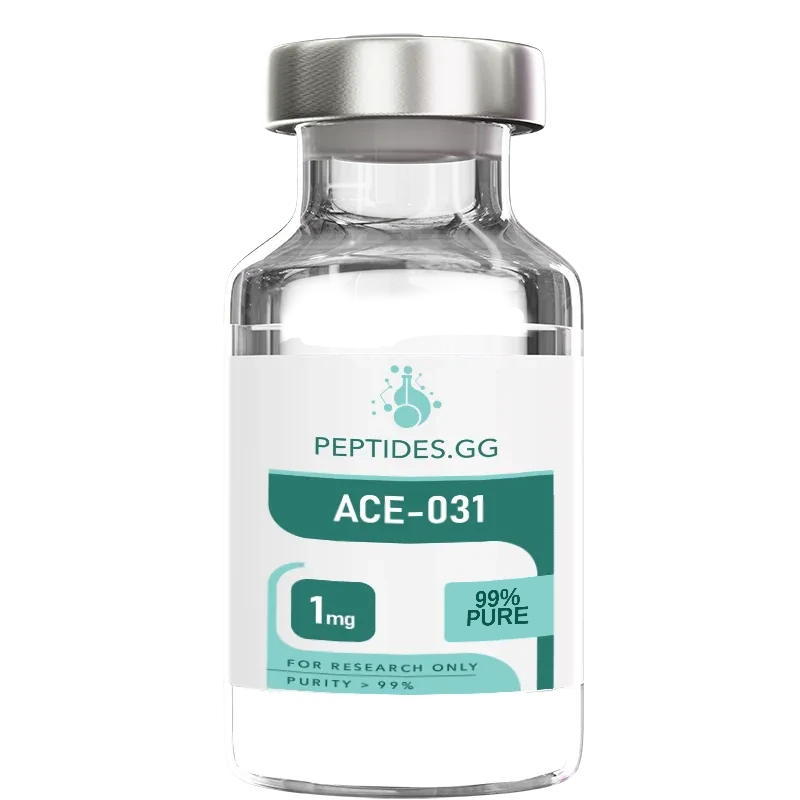
ACE-031 (often searched as ACE-031 peptide) serves as a valuable research tool for investigating activin receptor type IIB (ActRIIB) signaling, myostatin inhibition, and skeletal muscle growth regulation in laboratory settings. This soluble receptor decoy enables research into TGF-beta superfamily pathway modulation.
Research Disclaimer: Peptides.GG sells this and all other peptides for Research Only and not for human consumption.
ACE-031 Peptide
$139.00
- Free Delivery on all orders over $200
- Earn 5% Store Credit with Every Order
- Same Day Shipping Before 1 PM PST
14-day money-back guarantee
Not satisfied? Return any unopened product within 14 days of delivery for a full refund — we send the return label.

ACE-031 (often searched as ACE-031 peptide) serves as a valuable research tool for investigating activin receptor type IIB (ActRIIB) signaling, myostatin inhibition, and skeletal muscle growth regulation in laboratory settings. This soluble receptor decoy enables research into TGF-beta superfamily pathway modulation.
Research Disclaimer: Peptides.GG sells this and all other peptides for Research Only and not for human consumption.
Frequently Asked Questions About ACE-031
What is ACE-031?
ACE-031 is a recombinant fusion protein — not a small peptide — formed by joining the extracellular ligand-binding domain of the activin receptor type IIB (ActRIIB) to the Fc region of human immunoglobulin G1 (IgG1). This creates a soluble "decoy receptor," or ligand trap, that captures myostatin (GDF-8) and related signaling proteins before they can engage cell-surface ActRIIB. It is studied as a research tool for myostatin- and activin-pathway biology and is supplied strictly for laboratory use, not for human consumption.
Is ACE-031 a peptide or a protein?
ACE-031 is a large recombinant Fc-fusion glycoprotein, not a synthetic peptide. Each monomer combines the ActRIIB extracellular domain with an IgG1-Fc domain, and the native molecule is a glycosylated homodimer with an apparent molecular weight near 90,000 Da (CAS 1286670-14-5). This biologics-class structure is the reason it is produced by recombinant expression in mammalian cell systems rather than by peptide synthesis.
How does ACE-031 act in research models?
In laboratory research, ACE-031 works as a broad ActRIIB ligand trap: by binding myostatin (GDF-8), GDF-11, and activins in the extracellular space, it limits their engagement of membrane-bound ActRIIB and the downstream SMAD2/3 signaling cascade that normally restrains skeletal-muscle mass. Because it captures several ligands rather than myostatin alone, researchers interpret its effects as reflecting combined ActRIIB-pathway inhibition. These mechanisms are investigated in cell-culture and animal models, not in humans.
What is ACE-031 studied for in laboratory research?
In preclinical research, ACE-031 is used as a pharmacological tool to interrogate the myostatin/activin-ActRIIB pathway in skeletal-muscle biology, bone-density and skeletal research, and systemic metabolic studies (lean and fat mass, glucose handling). Typical protocols include circulating-myostatin and SMAD2/3 phosphorylation readouts to confirm target engagement, alongside body-composition and tissue analyses in animal models. It serves as a reference standard for pharmacological ActRIIB blockade in muscle-biology research. Supplied for laboratory research use only; not for human consumption.
What is the half-life of ACE-031 in research models?
Because ACE-031 carries an IgG1-Fc domain, it benefits from neonatal Fc receptor (FcRn)-mediated recycling, which gives it a much longer half-life than the isolated ActRIIB domain. Preclinical pharmacokinetic studies in rodents report terminal half-lives on the order of several days, allowing weekly or biweekly schedules in chronic study designs. These are research-model observations and do not constitute human guidance.
How is ACE-031 stored and quality-tested?
ACE-031 is supplied as a lyophilized white to off-white powder and stored at −20°C or below in a desiccated, light-protected environment, with sealed vials allowed to reach room temperature before opening to limit condensation; lyophilized material is stable for 24 months under recommended conditions. Each lot is analyzed by size-exclusion HPLC for intact homodimer content (≥98%), with structural verification by mass spectrometry and SDS-PAGE, functional ligand-binding ELISA against recombinant myostatin, and endotoxin, host-cell-protein, and residual-DNA testing. A full Certificate of Analysis accompanies each shipment.
Research References
Peer-reviewed studies and database records underpinning the research described on this page. Links open on PubMed, PubMed Central, or the publisher in a new tab.
- McPherron AC, et al. Regulation of skeletal muscle mass in mice by a new TGF-beta superfamily member. Nature. 1997. PMID: 9139826 →
- Lee SJ, McPherron AC. Regulation of myostatin activity and muscle growth. Proc Natl Acad Sci U S A. 2001. PMID: 11459935 →
- Lee SJ, et al. Regulation of muscle growth by multiple ligands signaling through activin type II receptors. Proc Natl Acad Sci U S A. 2005. PMID: 16330774 →
- Cadena SM, et al. Administration of a soluble activin type IIB receptor promotes skeletal muscle growth independent of fiber type. J Appl Physiol (1985). 2010. PMID: 20466801 →
- Pistilli EE, et al. Targeting the activin type IIB receptor to improve muscle mass and function in the mdx mouse model of Duchenne muscular dystrophy. Am J Pathol. 2011. PMID: 21356379 →
- Attie KM, et al. A single ascending-dose study of muscle regulator ACE-031 in healthy volunteers. Muscle Nerve. 2013. PMID: 23169607 →
- Bialek P, et al. A myostatin and activin decoy receptor enhances bone formation in mice. Bone. 2014. PMID: 24333131 →
- Campbell C, et al. Myostatin inhibitor ACE-031 treatment of ambulatory boys with Duchenne muscular dystrophy: Results of a randomized, placebo-controlled clinical trial. Muscle Nerve. 2017. PMID: 27462804 →
- Suragani RN, et al. Transforming growth factor-β superfamily ligand trap ACE-536 corrects anemia by promoting late-stage erythropoiesis. Nat Med. 2014. PMID: 24658078 →
- Egerman MA, et al. GDF11 Increases with Age and Inhibits Skeletal Muscle Regeneration. Cell Metab. 2015. PMID: 26001423 →
Related products
-

Ipamorelin / Tesamorelin Blends
$90.00 Select options This product has multiple variants. The options may be chosen on the product pageSize: Ipa 5mg / Tesa 10mg (15mg)
-
IGF-1 LR3
$65.00 Select options This product has multiple variants. The options may be chosen on the product pageSize: 1mg
-
PEG MGF
$40.00 Select options This product has multiple variants. The options may be chosen on the product pageSize: 2mg
Research Overview
ACE-031 (often searched as ACE-031 peptide) is a recombinant fusion protein constructed by joining the extracellular ligand-binding domain of the activin receptor type IIB (ActRIIB) to the Fc region of human immunoglobulin G1 (IgG1). This architecture creates a soluble decoy receptor — often termed a “ligand trap” — that competes with cell-surface ActRIIB for binding of its endogenous ligands, most notably myostatin (GDF-8) and GDF-11, as well as several other members of the TGF-β superfamily. By sequestering these ligands in the extracellular space, ACE-031 prevents their engagement with membrane-bound ActRIIB and the downstream SMAD2/3 signaling cascade that negatively regulates skeletal muscle mass. The compound has been extensively employed in preclinical research models as a molecular tool for interrogating the physiological roles of myostatin and related ligands in muscle homeostasis, bone metabolism, and systemic metabolic regulation.
The myostatin signaling pathway represents one of the most rigorously characterized negative regulatory systems in skeletal muscle biology. Myostatin, encoded by the MSTN gene, is a secreted growth factor produced predominantly by skeletal muscle that acts in an autocrine and paracrine fashion to suppress satellite cell activation, muscle fiber hypertrophy, and overall lean mass accretion. Genetic disruption of myostatin in mice, cattle, and other species produces a dramatic hypermuscular phenotype, validating the pathway as a key gatekeeper of muscle mass. ACE-031 serves as a pharmacological tool for producing functional myostatin blockade in research settings, complementing genetic approaches and enabling concentration-dependent, temporally controlled pathway inhibition in intact animal models. Researchers investigating anabolic signaling in skeletal muscle frequently examine ACE-031 alongside other growth factor research tools; IGF-1 LR3 and PEG MGF are among the most commonly co-investigated tools in comparative studies of muscle anabolic signaling networks.
Beyond myostatin, ACE-031 has attracted research interest as a broad ActRIIB ligand trap capable of sequestering GDF-11 and activins, expanding its utility beyond pure muscle biology into research on bone mineral density, adipose tissue metabolism, and erythropoiesis. GDF-11, initially characterized as a circulating “rejuvenation factor” and later the subject of significant controversy regarding its physiological roles, signals through ActRIIB and is efficiently captured by ACE-031, making the fusion protein a key research tool in ongoing investigations of GDF-11 biology. Similarly, research on the ActRIIB pathway’s role in regulating fat mass, insulin sensitivity, and red blood cell production has expanded the scientific communities applying ACE-031 as a laboratory investigation tool. Studies examining secretagogue-driven growth hormone pulse dynamics alongside myostatin pathway research have employed tools such as Ipamorelin in parallel experimental designs to build comprehensive pictures of anabolic regulatory networks.
Molecular Characteristics
Complete Specifications:
- CAS Number: 1286670-14-5
- Molecular Weight: ~90,000 Da (glycosylated homodimer; the predominant native form under physiological conditions)
- Molecular Formula: Complex glycoprotein; empirical formula reflects recombinant expression in mammalian cell systems with associated N-linked glycosylation
- Sequence: Extracellular ligand-binding domain of human ActRIIB (residues 1–117 of mature protein) fused via a short linker to human IgG1-Fc domain
- Peptide Length / Classification: Fc fusion protein (biologics classification); ActRIIB-Fc myostatin/activin trap
- Appearance: Lyophilized white to off-white powder
- Solubility: Soluble in sterile water and PBS (pH 7.4) at research-relevant concentrations
The ~90,000 Da apparent molecular weight of ACE-031 reflects its homodimeric native state, in which two ActRIIB-Fc monomers (~45 kDa each) are connected through the disulfide bonds within the IgG1-Fc hinge region. The Fc fusion architecture serves multiple research-relevant functions simultaneously: it substantially extends the serum half-life of the ActRIIB extracellular domain (from hours for the isolated domain to days or weeks for the Fc fusion), provides a convenient immunoglobulin scaffold for purification (Protein A/G affinity chromatography), and facilitates bivalent ligand engagement through the dimeric configuration. The bivalent architecture may contribute to enhanced ligand sequestration efficiency relative to a monomeric ActRIIB decoy, a parameter of relevance to concentration-response characterization in preclinical studies.
The ActRIIB extracellular domain incorporated into ACE-031 binds myostatin with high affinity (Kd in the sub-nanomolar range), reflecting the natural high-affinity interaction between myostatin and its type II receptor. The binding specificity of the extracellular domain encompasses GDF-8, GDF-11, activin A, activin B, and BMP-9 to varying degrees, making ACE-031 a broad-spectrum ActRIIB ligand trap rather than a myostatin-selective inhibitor. This pharmacological breadth has important implications for the interpretation of preclinical data, as effects attributable to GDF-11 or activin sequestration may contribute to observed phenotypes alongside those arising from myostatin inhibition alone.
Pharmacokinetic Profile in Research Models
Distribution and Half-Life in Preclinical Models
- The IgG1-Fc fusion architecture confers neonatal Fc receptor (FcRn)-mediated recycling, which is responsible for the extended serum half-life observed for ACE-031 relative to the isolated ActRIIB extracellular domain in rodent and non-human primate pharmacokinetic studies
- Pharmacokinetic characterization in rodent models (mouse, rat) has documented terminal half-lives of several days, enabling weekly or biweekly administration schedules in chronic preclinical study designs without frequent re-administration
- ELISA-based quantification methods using anti-Fc or anti-ActRIIB antibodies have been validated for measuring ACE-031 serum concentrations in preclinical samples, supporting formal PK/PD modeling efforts
- Tissue distribution studies indicate that ACE-031, like other IgG-Fc fusions, distributes primarily to the vascular and interstitial compartments, with limited penetration of the blood-brain barrier
Ligand Sequestration Dynamics
- Following systemic administration in rodent models, circulating myostatin levels (measured by validated immunoassay) decrease substantially, reflecting rapid ligand sequestration by ACE-031 and providing a pharmacodynamic biomarker for target engagement
- GDF-11 and activin serum concentrations have been measured alongside myostatin in multi-analyte PD assays to characterize the ligand selectivity of ACE-031-mediated sequestration in vivo
- Downstream SMAD2/3 phosphorylation measurements in skeletal muscle biopsy samples provide direct pathway engagement data that complements circulating ligand measurements in PK/PD studies
Metabolic Considerations for Fc Fusion Proteins
- ACE-031 undergoes proteolytic catabolism consistent with IgG1-class biologics, primarily through intracellular lysosomal degradation following cellular internalization via Fc receptor-mediated or fluid-phase endocytosis
- Glycosylation of the ActRIIB extracellular domain, occurring at conserved N-linked glycosylation sites, influences overall molecular weight heterogeneity and may affect binding kinetics and FcRn-mediated recycling efficiency
- The presence of anti-drug antibodies (ADA) in repeat-administration preclinical studies represents a research consideration relevant to chronic study design; immunogenicity profiling is a standard component of preclinical biologic characterization programs
Research Applications
Myostatin Inhibition and Skeletal Muscle Biology
- Preclinical rodent studies employing ACE-031 have documented significant increases in skeletal muscle mass, fiber cross-sectional area, and lean body composition endpoints relative to vehicle controls, providing quantitative phenotypic data on ActRIIB pathway inhibition
- Satellite cell activation and myonuclear accretion studies use ACE-031 treatment paradigms to examine how myostatin pathway blockade influences the proliferative and differentiation behavior of muscle stem cell populations
- Muscle fiber type composition analyses (MyHC isoform immunostaining, fiber typing) in ACE-031-treated animals address whether ActRIIB blockade preferentially affects fast- versus slow-twitch fiber populations
- Functional assessments of muscle performance (grip strength, ex vivo contractile force measurements, treadmill testing) in preclinical models complement anatomical measurements, providing a comprehensive characterization of the functional consequences of ActRIIB inhibition
- Research examining muscle atrophy models (hindlimb suspension, denervation, cachexia induction) uses ACE-031 to determine whether ActRIIB blockade can attenuate pathological muscle loss, informing mechanistic understanding of wasting pathways
The robust and reproducible muscle mass augmentation produced by ACE-031 in preclinical models has made it the reference standard for pharmacological ActRIIB pathway blockade in the muscle biology research field. Its utility for generating clean, concentration-dependent pathway inhibition has enabled researchers to build detailed mechanistic models of the cellular and molecular events downstream of myostatin sequestration, independently of the genetic compensation that can complicate interpretation of knockout models.
GDF-8 and GDF-11 Signaling Research
- ACE-031 serves as a biochemical tool for simultaneous sequestration of GDF-8 and GDF-11 in experimental systems, enabling researchers to isolate the combined contribution of these ligands to ActRIIB-dependent signaling phenotypes
- Comparative experiments using GDF-8-selective inhibitors alongside ACE-031 allow deconvolution of GDF-8-specific versus GDF-11-specific effects in tissues where both ligands are expressed
- Cardiac and skeletal muscle GDF-11 biology research employs ACE-031 to investigate the contested roles of circulating GDF-11 in age-related cardiac hypertrophy and skeletal muscle aging phenotypes
- SMAD2/3 phosphorylation kinetics following acute GDF-8 or GDF-11 challenge in the presence or absence of ACE-031 pre-treatment provide mechanistic data on pathway inhibition dynamics at the cellular level
The broad ligand specificity of ACE-031 for multiple ActRIIB ligands has positioned it as a particularly informative research tool for dissecting the physiological roles of individual TGF-β superfamily members that share the same receptor. When used in combination with ligand-selective inhibitors or in genetic backgrounds lacking individual ligands, ACE-031 enables experimental designs that systematically attribute observed biological effects to specific ActRIIB ligands.
Bone Mineral Density and Skeletal Research
- Micro-CT analyses of long bones and vertebrae in ACE-031-treated rodents have documented significant increases in trabecular bone volume, trabecular number, and cortical thickness, reflecting the role of ActRIIB ligands in suppressing bone formation
- Histomorphometric bone formation and resorption marker measurements (P1NP, osteocalcin, CTX) in ACE-031 preclinical studies characterize the mechanism of bone mass changes at the cellular level
- Bone strength testing by three-point bending and vertebral compression assays provides functional correlates of the bone mass changes induced by ActRIIB blockade in preclinical models
- Research pairing ACE-031 with bone healing models (fracture repair, distraction osteogenesis) investigates whether ActRIIB ligand sequestration enhances skeletal repair processes in preclinical systems
Lean Mass Regulation and Metabolic Research
- Body composition analyses by DXA and MRI in ACE-031-treated rodents quantify changes in lean mass, fat mass, and bone mineral content, enabling comprehensive assessment of systemic metabolic consequences of ActRIIB pathway inhibition
- Metabolic rate and substrate utilization studies (indirect calorimetry, stable isotope tracer experiments) in ACE-031-treated animals investigate how increases in skeletal muscle mass affect systemic energy metabolism
- Insulin sensitivity and glucose disposal studies (hyperinsulinemic-euglycemic clamps, OGTT) in ACE-031-treated diet-induced obesity models examine the metabolic consequences of pharmacological lean mass augmentation
- Research tools such as TB-500 addressing tissue repair and regenerative signaling are sometimes examined alongside ACE-031 in multi-system preclinical studies investigating the intersection of anabolic and regenerative biology
Laboratory Handling and Storage Protocols
Lyophilized Storage
- Store lyophilized ACE-031 at −20°C or below in a desiccated, light-protected environment; as with all Fc fusion biologics, protection from moisture is critical to maintaining structural integrity during long-term storage
- Lyophilized material is stable for 24 months under recommended storage conditions; lot-specific stability data is provided in the certificate of analysis
- Allow sealed vials to equilibrate to room temperature before opening to minimize condensation on the protein powder, which can initiate aggregation
Quality Assurance and Analytical Testing
The analytical methods below are those commonly used to characterize and verify the identity, purity, and quality of research compounds in this class:
- Purity Analysis (HPLC/SEC): ACE-031 is analyzed by size-exclusion HPLC (SE-HPLC) to quantify the proportion of intact homodimer versus aggregated or degraded species; purity is confirmed at ≥99% monomer/dimer content, with the chromatogram included in the certificate of analysis
- Structural Verification (ESI-MS / SDS-PAGE): Electrospray ionization mass spectrometry and/or reducing SDS-PAGE confirm the molecular weight of the fusion protein under denaturing conditions, verifying correct assembly of both the ActRIIB extracellular domain and IgG1-Fc components
- Functional Binding Verification: Ligand-binding ELISA using recombinant myostatin (GDF-8) confirms that ACE-031 retains functional ligand sequestration activity, with EC50 values consistent with historical lot performance specifications
- Contaminant Testing: Endotoxin testing (LAL method), host cell protein (HCP) quantification by ELISA, and residual DNA testing by qPCR help ensure that research results reflect ACE-031 biology rather than manufacturing-associated contaminant effects
- Documentation: A full certificate of analysis detailing lot number, production date, SE-HPLC purity, mass spectrometric data, functional binding results, endotoxin level, and storage recommendations accompanies each shipment
Research Considerations
Investigators designing preclinical experiments with ACE-031 should account for the following experimental design factors:
- Recognize that ACE-031 is a broad ActRIIB ligand trap, not a myostatin-selective inhibitor; effects on GDF-11, activin A, activin B, and BMP-9 may contribute to observed phenotypes and must be considered in mechanistic interpretation
- Confirm myostatin sequestration via circulating myostatin ELISA and SMAD2/3 pathway inhibition via tissue phospho-SMAD2/3 Western blot to establish target engagement before attributing phenotypic effects to ActRIIB pathway blockade
- Account for the extended half-life of ACE-031 in study design; wash-out periods of several weeks may be required to assess reversibility of effects or to enable crossover experimental designs
- Monitor for immunogenicity in repeat-administration rodent studies by including ADA testing in the analytical plan; neutralizing antibodies against the ActRIIB domain can attenuate PD responses and confound longitudinal data interpretation
- Include appropriate vehicle controls (IgG1-Fc isotype control protein at matched concentration) to distinguish ActRIIB-specific effects from non-specific IgG Fc-mediated immune complex or FcR engagement effects
Key mechanistic questions currently under investigation in the field include:
- The relative contributions of myostatin versus GDF-11 sequestration to the bone mineral density phenotype consistently observed with ActRIIB-Fc treatment, addressable by parallel studies with myostatin-selective inhibitors
- Whether the erythropoiesis-stimulating effects of ActRIIB blockade (observed in some preclinical models) are primarily attributable to activin or GDF-11 sequestration, and the signaling pathways in erythroid progenitor cells responsible for this response
- The cellular mechanisms responsible for bone mass accrual with ActRIIB blockade, specifically whether the dominant effect is on osteoblast differentiation, osteoclast suppression, or both, and the specific ActRIIB ligand(s) mediating each cellular response
- The interaction between ActRIIB pathway inhibition by ACE-031 and anabolic signaling through the IGF-1/PI3K/Akt and GH/JAK2/STAT5 pathways in determining net skeletal muscle hypertrophy in research models
Compliance and Safety Information
- Regulatory Status: ACE-031 is supplied exclusively as a research reagent for laboratory use. It is not approved by the FDA, EMA, or any other regulatory authority as a drug, biologic, or medical device for human or veterinary use.
- Intended Use: This fusion protein is intended solely for in vitro binding assays, cell-based signaling studies, and properly authorized preclinical in vivo studies conducted by qualified researchers in appropriately equipped and regulated laboratory environments.
- NOT Intended For: Human or veterinary administration, self-experimentation, consumption in any form, or any application outside of a controlled research laboratory setting. This product is not a dietary supplement, pharmaceutical preparation, or clinical reagent.
- Safety Protocols: Handle in accordance with institutional biosafety guidelines for recombinant proteins. Use appropriate personal protective equipment (nitrile gloves, safety glasses, laboratory coat). Dispose of unused material in compliance with your institution’s biological waste disposal regulations. Consult the Safety Data Sheet for complete hazard information applicable to your jurisdiction.